
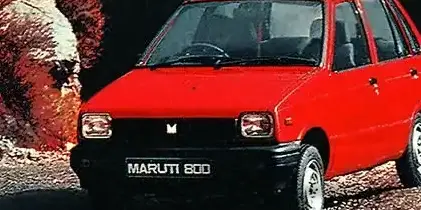
The Maruti 800 0.8, producing 35 horsepower, represents a pivotal moment in the history of Indian automotive manufacturing. Produced from 1985 to 1997, this small hatchback was instrumental in democratizing car ownership in India. It was based on the Suzuki Alto, and formed the cornerstone of Maruti Suzuki’s initial product lineup, establishing the brand as a major player in the burgeoning Indian market. This particular variant, with its 796cc engine, served as the entry point into the Maruti 800 range, offering affordable transportation to a wide segment of the population.
Technical Specifications
| Brand | Maruti |
| Model | 800 |
| Generation | 800 |
| Type (Engine) | 0.8 (35 Hp) |
| Start of production | 1985 |
| End of production | 1997 |
| Powertrain Architecture | Internal Combustion engine |
| Body type | Hatchback |
| Fuel Type | Petrol (Gasoline) |
| Power | 35 Hp @ 5500 rpm |
| Power per litre | 44 Hp/l |
| Torque | 56 Nm @ 2500 rpm / 41.3 lb.-ft. @ 2500 rpm |
| Engine layout | Front, Transverse |
| Engine displacement | 796 cm3 / 48.57 cu. in. |
| Number of cylinders | 3 |
| Engine configuration | Inline |
| Cylinder Bore | 68.5 mm / 2.7 in. |
| Piston Stroke | 72 mm / 2.83 in. |
| Compression ratio | 8.7:1 |
| Number of valves per cylinder | 2 |
| Fuel injection system | Single-point injection |
| Engine aspiration | Naturally aspirated engine |
Powertrain & Engine Architecture
The heart of the Maruti 800 0.8 was its F8A three-cylinder, inline petrol engine. This engine, derived from Suzuki’s designs, was chosen for its simplicity, reliability, and affordability. The 796cc displacement was a deliberate choice to keep costs down and meet the prevailing tax regulations in India at the time. The engine utilized a single-point fuel injection system, a relatively basic setup compared to multi-point injection systems found in more advanced vehicles. This system, while less efficient, contributed to the car’s low price point and ease of maintenance. The engine featured a two-valve per cylinder configuration and a compression ratio of 8.7:1. The F8A engine was known for its robust construction, though it lacked the refinement of larger, more sophisticated engines. The engine was transversely mounted at the front of the vehicle, driving the front wheels.
Driving Characteristics
The Maruti 800 0.8 was not designed for performance. With only 35 horsepower, acceleration was leisurely, and highway driving required careful planning. The car’s lightweight construction (around 760 kg or 1675 lbs) helped to mitigate the lack of power to some extent. The gear ratios were optimized for city driving, providing adequate, if not exhilarating, performance in urban environments. The four-speed manual transmission was the standard offering, and the gearshift was known for its light action. Compared to later, more powerful versions of the Maruti 800 (such as those with 5-speed transmissions or slightly larger engines), the 0.8-liter variant felt noticeably slower and less capable on inclines. However, its simplicity and predictable handling made it easy to drive, even for novice drivers.
Equipment & Trim Levels
The Maruti 800 0.8 was intentionally spartan in its equipment levels. It was designed to be an affordable car, and luxuries were kept to a minimum. Standard features typically included basic cloth upholstery, a simple dashboard with analog gauges, and manually operated windows and door locks. Air conditioning was often an optional extra, and power steering was not available. The interior was functional and durable, prioritizing practicality over aesthetics. Trim levels were minimal, with most cars being essentially identical in terms of features. Later models saw the addition of minor cosmetic upgrades, such as different wheel covers or interior trim colors, but the core specification remained largely unchanged.
Chassis & Braking
The Maruti 800 featured a basic but effective chassis design. It utilized a MacPherson strut suspension at the front and a leaf spring suspension at the rear. The leaf spring setup, while cost-effective, provided a somewhat firm and bumpy ride, particularly on uneven surfaces. The braking system consisted of drum brakes on all four wheels, which were adequate for the car’s weight and performance. Steering was manual, requiring a reasonable amount of effort, especially at low speeds. The car’s small size and relatively short wheelbase contributed to its maneuverability in tight urban spaces. Stabilizer bars were not typically fitted to the base 0.8-liter model.
Market Reception & Comparison
The Maruti 800 0.8 was a resounding success in the Indian market. It provided a reliable and affordable means of transportation for millions of Indians, many of whom were first-time car buyers. Critics praised its simplicity, fuel efficiency, and ease of maintenance. However, it was also criticized for its lack of power, basic interior, and somewhat harsh ride. Compared to other cars available in India at the time, such as the Ambassador or the Premier Padmini, the Maruti 800 offered a more modern and reliable driving experience. Its fuel economy, typically around 18-20 kilometers per liter (approximately 42-47 mpg), was a significant advantage. Later versions of the Maruti 800, with larger engines and improved features, offered a more refined experience, but the 0.8-liter variant remained popular due to its affordability.
Legacy
The Maruti 800 0.8 holds a significant place in Indian automotive history. It not only popularized car ownership but also laid the foundation for Maruti Suzuki’s dominance in the Indian market. The F8A engine proved to be remarkably durable, and many examples of the Maruti 800 are still on the road today. In the used car market, the 0.8-liter variant remains highly sought after by those looking for a simple, reliable, and affordable vehicle. While it may not offer the comfort or performance of modern cars, its legacy as a game-changer in the Indian automotive landscape is undeniable. Its impact extended beyond just transportation; it represented a symbol of upward mobility and economic progress for many Indian families.
