
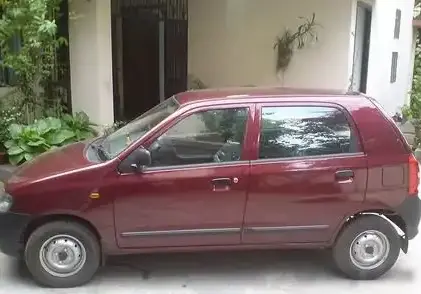
The Maruti Alto 1.1 i 16V VX (63 Hp) represents a significant entry point into the Indian automotive market during its production run from 2000 to 2014. Part of the second generation Alto (often referred to as the Alto 800 in later iterations), this variant was positioned as an affordable and fuel-efficient hatchback aimed at first-time car buyers and urban commuters. It played a crucial role in Maruti Suzuki’s dominance of the small car segment in India, offering a practical and economical transportation solution. The VX trim level denoted a relatively well-equipped version within the Alto range, offering features beyond the base models. This specific configuration, with its 1.1-liter engine and five-speed manual transmission, was a mainstay of the lineup for much of its lifespan.
Technical Specifications
| Brand | Maruti |
| Model | Alto |
| Generation | Alto |
| Type (Engine) | 1.1 i 16V VX (63 Hp) |
| Start of production | 2000 year |
| End of production | 2014 year |
| Powertrain Architecture | Internal Combustion engine |
| Body type | Hatchback |
| Seats | 5 |
| Doors | 3/5 |
| Fuel consumption (urban) | 6.5 l/100 km (36.2 US mpg, 43.5 UK mpg, 15.4 km/l) |
| Fuel consumption (extra urban) | 4 l/100 km (58.8 US mpg, 70.6 UK mpg, 25 km/l) |
| Fuel Type | Petrol (Gasoline) |
| Acceleration 0 – 100 km/h | 14 sec |
| Acceleration 0 – 62 mph | 14 sec |
| Acceleration 0 – 60 mph | 13.3 sec |
| Maximum speed | 155 km/h (96.31 mph) |
| Weight-to-power ratio | 11.9 kg/Hp, 84 Hp/tonne |
| Weight-to-torque ratio | 9.4 kg/Nm, 106.7 Nm/tonne |
| Power | 63 Hp @ 6000 rpm |
| Power per litre | 59.4 Hp/l |
| Torque | 80 Nm @ 3500 rpm (59 lb.-ft. @ 3500 rpm) |
| Engine layout | Front, Transverse |
| Engine displacement | 1061 cm3 (64.75 cu. in.) |
| Number of cylinders | 4 |
| Engine configuration | Inline |
| Cylinder Bore | 68.5 mm (2.7 in.) |
| Piston Stroke | 72 mm (2.83 in.) |
| Compression ratio | 10:1 |
| Number of valves per cylinder | 4 |
| Fuel injection system | Multi-port manifold injection |
| Engine aspiration | Naturally aspirated engine |
| Kerb Weight | 750 kg (1653.47 lbs.) |
| Max. weight | 1165 kg (2568.39 lbs.) |
| Max load | 415 kg (914.92 lbs.) |
| Trunk (boot) space – minimum | 175 l (6.18 cu. ft.) |
| Trunk (boot) space – maximum | 850 l (30.02 cu. ft.) |
| Fuel tank capacity | 35 l (9.25 US gal | 7.7 UK gal) |
| Length | 3495 mm (137.6 in.) |
| Width | 1495 mm (58.86 in.) |
| Height | 1460 mm (57.48 in.) |
| Wheelbase | 2360 mm (92.91 in.) |
| Front track | 1335 mm (52.56 in.) |
| Rear (Back) track | 1305 mm (51.38 in.) |
| Drivetrain Architecture | The Internal combustion engine (ICE) drives the front wheels of the vehicle. |
| Drive wheel | Front wheel drive |
| Number of gears and type of gearbox | 5 gears, manual transmission |
| Front suspension | Spring Strut |
| Rear suspension | Torsion |
| Front brakes | Disc |
| Rear brakes | Drum |
| Steering type | Steering rack and pinion |
| Tires size | 155/65 R13 |
| Wheel rims size | 13 |
Powertrain & Engine Architecture
The heart of the Alto 1.1 i VX is the F10D engine, a 1061cc inline-four cylinder petrol engine. This engine, a staple of Maruti Suzuki’s offerings for many years, utilizes a multi-point fuel injection system to deliver fuel to the cylinders. The 16-valve cylinder head, indicated by the “16V” in the model name, contributes to improved breathing and, consequently, a slightly higher power output compared to earlier 8-valve versions. The engine’s relatively simple design prioritized reliability and ease of maintenance over outright performance. The five-speed manual transmission was the only gearbox option available for this variant, offering a reasonable balance between fuel economy and drivability. The transmission’s gear ratios were tuned for maximizing fuel efficiency in city driving conditions, which was a primary concern for Indian consumers.
Driving Characteristics
The Alto 1.1 i VX, with its 63 horsepower and 80 Nm of torque, wasn’t designed for spirited acceleration. Zero to 100 km/h took approximately 14 seconds, and top speed was around 155 km/h. However, within the confines of urban traffic, the Alto proved to be surprisingly nimble and easy to maneuver. The light weight of the vehicle (around 750 kg) helped to offset the modest power output. The five-speed gearbox allowed for relatively efficient cruising on highways, although overtaking required careful planning. Compared to potential upgrades like a larger engine, the 1.1L offered a smoother, more economical ride, but at the cost of performance. The manual transmission provided a more engaging driving experience than an automatic would have, and allowed the driver to maximize the available power.
Equipment & Trim Levels
The VX trim level represented a step up from the base Alto models. Standard features typically included power steering, air conditioning, and basic instrumentation. The interior was functional and utilitarian, with hard-wearing plastic trim and cloth upholstery. Optional extras, depending on the year and regional availability, could include a stereo system, power windows, and central locking. The VX trim aimed to provide a reasonable level of comfort and convenience without significantly increasing the vehicle’s price. The dashboard layout was simple and straightforward, prioritizing ease of use over aesthetic appeal.
Chassis & Braking
The Alto 1.1 i VX utilized a relatively simple chassis design. Front suspension consisted of a MacPherson strut setup, while the rear employed a torsion beam axle. This configuration provided a comfortable ride quality, particularly on the often-rough road surfaces found in India. Braking was handled by disc brakes on the front wheels and drum brakes on the rear. While adequate for everyday driving, the braking system wasn’t particularly powerful. The steering was a rack and pinion system, providing reasonably precise control. The relatively narrow tires (155/65 R13) contributed to fuel efficiency but offered limited grip.
Market Reception & Comparison
The Maruti Alto 1.1 i VX was widely praised for its affordability, fuel efficiency, and reliability. Critics noted its basic interior and modest performance, but acknowledged that these were acceptable trade-offs given its price point. Compared to other trims in the Alto lineup, the 1.1L VX offered a good balance between features and cost. It was often seen as a more sensible choice than the base models, while remaining significantly cheaper than larger or more powerful vehicles. Its fuel economy was a major selling point, particularly in a market where petrol prices were relatively high. Compared to competitors like the Hyundai Santro, the Alto generally offered better value for money.
Legacy
The Maruti Alto, in all its iterations, has become an iconic vehicle in India. The 1.1 i VX variant, in particular, is remembered as a reliable and economical workhorse. The F10D engine proved to be remarkably durable, and many examples are still on the road today. In the used car market, these Altos are highly sought after for their low running costs and ease of maintenance. While no longer in production, the Alto’s legacy continues to influence the design and engineering of small cars in India. Its success demonstrated the demand for affordable and practical transportation, paving the way for future generations of compact hatchbacks.
