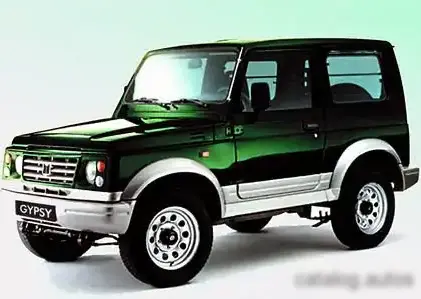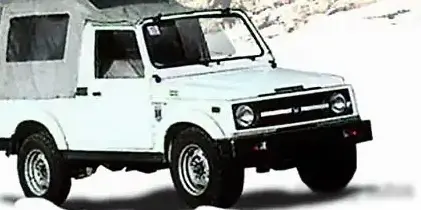
The Maruti Gypsy Cabrio 1.3 i 16V Gypsy King, producing 80 horsepower, represents a unique and enduring chapter in the history of Indian automotive manufacturing. Produced from 2000 to 2019, this open-top, four-wheel-drive vehicle was a direct descendant of the original Gypsy, which itself was based on the second-generation Suzuki LJ series. The Cabrio variant, and specifically this 1.3-liter engine configuration, occupied a niche position, appealing to enthusiasts seeking a rugged, affordable, and customizable off-road vehicle with a distinctive open-air experience. It was primarily sold within the Indian market, where it gained a loyal following due to its simplicity, durability, and go-anywhere capability.
Technical Specifications
| Brand | Maruti |
| Model | Gypsy |
| Generation | Gypsy Cabrio |
| Type (Engine) | 1.3 i 16V Gypsy King (80 Hp) |
| Start of production | 2000 year |
| End of production | 2019 year |
| Powertrain Architecture | Internal Combustion engine |
| Body type | Off-road vehicle, Cabriolet |
| Seats | 5 |
| Doors | 2 |
| Fuel Type | Petrol (Gasoline) |
| Maximum speed | 130 km/h (80.78 mph) |
| Weight-to-power ratio | 12.6 kg/Hp, 79.2 Hp/tonne |
| Weight-to-torque ratio | 9.8 kg/Nm, 102 Nm/tonne |
| Power | 80 Hp @ 6000 rpm |
| Power per litre | 61.6 Hp/l |
| Torque | 103 Nm @ 4500 rpm (75.97 lb.-ft. @ 4500 rpm) |
| Engine layout | Front, Longitudinal |
| Engine Model/Code | G13B |
| Engine displacement | 1299 cm3 (79.27 cu. in.) |
| Number of cylinders | 4 |
| Engine configuration | Inline |
| Cylinder Bore | 74 mm (2.91 in.) |
| Piston Stroke | 75.5 mm (2.97 in.) |
| Compression ratio | 9.2:1 |
| Number of valves per cylinder | 4 |
| Fuel injection system | Multi-port manifold injection |
| Engine aspiration | Naturally aspirated engine |
| Engine oil capacity | 4.2 l (4.44 US qt | 3.7 UK qt) |
| Kerb Weight | 1010 kg (2226.67 lbs.) |
| Max. weight | 1495 kg (3295.91 lbs.) |
| Max load | 485 kg (1069.24 lbs.) |
| Fuel tank capacity | 40 l (10.57 US gal | 8.8 UK gal) |
| Length | 4010 mm (157.87 in.) |
| Width | 1540 mm (60.63 in.) |
| Height | 1845 mm (72.64 in.) |
| Wheelbase | 2375 mm (93.5 in.) |
| Front track | 1300 mm (51.18 in.) |
| Rear (Back) track | 1310 mm (51.57 in.) |
| Drive wheel | All wheel drive (4×4) |
| Number of gears and type of gearbox | 5 gears, manual transmission |
| Front suspension | Leaf spring |
| Rear suspension | Leaf spring |
| Front brakes | Disc |
| Rear brakes | Drum |
| Assisting systems | ABS (Anti-lock braking system) |
| Tires size | 205/70 R15 |
| Wheel rims size | 15 |
Powertrain & Engine Architecture
The heart of the Gypsy Cabrio 1.3 i 16V was the G13B engine, a 1.3-liter, inline-four cylinder gasoline engine. This engine, a mainstay of Suzuki vehicles for decades, featured a single overhead camshaft (SOHC) and multi-point fuel injection. The 16-valve configuration, achieved through four valves per cylinder, contributed to improved breathing and a slightly higher power output compared to earlier 8-valve versions. While not a particularly sophisticated engine by modern standards, the G13B was known for its robustness and relative simplicity, making it easy to maintain and repair, particularly in regions with limited access to specialized tools or expertise. The engine’s longitudinal mounting within the chassis, coupled with a robust five-speed manual transmission, provided a traditional four-wheel-drive layout. The transmission was chosen for its durability and ability to handle the stresses of off-road driving.
Driving Characteristics
The 80 horsepower output of the 1.3-liter engine, combined with the vehicle’s relatively light weight of around 1010 kg (2226 lbs), provided adequate, though not exhilarating, performance. Acceleration was modest, and highway cruising required the engine to work relatively hard. However, the engine’s torque characteristics, peaking at 103 Nm (75.97 lb-ft) at 4500 rpm, made it well-suited to low-speed off-road work. The manual transmission’s gear ratios were optimized for climbing steep inclines and navigating challenging terrain. Compared to potential upgrades like a Suzuki Sierra engine swap, or even the more powerful Gypsy King variants, this 1.3L version offered a more economical and accessible entry point into the world of off-roading. The leaf spring suspension, while providing a comfortable ride on paved roads, was primarily designed for load-carrying capacity and durability in off-road conditions.
Equipment & Trim Levels
The Gypsy Cabrio 1.3 i 16V Gypsy King was generally sparsely equipped, reflecting its utilitarian origins and target market. Standard features typically included basic steel wheels, vinyl or cloth upholstery, a simple dashboard layout, and minimal creature comforts. Air conditioning was often an optional extra, as were power windows and central locking. The Cabrio variant, by its nature, featured a manually operated folding soft top, providing open-air driving enjoyment. Trim levels were relatively limited, with most variations stemming from optional accessories added by the dealer or owner. The focus was on functionality and affordability rather than luxury.
Chassis & Braking
The Gypsy’s chassis was a body-on-frame construction, providing exceptional strength and durability. The front suspension utilized leaf springs, while the rear suspension also employed a leaf spring setup. This configuration, while not offering the most refined ride quality, was incredibly robust and capable of handling significant loads. The braking system consisted of disc brakes on the front wheels and drum brakes on the rear. An Anti-lock Braking System (ABS) was included as a safety feature. The relatively simple braking system was adequate for the vehicle’s performance capabilities, but lacked the sophistication of more modern braking technologies.
Market Reception & Comparison
The Gypsy Cabrio 1.3 i 16V Gypsy King was well-received in the Indian market as an affordable and capable off-road vehicle. Critics praised its ruggedness, simplicity, and go-anywhere ability. However, some noted its lack of refinement and relatively low power output. Compared to other Gypsy variants, such as those equipped with larger engines, the 1.3-liter version offered a more economical option, appealing to budget-conscious buyers. Fuel economy was reasonable for a four-wheel-drive vehicle of its type, and maintenance costs were relatively low due to the engine’s simplicity and the widespread availability of spare parts.
Legacy
The Maruti Gypsy, and particularly the Cabrio variant, has achieved a cult following in India. Despite its discontinuation in 2019 due to stricter emission regulations, the Gypsy remains a popular choice among off-road enthusiasts and collectors. The G13B engine, while aging, is known for its reliability and longevity, and many examples are still in active use today. The Gypsy’s enduring appeal lies in its simplicity, ruggedness, and the unique open-air driving experience offered by the Cabrio model. It represents a significant piece of Indian automotive history, and its legacy continues to inspire a dedicated community of owners and enthusiasts.