
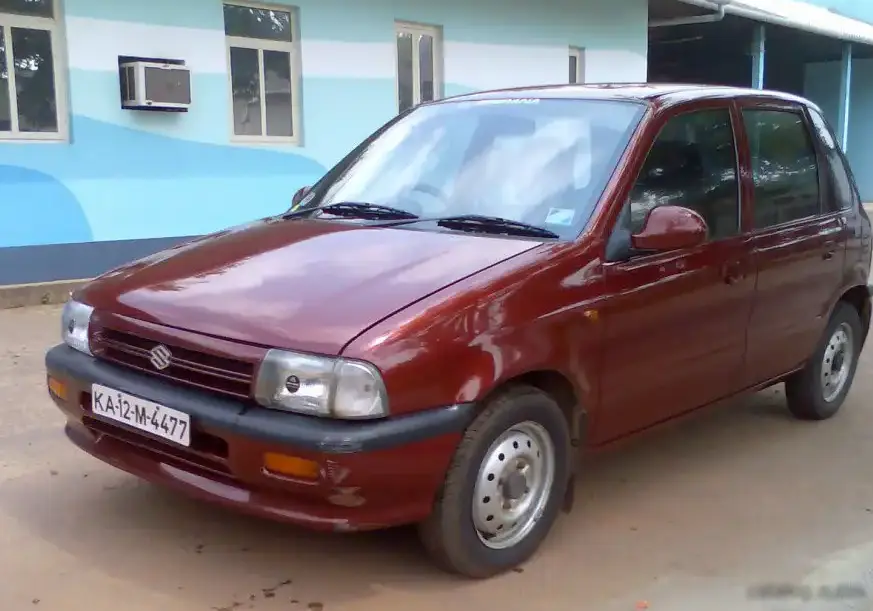
The Maruti Zen, designated as the EF series, was a pivotal model for Maruti Suzuki in the Indian automotive market. Introduced in 1994 and continuing production through 1999, the Zen represented a significant step forward in compact car design and affordability for Indian consumers. This particular variant, the 1.0-liter (50 hp) model, served as the entry point into the Zen lineup, offering a balance of fuel efficiency and practicality. It was built upon a front-engine, front-wheel-drive platform, and quickly became a popular choice for first-time car buyers and urban commuters. The Zen played a crucial role in modernizing the Indian car landscape, moving away from the boxy designs of earlier models and embracing a more contemporary aesthetic.
Technical Specifications
| Brand | Maruti |
| Model | Zen |
| Generation | ZEN (EF) |
| Type (Engine) | 1.0 (50 Hp) |
| Start of production | 1994 |
| End of production | 1999 |
| Powertrain Architecture | Internal Combustion engine |
| Body type | Hatchback |
| Seats | 5 |
| Doors | 5 |
| Fuel Type | Petrol (Gasoline) |
| Weight-to-power ratio | 14.6 kg/Hp, 68.5 Hp/tonne |
| Weight-to-torque ratio | 10.3 kg/Nm, 97.3 Nm/tonne |
| Power | 50 Hp @ 6500 rpm |
| Power per litre | 50.4 Hp/l |
| Torque | 71 Nm @ 4500 rpm, 52.37 lb.-ft. @ 4500 rpm |
| Engine layout | Front, Transverse |
| Engine displacement | 993 cm3, 60.6 cu. in. |
| Number of cylinders | 3 |
| Engine configuration | Inline |
| Cylinder Bore | 74 mm, 2.91 in. |
| Piston Stroke | 77 mm, 3.03 in. |
| Compression ratio | 9.5:1 |
| Number of valves per cylinder | 2 |
| Fuel injection system | Carburettor |
| Engine aspiration | Naturally aspirated engine |
| Valvetrain | OHC |
| Kerb Weight | 730 kg, 1609.37 lbs |
| Max. weight | 1180 kg, 2601.45 lbs |
| Max load | 450 kg, 992.08 lbs |
| Fuel tank capacity | 35 l, 9.25 US gal | 7.7 UK gal |
| Length | 3495 mm, 137.6 in. |
| Width | 1495 mm, 58.86 in. |
| Height | 1405 mm, 55.31 in. |
| Wheelbase | 2335 mm, 91.93 in. |
| Front track | 1200 mm, 47.24 in. |
| Rear (Back) track | 1200 mm, 47.24 in. |
| Minimum turning circle (turning diameter) | 9.8 m, 32.15 ft |
| Drivetrain Architecture | The Internal combustion engine (ICE) drives the front wheels of the vehicle. |
| Drive wheel | Front wheel drive |
| Number of gears and type of gearbox | 5 gears, manual transmission |
| Front suspension | Spring Strut |
| Rear suspension | Coil spring |
| Front brakes | Disc |
| Rear brakes | Drum |
| Assisting systems | ABS (Anti-lock braking system) |
| Steering type | Steering rack and pinion |
| Tires size | 145/70 R13 S |
| Wheel rims size | 13 |
Powertrain & Engine Architecture
The heart of the Maruti Zen 1.0 was a 993cc, inline-three cylinder petrol engine. This engine, often referred to by its internal code F10D, was a relatively simple design, utilizing a single overhead camshaft (OHC) and a carburetor for fuel delivery. The carburetor system, while common for the time, was a key factor in the engine’s affordability but also contributed to its lower power output and less precise fuel metering compared to later fuel-injected engines. The engine produced 50 horsepower at 6500 rpm and 71 Nm (52.37 lb-ft) of torque at 4500 rpm. The engine’s compact size and lightweight construction were beneficial for the Zen’s overall handling and fuel efficiency. The engine was mated to a five-speed manual transmission, which was the only transmission option available for this variant. The transmission was designed for durability and ease of maintenance, reflecting the practical nature of the vehicle.
Driving Characteristics
The 1.0-liter Zen, with its 50 hp output, was not designed for outright performance. Acceleration was modest, and overtaking required careful planning. However, the car’s light weight (730 kg or 1609 lbs) helped to mitigate the lack of power, making it feel reasonably nimble in city traffic. The five-speed manual transmission allowed drivers to keep the engine in its optimal power band, but the carburetor’s responsiveness could be somewhat lacking compared to modern fuel-injected systems. Compared to potential future variants with larger engines, this 1.0L version prioritized fuel economy and affordability over spirited driving. The gear ratios were tuned for everyday usability, with a focus on maximizing fuel efficiency rather than achieving quick acceleration. The steering was light and responsive, making it easy to maneuver in tight spaces.
Equipment & Trim Levels
The base-model Maruti Zen 1.0 was relatively sparsely equipped, reflecting its position as the entry-level variant. Standard features typically included basic steel wheels, black plastic bumpers, and a simple interior with cloth upholstery. The dashboard layout was functional and straightforward, with basic instrumentation. Power steering was not standard on this trim level, but it was often available as an optional extra. Other optional extras included a radio/cassette player and upgraded interior trim. The focus was on providing a reliable and affordable mode of transportation, rather than luxury or advanced features.
Chassis & Braking
The Zen EF utilized a relatively simple chassis design, featuring a MacPherson strut suspension in the front and a coil spring suspension in the rear. The suspension was tuned for comfort and ride quality, rather than sporty handling. The front brakes were disc brakes, providing adequate stopping power, while the rear brakes were drum brakes, a cost-saving measure common in this class of vehicle. The car’s light weight contributed to its manageable braking performance. An Anti-lock Braking System (ABS) was available as an option on some models, enhancing safety. The steering system employed a rack and pinion setup, providing precise and responsive steering feel.
Market Reception & Comparison
The Maruti Zen 1.0 was well-received in the Indian market, particularly among first-time car buyers and those seeking an affordable and reliable city car. Critics praised its compact size, fuel efficiency, and ease of maintenance. However, the engine’s limited power output was a common criticism. Compared to other cars in its segment, such as the Hyundai Santro, the Zen offered a more engaging driving experience, but the Santro often provided more features for a similar price. The Zen’s carburetor-based fuel system was also seen as a drawback compared to the fuel injection systems found in some of its competitors. Despite these criticisms, the Zen remained a popular choice throughout its production run.
Legacy
The Maruti Zen 1.0 holds a significant place in Indian automotive history as one of the first truly modern compact cars to be widely adopted by the Indian public. Its simple, reliable powertrain and affordable price point made it accessible to a broad range of consumers. While the carburetor-equipped engine may not be as desirable today as more modern fuel-injected alternatives, the Zen 1.0 remains a popular choice among enthusiasts and collectors. The car’s robust construction and readily available spare parts ensure that many examples are still on the road today. The Zen’s success paved the way for future generations of Maruti Suzuki hatchbacks, solidifying the company’s position as a leading automotive manufacturer in India.
