
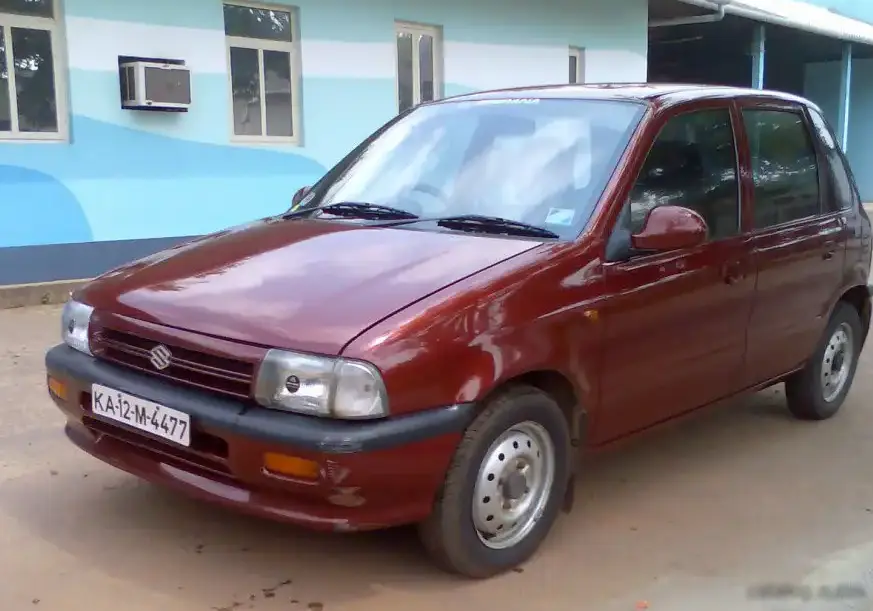
The Maruti Zen (EF) 1.0i LX, produced between 2000 and 2006, represented the entry-level offering within the broader Zen lineup, a popular hatchback in the Indian automotive market. Positioned as an affordable and practical city car, the 1.0i LX was characterized by its small displacement engine and focus on fuel efficiency. It was a key model for Maruti Suzuki, contributing significantly to the company’s dominance in the small car segment during that period. The Zen (EF) was based on the earlier Zen model, but received updates to its styling and mechanical components, aligning it with contemporary automotive trends. This variant specifically catered to buyers seeking a basic, reliable, and economical mode of transportation.
Technical Specifications
| Brand | Maruti |
| Model | Zen |
| Generation | ZEN (EF) |
| Type (Engine) | 1.0i LX (50 Hp) |
| Start of production | 2000 year |
| End of production | 2006 year |
| Powertrain Architecture | Internal Combustion engine |
| Body type | Hatchback |
| Seats | 5 |
| Doors | 5 |
| Fuel Type | Petrol (Gasoline) |
| Acceleration 0 – 100 km/h | 15.5 sec |
| Acceleration 0 – 62 mph | 15.5 sec |
| Acceleration 0 – 60 mph | 14.7 sec |
| Maximum speed | 145 km/h (90.1 mph) |
| Weight-to-power ratio | 15.1 kg/Hp, 66.2 Hp/tonne |
| Weight-to-torque ratio | 10.8 kg/Nm, 92.7 Nm/tonne |
| Power | 50 Hp @ 6500 rpm |
| Power per litre | 50.4 Hp/l |
| Torque | 70 Nm @ 4500 rpm (51.63 lb.-ft. @ 4500 rpm) |
| Engine layout | Front, Transverse |
| Engine displacement | 993 cm3 (60.6 cu. in.) |
| Number of cylinders | 4 |
| Engine configuration | Inline |
| Cylinder Bore | 72 mm (2.83 in.) |
| Piston Stroke | 61 mm (2.4 in.) |
| Compression ratio | 8.8:1 |
| Number of valves per cylinder | 2 |
| Fuel injection system | Single-point injection |
| Engine aspiration | Naturally aspirated engine |
| Kerb Weight | 755 kg (1664.49 lbs.) |
| Max. weight | 1160 kg (2557.36 lbs.) |
| Max load | 405 kg (892.87 lbs.) |
| Fuel tank capacity | 35 l (9.25 US gal | 7.7 UK gal) |
| Length | 3495 mm (137.6 in.) |
| Width | 1495 mm (58.86 in.) |
| Height | 1405 mm (55.31 in.) |
| Wheelbase | 2335 mm (91.93 in.) |
| Front track | 1335 mm (52.56 in.) |
| Rear (Back) track | 1305 mm (51.38 in.) |
| Minimum turning circle | 9.8 m (32.15 ft.) |
| Drivetrain Architecture | The Internal combustion engine (ICE) drives the front wheels of the vehicle. |
| Drive wheel | Front wheel drive |
| Number of gears and type of gearbox | 5 gears, manual transmission |
| Front suspension | Spring Strut |
| Rear suspension | Coil spring |
| Front brakes | Disc |
| Rear brakes | Drum |
| Assisting systems | ABS (Anti-lock braking system) |
| Steering type | Steering rack and pinion |
| Tires size | 145/70 R13 |
| Wheel rims size | 13 |
Powertrain & Engine Architecture
The heart of the Zen 1.0i LX was the F10D engine, a 993cc inline-four cylinder petrol engine. This engine utilized a single-point fuel injection system, a relatively simple and cost-effective technology for the time. The engine featured a single overhead camshaft (SOHC) operating two valves per cylinder. Its modest output of 50 horsepower at 6500 rpm and 70 Nm (51.63 lb-ft) of torque at 4500 rpm was geared towards maximizing fuel economy rather than outright performance. The engine’s design prioritized reliability and ease of maintenance, making it a popular choice for first-time car owners and those seeking a low-cost vehicle. The engine was transversely mounted, driving the front wheels through a five-speed manual transmission. This configuration helped to maximize interior space within the compact dimensions of the Zen.
Driving Characteristics
The Zen 1.0i LX, with its 50 hp engine and manual transmission, offered a basic but functional driving experience. Acceleration was leisurely, taking approximately 15.5 seconds to reach 100 km/h (62 mph). The gear ratios were tuned for economy, meaning the engine needed to be revved to extract the most performance. Compared to higher-spec Zen models equipped with larger engines, the 1.0i LX felt noticeably underpowered, particularly when carrying a full load of passengers or navigating hilly terrain. However, its light weight and nimble handling made it well-suited for urban driving conditions. The steering was responsive, and the suspension provided a reasonably comfortable ride, although it could feel somewhat bouncy on uneven surfaces. The five-speed manual transmission was relatively smooth and easy to operate.
Equipment & Trim Levels
The 1.0i LX trim level represented the base model in the Zen range. Standard equipment included basic steel wheels, black plastic bumpers, and a simple interior with cloth upholstery. The dashboard was functional but lacked many of the modern conveniences found in higher-spec models. Power steering was often an optional extra, as were features like air conditioning and a radio/cassette player. The LX trim focused on providing essential transportation at the lowest possible price point. The interior space was adequate for a small hatchback, offering comfortable seating for four adults. The rear seats could be folded down to increase cargo capacity.
Chassis & Braking
The Zen (EF) utilized a relatively simple chassis design. The front suspension consisted of MacPherson strut coil springs, while the rear suspension employed a trailing arm setup with coil springs. The braking system featured disc brakes on the front wheels and drum brakes on the rear. ABS (Anti-lock Braking System) was available as an optional extra, enhancing safety by preventing wheel lockup during hard braking. The steering system was a rack and pinion type, providing precise and responsive steering control. The relatively lightweight construction of the Zen contributed to its nimble handling characteristics. Tire size was typically 145/70 R13.
Market Reception & Comparison
The Maruti Zen 1.0i LX was well-received in the Indian market as an affordable and reliable city car. Critics praised its fuel efficiency and ease of driving, but noted its lack of power and basic interior. Compared to other models in the Zen lineup, such as the higher-spec versions with larger engines, the 1.0i LX offered a more economical option for budget-conscious buyers. Its fuel economy was a significant selling point, particularly in a market where petrol prices were relatively high. The Zen 1.0i LX competed with other small hatchbacks like the Hyundai Santro and the Tata Indica, offering a compelling combination of price, reliability, and fuel efficiency.
Legacy
The Maruti Zen (EF) 1.0i LX remains a popular choice in the used car market in India. Its simple mechanical design and readily available spare parts contribute to its continued reliability and affordability. While not known for its performance, the 1.0i LX is appreciated for its practicality and fuel efficiency. The F10D engine, while basic, proved to be a durable and long-lasting unit when properly maintained. The Zen (EF) played a significant role in establishing Maruti Suzuki as a dominant force in the Indian automotive industry, and the 1.0i LX variant helped to make car ownership accessible to a wider range of consumers.
