
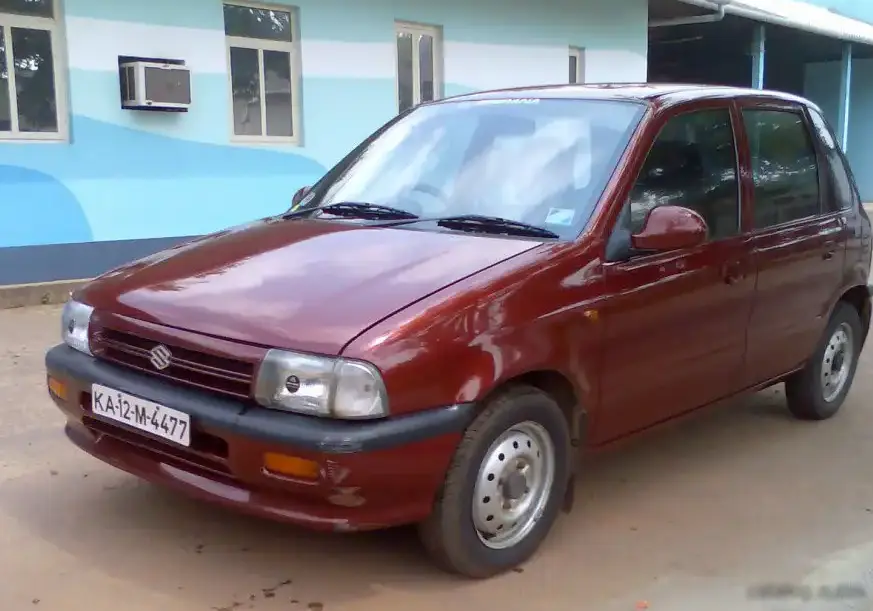
The Maruti Zen, specifically the EF series 1.5 D variant produced between 1999 and 2006, represented a significant entry point into diesel-powered motoring for the Indian market. Positioned as an affordable and practical hatchback, the 1.5 D offered a fuel-efficient alternative to the petrol-powered Zen models. It was built upon the existing Zen platform, known for its compact size and nimble handling, and aimed at buyers prioritizing economy and durability over outright performance. This model played a crucial role in establishing Maruti Suzuki’s dominance in the small car segment in India, offering a diesel option at a time when such choices were less common and often considerably more expensive.
Technical Specifications
| Brand | Maruti |
| Model | Zen |
| Generation | ZEN (EF) |
| Type (Engine) | 1.5 D (57 Hp) |
| Start of production | 1999 |
| End of production | 2006 |
| Powertrain Architecture | Internal Combustion engine |
| Body type | Hatchback |
| Seats | 5 |
| Doors | 5 |
| Fuel consumption (urban) | 7 l/100 km (33.6 US mpg, 40.4 UK mpg, 14.3 km/l) |
| Fuel consumption (extra urban) | 4.5 l/100 km (52.3 US mpg, 62.8 UK mpg, 22.2 km/l) |
| Fuel Type | Diesel |
| Acceleration 0 – 100 km/h | 18 sec |
| Acceleration 0 – 62 mph | 18 sec |
| Acceleration 0 – 60 mph | 17.1 sec |
| Maximum speed | 155 km/h (96.31 mph) |
| Weight-to-power ratio | 14.3 kg/Hp, 69.9 Hp/tonne |
| Weight-to-torque ratio | 8.6 kg/Nm, 116.6 Nm/tonne |
| Power | 57 Hp @ 5000 rpm |
| Power per litre | 37.3 Hp/l |
| Torque | 95 Nm @ 2250 rpm (70.07 lb.-ft. @ 2250 rpm) |
| Engine layout | Front, Transverse |
| Engine displacement | 1527 cm3 (93.18 cu. in.) |
| Number of cylinders | 4 |
| Engine configuration | Inline |
| Cylinder Bore | 77 mm (3.03 in.) |
| Piston Stroke | 82 mm (3.23 in.) |
| Compression ratio | 23:1 |
| Number of valves per cylinder | 2 |
| Fuel injection system | Precombustion chamber injection |
| Engine aspiration | Naturally aspirated engine |
| Kerb Weight | 815 kg (1796.77 lbs.) |
| Max. weight | 1265 kg (2788.85 lbs.) |
| Max load | 450 kg (992.08 lbs.) |
| Trunk (boot) space – minimum | 175 l (6.18 cu. ft.) |
| Trunk (boot) space – maximum | 850 l (30.02 cu. ft.) |
| Fuel tank capacity | 35 l (9.25 US gal | 7.7 UK gal) |
| Length | 3495 mm (137.6 in.) |
| Width | 1495 mm (58.86 in.) |
| Height | 1410 mm (55.51 in.) |
| Wheelbase | 2335 mm (91.93 in.) |
| Front track | 1335 mm (52.56 in.) |
| Rear (Back) track | 1305 mm (51.38 in.) |
| Minimum turning circle | 9.8 m (32.15 ft.) |
| Drivetrain Architecture | The Internal combustion engine (ICE) drives the front wheels of the vehicle. |
| Drive wheel | Front wheel drive |
| Number of gears and type of gearbox | 5 gears, manual transmission |
| Front suspension | Spring Strut |
| Rear suspension | Coil spring |
| Front brakes | Disc |
| Rear brakes | Drum |
| Assisting systems | ABS (Anti-lock braking system) |
| Steering type | Steering rack and pinion |
| Tires size | 145/70 R13 |
| Wheel rims size | 13 |
Powertrain & Engine Architecture
The heart of the Zen 1.5 D was a 1.5-liter inline-four diesel engine. This engine, often identified by its engine code, utilized a precombustion chamber injection system – a common technology for diesel engines of that era. This system involved injecting fuel into a precombustion chamber connected to the main cylinder, promoting more complete combustion and reducing noise. The engine produced 57 horsepower at 5000 rpm and 95 Nm (70 lb-ft) of torque at 2250 rpm. The five-speed manual transmission was the only gearbox option available with this engine, prioritizing fuel efficiency and simplicity. The engine’s relatively low compression ratio of 23:1, while typical for the time, contributed to its durability and ability to run on the often-variable quality of diesel fuel available in India.
Driving Characteristics
The Zen 1.5 D was not designed for spirited driving. Its 57 horsepower and relatively high weight (815 kg / 1797 lbs) resulted in a 0-60 mph time of around 17.1 seconds and a top speed of 96 mph. However, the engine’s torque delivery, peaking at 2250 rpm, provided adequate pulling power for everyday driving conditions, particularly in urban environments. The gear ratios were tuned for economy, meaning the engine needed to be revved to access its full potential. Compared to the petrol-powered Zen variants, the 1.5 D offered significantly better fuel economy but lacked the responsiveness and refinement of its gasoline counterparts. The manual transmission, while basic, provided a direct connection to the engine and allowed drivers to maximize fuel efficiency.
Equipment & Trim Levels
The Zen 1.5 D was generally offered in a fairly basic trim level, reflecting its positioning as an affordable option. Standard features typically included power steering, a basic audio system, and cloth upholstery. Air conditioning was often an optional extra. The interior was functional and utilitarian, prioritizing durability over luxury. The dashboard layout was simple and straightforward, with easy-to-use controls. Higher trim levels, if available, might have included features like central locking, power windows, and upgraded interior trim.
Chassis & Braking
The Zen 1.5 D utilized a relatively simple chassis design. Front suspension consisted of a MacPherson strut setup, while the rear employed a coil spring arrangement. The braking system featured disc brakes on the front wheels and drum brakes on the rear. ABS (Anti-lock Braking System) was often included as a standard safety feature, a notable addition for a car in this price segment. The suspension was tuned for comfort and ride quality, prioritizing absorbing bumps and imperfections in the road. The relatively narrow tires (145/70 R13) contributed to fuel efficiency but limited grip during cornering.
Market Reception & Comparison
The Maruti Zen 1.5 D was well-received in the Indian market, particularly by buyers seeking a fuel-efficient and reliable diesel hatchback. Critics praised its affordability and practicality, but noted its lack of performance and refinement compared to more expensive competitors. Compared to the petrol-powered Zen variants, the 1.5 D offered significantly better fuel economy – a crucial factor for Indian buyers – but sacrificed acceleration and overall driving enjoyment. Against other diesel hatchbacks of the time, the Zen 1.5 D offered a compelling combination of price, fuel efficiency, and Maruti Suzuki’s established reputation for reliability.
Legacy
The Maruti Zen 1.5 D established a strong reputation for durability and reliability. The engine, while not particularly powerful, proved to be robust and capable of withstanding the demanding conditions of Indian roads. Today, well-maintained examples of the Zen 1.5 D are still relatively common on Indian roads, a testament to its build quality and longevity. In the used car market, these vehicles are valued for their affordability, fuel efficiency, and ease of maintenance. The Zen 1.5 D played a significant role in shaping the Indian automotive landscape, paving the way for the widespread adoption of diesel-powered vehicles and solidifying Maruti Suzuki’s position as a market leader.
