
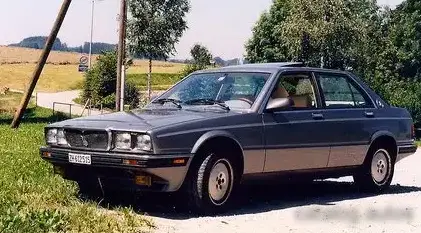
The Maserati 420, produced between 1985 and 1986, represents a relatively short-lived but significant chapter in the Italian manufacturer’s history. Positioned as a more accessible entry point into the Maserati lineup, the 420 aimed to broaden the brand’s appeal beyond its traditional, high-performance clientele. It was based on the Maserati Khamsin platform, though significantly revised and simplified. The 420/430 series, encompassing both the 420 and the later 430 models, sought to offer a blend of Italian luxury and performance at a more competitive price point, particularly in comparison to its larger, more expensive siblings. The 420, with its 180 horsepower engine, served as the initial offering, later superseded by the 430 with a more powerful engine. Production numbers were limited, contributing to its relative rarity today.
Technical Specifications
| Brand | Maserati |
| Model | 420/430 |
| Generation | 420/430 |
| Type (Engine) | 420 (180 Hp) |
| Start of Production | 1985 |
| End of Production | 1986 |
| Powertrain Architecture | Internal Combustion Engine |
| Body Type | Sedan |
| Fuel Type | Petrol (Gasoline) |
| Power | 180 Hp |
| Engine Model/Code | AM332 |
| Engine Aspiration | Naturally Aspirated |
Powertrain & Engine Architecture
The heart of the Maserati 420 is the AM332 engine, a 2.0-liter (1996 cc) inline-six cylinder gasoline engine. This engine, while bearing the Maserati name, has roots in the Peugeot-Renault-Volvo (PRV) V6 design, adapted and modified by Maserati engineers. The AM332 featured a single overhead camshaft (SOHC) valvetrain operating two valves per cylinder. Fuel delivery was managed by Bosch mechanical fuel injection, a system chosen for its reliability and relative simplicity compared to emerging electronic fuel injection systems of the era. The engine produced 180 horsepower at 6000 rpm and 192 lb-ft of torque at 4500 rpm. The engine was mated to a three-speed automatic transmission, a Chrysler TorqueFlite A727 unit. This transmission choice, while providing smooth operation, was a point of criticism for some enthusiasts who preferred a manual gearbox for a more engaging driving experience. The automatic transmission was selected to appeal to the target market seeking a comfortable, luxurious grand tourer.
Driving Characteristics
The Maserati 420, equipped with the 2.0-liter engine and automatic transmission, offered a distinctly different driving experience compared to other Maserati models of the time. While it lacked the raw power and aggressive performance of the Biturbo models, it provided a refined and comfortable ride. The automatic transmission, while smooth, resulted in somewhat leisurely acceleration. The three-speed unit, while adequate for cruising, didn’t allow the engine to rev freely, impacting overall responsiveness. The gear ratios were optimized for fuel economy and comfortable highway driving rather than spirited acceleration. Compared to the later 430 model, which featured a 2.8-liter V6 engine, the 420 felt noticeably less powerful. However, the 420’s lighter weight, due to the smaller engine, partially compensated for the power deficit, resulting in balanced handling. The suspension, derived from the Khamsin, provided a comfortable ride, absorbing road imperfections effectively.
Equipment & Trim Levels
The Maserati 420 was positioned as a relatively well-equipped vehicle, offering a level of luxury commensurate with the Maserati brand. Standard features included leather upholstery, power windows, power steering, and air conditioning. The interior design was elegant and understated, reflecting Italian design sensibilities of the 1980s. The dashboard featured wood trim and analog gauges. Optional extras included a sunroof, upgraded audio system, and metallic paint finishes. Trim levels were relatively limited, with most 420s featuring a similar specification. The focus was on providing a comfortable and luxurious environment for both the driver and passengers. The interior, while luxurious, was simpler than that found in the more expensive Maserati models, reflecting the 420’s more accessible price point.
Chassis & Braking
The Maserati 420 utilized a steel unibody construction, derived from the Khamsin platform. The suspension system consisted of independent double wishbones at the front and a De Dion axle with a Watts linkage at the rear. This setup provided a comfortable ride and predictable handling. Braking duties were handled by disc brakes at the front and drum brakes at the rear. While the front discs provided adequate stopping power, the rear drums were considered a compromise, particularly for a vehicle of this caliber. The braking system lacked the advanced features, such as ABS, found on some contemporary luxury cars. The chassis was relatively lightweight, contributing to the car’s balanced handling characteristics. Stabilizer bars were fitted to both the front and rear axles to reduce body roll during cornering.
Market Reception & Comparison
The Maserati 420 received a mixed reception from automotive critics. While praised for its elegant styling and comfortable ride, it was often criticized for its lack of performance and the somewhat dated three-speed automatic transmission. Compared to its siblings, such as the Biturbo, the 420 felt underpowered. The 430 model, with its larger engine, addressed this criticism, offering a significant performance improvement. Fuel economy was reasonable for a vehicle of its class, but not exceptional. Reliability was generally good, although the Bosch fuel injection system required periodic maintenance. The 420’s primary competitors included other Italian luxury sedans, such as the Alfa Romeo 6, and German models like the BMW 5 Series and Mercedes-Benz E-Class. The 420 offered a unique blend of Italian style and luxury at a more affordable price point than its German rivals.
Legacy
The Maserati 420, despite its short production run, holds a unique place in Maserati’s history. It represented an attempt to broaden the brand’s appeal and attract a wider customer base. While the 420 didn’t achieve significant sales success, it paved the way for the later 430 model, which proved more popular. Today, the Maserati 420 is a relatively rare and sought-after classic car. The AM332 engine, while not the most powerful Maserati engine, is generally reliable and relatively easy to maintain. The availability of parts can be a challenge, but a dedicated community of Maserati enthusiasts helps to support the preservation of these vehicles. The 420’s elegant styling and comfortable ride continue to appeal to collectors and enthusiasts who appreciate Italian automotive design and engineering. Well-maintained examples command a premium in the used car market, reflecting their rarity and historical significance.
