
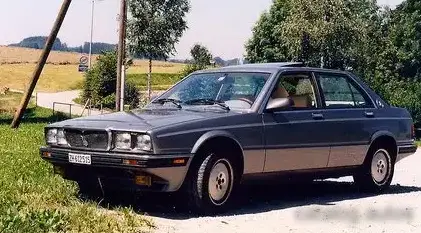
The Maserati 420/430, specifically the 420 i variant producing 187 horsepower, represents a relatively short-lived but significant chapter in the Italian manufacturer’s history. Produced between 1987 and 1988, this model aimed to bridge the gap between Maserati’s grand touring heritage and the demands of a more modern, executive sedan market. It was a transitional vehicle, attempting to offer a blend of luxury, performance, and Italian flair in a package that could compete with established German rivals. The 420/430 series, while not a commercial blockbuster, remains a fascinating example of Maserati’s engineering prowess during a period of ownership changes and restructuring.
Technical Specifications
| Brand | Maserati |
| Model | 420/430 |
| Generation | 420/430 |
| Type (Engine) | 420 i (187 Hp) |
| Start of Production | 1987 |
| End of Production | 1988 |
| Powertrain Architecture | Internal Combustion Engine |
| Body Type | Sedan |
| Fuel Type | Petrol (Gasoline) |
| Power | 187 Hp |
| Engine Model/Code | AM332 |
| Engine Aspiration | Naturally Aspirated |
Powertrain & Engine Architecture
The heart of the 420 i is the AM332 engine, a 2.8-liter (2786 cc) naturally aspirated V6. This engine is a 90-degree V6, derived from Maserati’s earlier V6 designs but significantly updated for the 420/430. It features a cast-iron block and aluminum cylinder heads, contributing to a robust and relatively lightweight construction. The engine utilizes a single overhead camshaft per cylinder bank, operating two valves per cylinder. Fuel delivery is managed by Bosch mechanical fuel injection, a system chosen for its reliability and relatively straightforward maintenance compared to early electronic fuel injection systems. While not offering the performance of more advanced injection systems, it provided adequate fuel atomization for the engine’s output.
The 420 i was exclusively offered with a three-speed automatic transmission, a Chrysler TorqueFlite A727. This transmission, while proven and durable, was a point of criticism for some reviewers, who felt it didn’t fully exploit the engine’s potential and lacked the responsiveness expected in a luxury performance sedan. The transmission’s gear ratios were geared more towards comfortable cruising than spirited acceleration. The drivetrain is rear-wheel drive, maintaining Maserati’s traditional configuration.
Driving Characteristics
The driving experience in the 420 i is best described as refined and comfortable, rather than overtly sporty. The 187 horsepower engine provides adequate power for highway cruising and passing maneuvers, but it doesn’t deliver the exhilarating acceleration associated with some of Maserati’s more potent models. The three-speed automatic transmission contributes to a smooth, but somewhat leisurely, driving experience. Gear changes are noticeable, and the transmission isn’t particularly quick to downshift. The suspension, while designed for comfort, offers a reasonable level of control in corners, but the car’s weight (approximately 3,600 lbs) is noticeable. Steering is power-assisted and provides good feedback, contributing to a confident feel behind the wheel. Compared to potential manual transmission variants (which were never officially offered), the automatic version sacrifices some responsiveness and driver engagement.
Equipment & Trim Levels
The 420 i was positioned as the entry-level model in the 420/430 range, though still representing a significant investment. Standard equipment included leather upholstery, power windows, power locks, air conditioning, and a basic sound system. The interior design, while elegant, was somewhat dated even for the late 1980s, reflecting the car’s origins in earlier designs. Optional extras included a sunroof, upgraded sound system, and various trim options. The dashboard layout is relatively straightforward, with traditional analog gauges providing information on speed, engine RPM, coolant temperature, and fuel level. Interior color schemes were typically conservative, with shades of beige, brown, and black being the most common.
Chassis & Braking
The 420/430 utilizes a traditional body-on-frame construction, a design choice that contributed to the car’s weight but also provided a degree of structural rigidity. The suspension consists of independent double wishbones at the front and a live axle with trailing arms at the rear. The braking system features disc brakes at the front and drum brakes at the rear. While adequate for normal driving conditions, the rear drum brakes were a point of criticism, as they didn’t offer the same stopping power as disc brakes. Power steering is standard, making the car relatively easy to maneuver at low speeds. A stabilizer bar is fitted to the front suspension to reduce body roll during cornering.
Market Reception & Comparison
The Maserati 420/430, and particularly the 420 i variant, received mixed reviews from automotive critics. While the car was praised for its elegant styling, comfortable ride, and Italian craftsmanship, it was often criticized for its dated technology, lackluster performance (especially with the automatic transmission), and relatively high price. Compared to its German rivals, such as the BMW 5 Series and Mercedes-Benz E-Class, the 420 i offered less in terms of performance and technological innovation. Fuel economy was also a concern, with the 2.8-liter V6 returning approximately 16-18 mpg in combined driving. Reliability was also a mixed bag, with some owners reporting issues with the electrical system and fuel injection. The 420 i was intended to attract buyers who valued luxury and style over outright performance, but it struggled to gain significant market share.
Legacy
The Maserati 420/430 represents a transitional period for the company. While it wasn’t a commercial success, it demonstrated Maserati’s continued commitment to building luxurious and stylish automobiles. The AM332 engine, while not a groundbreaking design, proved to be relatively durable and is still appreciated by enthusiasts. Today, the 420 i is a relatively rare and collectible car, appealing to Maserati enthusiasts and those seeking a unique and elegant classic sedan. The automatic transmission, while not ideal for performance driving, has proven to be reliable, and parts availability is generally good. Values for well-maintained examples have been steadily increasing in recent years, reflecting the car’s growing appeal as a classic Italian automobile. The 420 i serves as a reminder of Maserati’s rich heritage and its ongoing pursuit of automotive excellence.
