
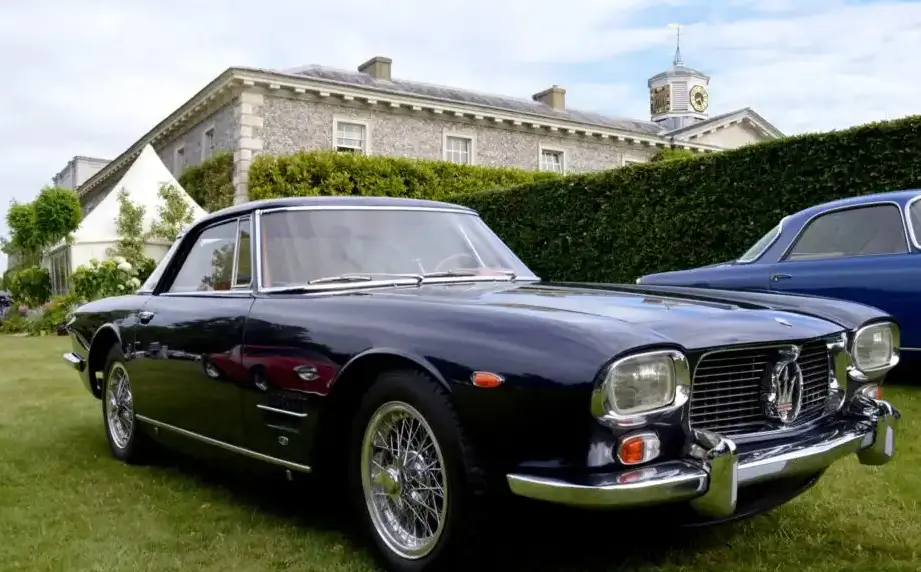
The Maserati 5000 GT, produced between 1959 and 1966, represents a pivotal moment in the Italian manufacturer’s history. Born from a challenge issued by Sir David Brown of Aston Martin to Maserati’s engineers, the 5000 GT was intended to be a grand tourer capable of rivaling the best British offerings. The car was a showcase of Italian engineering and design, and its 4.9-liter V8 engine became its defining characteristic. While relatively few were produced – approximately 34 examples – the 5000 GT established Maserati as a builder of high-performance, luxurious automobiles. This variant, equipped with the 4.9-liter V8 producing 325 horsepower, was the standard configuration for the model, representing the pinnacle of Maserati’s engineering capabilities at the time.
Technical Specifications
| Brand | Maserati |
| Model | 5000 GT |
| Generation | 5000 GT |
| Type (Engine) | 4.9 V8 (325 Hp) |
| Start of production | 1959 |
| End of production | 1966 |
| Powertrain Architecture | Internal Combustion engine |
| Body type | Coupe |
| Seats | 4 |
| Doors | 2 |
| Fuel consumption (combined) | 18 l/100 km (13.1 US mpg, 15.7 UK mpg, 5.6 km/l) |
| Fuel Type | Petrol (Gasoline) |
| Maximum speed | 270 km/h (167.77 mph) |
| Power | 325 Hp @ 5500 rpm |
| Power per litre | 65.8 Hp/l |
| Engine layout | Front, Longitudinal |
| Engine Model/Code | AM103 |
| Engine displacement | 4941 cm3 (301.52 cu. in.) |
| Number of cylinders | 8 |
| Engine configuration | V-engine |
| Cylinder Bore | 94 mm (3.7 in.) |
| Piston Stroke | 89 mm (3.5 in.) |
| Compression ratio | 8.5:1 |
| Number of valves per cylinder | 4 |
| Fuel injection system | Carburettor |
| Engine aspiration | Naturally aspirated engine |
| Valvetrain | DOHC |
| Trunk (boot) space – minimum | 453 l (16 cu. ft.) |
| Fuel tank capacity | 100 l (26.42 US gal | 22 UK gal) |
| Length | 4800 mm (188.98 in.) |
| Width | 1700 mm (66.93 in.) |
| Height | 1320 mm (51.97 in.) |
| Wheelbase | 2600 mm (102.36 in.) |
| Front track | 1390 mm (54.72 in.) |
| Rear (Back) track | 1360 mm (53.54 in.) |
| Drivetrain Architecture | The Internal combustion engine (ICE) drives the rear wheels of the vehicle. |
| Drive wheel | Rear wheel drive |
| Number of gears and type of gearbox | 4 gears, manual transmission |
| Front suspension | Wishbone, Transverse stabilizer |
| Rear suspension | Leaf spring |
| Front brakes | Disc |
| Rear brakes | Disc |
Powertrain & Engine Architecture
The heart of the 5000 GT is the AM103 engine, a 4.9-liter (4941 cc) naturally aspirated V8. This engine was derived from a design originally intended for a Maserati Formula One car, but adapted for grand touring purposes. It featured a 90-degree V-angle, a cast iron block, and aluminum cylinder heads. The engine utilized a dual overhead camshaft (DOHC) valvetrain with four valves per cylinder, contributing to its high-revving nature and substantial power output. Fuel delivery was managed by four Weber 3C-D COF carburetors, a common setup for high-performance engines of the era. The 325 horsepower was achieved at 5500 rpm, and the engine produced significant torque throughout the rev range. The standard transmission was a four-speed manual, chosen for its direct connection to the engine and its suitability for spirited driving. The engine’s longitudinal mounting within the chassis contributed to a balanced weight distribution.
Driving Characteristics
The Maserati 5000 GT, with its 325 hp and manual transmission, offered a driving experience that was both refined and exhilarating. Acceleration was brisk, and the car felt confident at high speeds. The four-speed manual gearbox, while not as sophisticated as later transmissions, provided a direct and engaging connection to the engine. Gear ratios were well-chosen to maximize the engine’s torque and power, allowing for strong acceleration in all gears. The car’s relatively long wheelbase and sophisticated suspension – featuring wishbones and a transverse stabilizer at the front, and leaf springs in the rear – provided a comfortable ride, even on imperfect road surfaces. However, the 5000 GT was not a lightweight car, and its weight (approximately 1,650 kg or 3,638 lbs) did impact its agility compared to smaller sports cars. The rear-wheel drive configuration provided a classic sports car feel, but required a skilled driver to manage its power effectively.
Equipment & Trim Levels
The Maserati 5000 GT was a luxury grand tourer, and as such, it was equipped with a high level of standard features. The interior was typically trimmed in high-quality leather, with wood veneer accents on the dashboard and door panels. Instruments were elegantly designed and clearly laid out. Power steering and power-assisted brakes were standard equipment, making the car easier to handle and control. Air conditioning was often specified as an option, as were electric windows. The 5000 GT was largely hand-built, and customers could request bespoke modifications and customizations to suit their individual preferences. The car’s exterior was typically finished in a vibrant color, reflecting its Italian heritage and sporting character.
Chassis & Braking
The 5000 GT utilized a robust chassis constructed from steel. The suspension system was designed to provide a balance between comfort and handling. As mentioned, the front suspension employed wishbones and a transverse stabilizer, while the rear suspension utilized leaf springs. This combination provided a relatively compliant ride while maintaining good control. Braking was handled by disc brakes on all four wheels, a relatively advanced feature for the late 1950s and early 1960s. The brakes provided ample stopping power, although they lacked the sophistication of modern anti-lock braking systems. The car’s steering was a recirculating ball system, which provided a good feel for the road but required some effort at low speeds.
Market Reception & Comparison
The Maserati 5000 GT was well-received by automotive journalists and enthusiasts alike. It was praised for its powerful engine, luxurious interior, and elegant styling. Critics noted that it was a worthy competitor to the best grand tourers from Aston Martin and Ferrari. However, its high price and limited production run meant that it remained an exclusive vehicle, accessible only to a select few. Compared to other Maserati models of the era, the 5000 GT represented a significant step up in terms of performance and luxury. It was more powerful and refined than the 3500 GT, and it offered a more exclusive and prestigious image. Fuel economy, at 18 l/100 km, was typical for a high-performance V8 of the time, but it was considerably worse than the smaller-engined Maserati models.
Legacy
The Maserati 5000 GT remains a highly sought-after collector’s car today. Its rarity, historical significance, and stunning design contribute to its enduring appeal. The AM103 V8 engine is considered a masterpiece of Italian engineering, and its robust construction has ensured that many examples remain in running condition. While maintenance can be expensive due to the car’s age and complexity, the 5000 GT offers a unique and rewarding driving experience. The car’s influence can be seen in later Maserati models, which continued to emphasize performance, luxury, and Italian style. In the used car market, well-maintained examples of the 5000 GT can command prices well into the six-figure range, reflecting its status as a true automotive icon.
