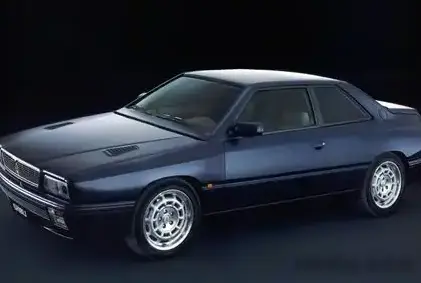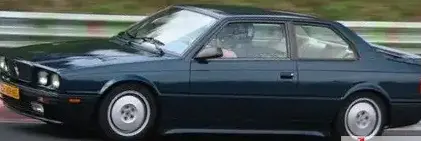
The Maserati Biturbo 2.24V, produced between 1988 and 1992, represents a pivotal point in the storied Italian manufacturer’s history. Falling within the second generation of the Biturbo family (often referred to as the ‘90’ series), this variant aimed to blend Maserati’s grand touring heritage with a more accessible price point, though still maintaining a distinctly premium experience. The 2.24V designation refers to the engine’s 2.2-liter displacement and four valves per cylinder, a significant upgrade over earlier Biturbo models. It was offered primarily as a four-door sedan, though limited numbers were also available as coupes. This model sought to address criticisms of earlier Biturbos regarding refinement and long-term reliability, while still delivering the performance expected of a Maserati.
Technical Specifications
| Brand | Maserati |
| Model | Biturbo |
| Generation | Biturbo (90 Series) |
| Type (Engine) | 2.24V (245 Hp) |
| Start of Production | 1988 |
| End of Production | 1992 |
| Powertrain Architecture | Internal Combustion Engine |
| Body Type | Sedan |
| Seats | 5 |
| Fuel Type | Petrol (Gasoline) |
| Maximum Speed | 230 km/h (142.92 mph) |
| Power | 245 Hp |
| Engine Model/Code | AM331 |
| Engine Aspiration | Naturally Aspirated |
| Fuel Tank Capacity | 80 l (21.13 US gal | 17.6 UK gal) |
Powertrain & Engine Architecture
The heart of the Biturbo 2.24V is the AM331 engine, a 2.2-liter, naturally aspirated V6. This engine represented a significant evolution from the earlier 2.0-liter and 2.8-liter Biturbo engines. The key upgrade was the introduction of four valves per cylinder (hence the “4V” designation), increasing breathing efficiency and allowing for a higher redline. The engine utilized a Bosch Motronic fuel injection system, managing fuel delivery and ignition timing for optimal performance and emissions control. The valvetrain employed double overhead camshafts (DOHC), further enhancing the engine’s responsiveness. Unlike some of its turbocharged siblings, the 2.24V relied solely on atmospheric intake, resulting in a more linear power delivery. The engine produced 245 horsepower at approximately 6250 rpm and 200 lb-ft of torque at 4500 rpm. While Maserati did not offer an automatic transmission option for this specific variant in the US market, European models were available with a 5-speed manual transmission, and a 4-speed automatic. The automatic, while offering convenience, did slightly diminish the car’s acceleration compared to the manual.
Driving Characteristics
The Biturbo 2.24V offered a distinctly Italian driving experience. The naturally aspirated engine provided a smooth and responsive power delivery, lacking the turbo lag present in some of the other Biturbo models. Acceleration was brisk, with a 0-60 mph time of around 6.5 seconds for the manual transmission version. The automatic, while comfortable, added approximately half a second to this time. The chassis, though based on a steel monocoque, was relatively lightweight, contributing to agile handling. The suspension, featuring independent suspension all around, provided a comfortable ride, though it could feel somewhat soft by modern standards. Steering was unassisted, offering a direct and communicative feel, but requiring more effort at low speeds. The car’s balance was generally good, though it could exhibit a tendency towards understeer when pushed hard. Compared to the Biturbo 2.8, the 2.24V offered a more refined and balanced driving experience, sacrificing some outright power for improved responsiveness and handling.
Equipment & Trim Levels
The Biturbo 2.24V was positioned as a mid-range offering within the Biturbo lineup. Standard equipment included leather upholstery, power windows, central locking, and air conditioning. The interior was generally well-appointed, though the materials and build quality, while improved over earlier Biturbos, still didn’t quite match those of its German rivals. Optional extras included a sunroof, upgraded audio system, and metallic paint. The dashboard layout was relatively straightforward, with clearly marked gauges and controls. Interior color options were limited, typically consisting of shades of beige, gray, and black. The exterior styling remained largely consistent with other Biturbo models, featuring a wedge-shaped silhouette and distinctive Maserati grille. The 2.24V did receive some minor cosmetic updates, such as revised wheel designs and body-colored bumpers.
Chassis & Braking
The Biturbo 2.24V utilized a steel monocoque chassis, providing a good balance of strength and weight. The suspension consisted of independent double wishbones at the front and a semi-trailing arm setup at the rear. Stabilizer bars were fitted to both axles, helping to reduce body roll during cornering. Braking was initially provided by ventilated discs at the front and drums at the rear. Later models saw the introduction of rear disc brakes, improving stopping performance. The braking system was not particularly powerful by modern standards, and ABS was not available on all models. The steering was unassisted, providing a direct and communicative feel, but requiring more effort at low speeds. The car’s relatively lightweight construction helped to offset the limitations of the braking system.
Market Reception & Comparison
The Biturbo 2.24V received mixed reviews from automotive critics. While praised for its stylish design, responsive engine, and engaging driving experience, it was also criticized for its occasionally questionable build quality and reliability. Compared to the turbocharged Biturbo models, the 2.24V was seen as a more refined and predictable performer, but lacking the same level of outright excitement. Against its German rivals, such as the BMW 5 Series and Mercedes-Benz E-Class, the Biturbo 2.24V offered a more distinctive character and a lower price point, but fell short in terms of overall refinement and long-term reliability. Fuel economy was reasonable for a V6 engine of this era, averaging around 18-22 mpg in mixed driving. The 2.24V was generally considered a better value proposition than the more expensive Biturbo 2.8, offering a similar level of performance and refinement at a lower cost.
Legacy
The Biturbo 2.24V represents a significant chapter in Maserati’s history. It was an attempt to broaden the brand’s appeal and compete more effectively in the executive car market. While it didn’t achieve the sales success of its German rivals, it helped to establish Maserati as a credible alternative. Today, the Biturbo 2.24V is a sought-after classic car, particularly among enthusiasts who appreciate its unique character and Italian flair. The AM331 engine, while not without its quirks, is generally considered to be a robust and reliable unit, provided it has been properly maintained. Parts availability can be a challenge, but a dedicated network of specialists and suppliers exists to support Biturbo owners. The car’s relatively affordable price point makes it an accessible entry point into the world of classic Maserati ownership. The Biturbo 2.24V remains a testament to Maserati’s enduring passion for performance and style.