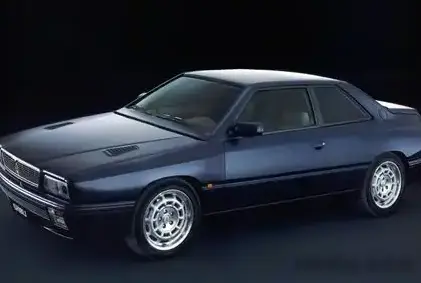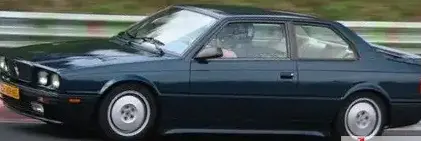
The Maserati Biturbo 425, produced between 1984 and 1987, represents a pivotal moment in the storied Italian manufacturer’s history. This model, falling within the first generation of the Biturbo family (Tipo AM332), was Maserati’s attempt to enter the volume market with a more accessible, yet still luxurious, sports sedan. It marked a departure from the traditionally hand-built, low-volume grand tourers that had defined the brand, embracing more modern manufacturing techniques and a smaller displacement, turbocharged engine. The 425 designation refers to the engine displacement in cubic centimeters, and the 190 horsepower output positioned it as a performance-oriented offering within the initial Biturbo lineup.
Technical Specifications
| Brand | Maserati |
| Model | Biturbo |
| Generation | Biturbo (Tipo AM332) |
| Type (Engine) | 425 (190 Hp) |
| Start of Production | 1984 |
| End of Production | 1987 |
| Powertrain Architecture | Internal Combustion Engine |
| Body Type | Sedan |
| Fuel Type | Petrol (Gasoline) |
| Power | 190 Hp |
| Engine Model/Code | AM332 |
| Engine Aspiration | Naturally Aspirated |
| Engine Oil Capacity | 6 l (6.34 US qt | 5.28 UK qt) |
| Coolant Capacity | 8.5 l (8.98 US qt | 7.48 UK qt) |
Powertrain & Engine Architecture
The heart of the Biturbo 425 is the AM332 engine, a 2.5-liter, naturally aspirated V6. While later Biturbo models would become synonymous with turbocharging, the initial 425 utilized a naturally aspirated configuration to provide a more linear power delivery. The engine features a 90-degree V6 layout, contributing to its inherent balance and smoothness. It employed a single overhead camshaft per cylinder bank, operating two valves per cylinder (three valves per cylinder were introduced in later iterations). Fuel delivery was managed by Bosch mechanical fuel injection, a system chosen for its reliability and relative simplicity compared to emerging electronic fuel injection systems of the time. The engine’s block was constructed from cast iron, while the cylinder heads were made of aluminum alloy, a common practice to reduce weight. The AM332 produced 190 horsepower at 6000 rpm and approximately 184 lb-ft of torque at 4500 rpm. The engine was paired with a ZF-sourced 5-speed manual transmission, or a 3-speed automatic transmission, the latter being less common and often criticized for its performance characteristics.
Driving Characteristics
The Biturbo 425, even in its naturally aspirated form, offered a distinctly Italian driving experience. The engine provided ample power for spirited driving, though it lacked the explosive acceleration of the later turbocharged models. The 5-speed manual transmission allowed drivers to fully exploit the engine’s powerband, while the automatic, while offering convenience, noticeably dulled the car’s responsiveness. The car’s relatively lightweight construction (around 3,200 lbs) contributed to its agile handling. Steering was direct and communicative, providing a good sense of connection to the road. The suspension, featuring independent suspension all around, offered a comfortable ride without sacrificing handling precision. However, the car’s braking system, utilizing ventilated discs at the front and drums at the rear, could feel somewhat inadequate under hard braking, particularly given the car’s performance potential. The automatic transmission, with its wider gear ratios, prioritized comfort and fuel economy over outright performance, resulting in a more relaxed, but less engaging, driving experience.
Equipment & Trim Levels
The Biturbo 425 was positioned as a relatively well-equipped vehicle, aiming to compete with other European sports sedans of the era. Standard features included leather upholstery, power windows, central locking, and air conditioning. The interior design was typically Italian, with a focus on style and comfort. The dashboard featured wood trim and analog gauges, creating a classic and luxurious ambiance. Optional extras included a sunroof, upgraded audio system, and metallic paint finishes. The interior trim was generally conservative, with a focus on quality materials and craftsmanship. The Biturbo 425 didn’t offer the extensive customization options of some of its more exclusive Maserati siblings, but it provided a comfortable and well-appointed cabin for its price point.
Chassis & Braking
The Biturbo 425 utilized a steel unibody construction, providing a solid and rigid platform. The suspension system consisted of independent double wishbones at the front and a De Dion axle with a Watts linkage at the rear. This setup aimed to provide a balance between ride comfort and handling performance. The braking system, as mentioned previously, featured ventilated discs at the front and drum brakes at the rear. While adequate for normal driving conditions, the rear drum brakes were a point of criticism, particularly for a car marketed as a performance sedan. The steering system was a recirculating ball setup, providing precise and responsive steering feel. The car’s wheelbase was relatively short, contributing to its agile handling characteristics. Stabilizer bars were fitted to both the front and rear axles to reduce body roll during cornering.
Market Reception & Comparison
The Biturbo 425 received mixed reviews upon its launch. Critics praised its stylish design, comfortable interior, and engaging driving experience. However, concerns were raised about its reliability, particularly with the Bosch fuel injection system and the quality control of some components. Compared to its siblings, such as the later turbocharged Biturbo models, the 425 offered a more refined and predictable driving experience, but lacked the outright performance of its boosted counterparts. It was also positioned as a more affordable alternative to the larger and more expensive Maserati Quattroporte. Against competitors like the Alfa Romeo GTV6 and BMW 5 Series, the Biturbo 425 offered a unique blend of Italian style and performance, but its reliability issues often overshadowed its strengths. Fuel economy was reasonable for the time, averaging around 18-22 mpg in mixed driving conditions.
Legacy
The Maserati Biturbo 425, despite its relatively short production run, played a crucial role in the brand’s history. It represented Maserati’s first serious attempt to enter the volume market, and while it wasn’t without its flaws, it laid the foundation for the Biturbo family that would define the company for the next decade. Today, the Biturbo 425 is a sought-after classic car, particularly among Maserati enthusiasts. While maintenance can be challenging due to the car’s age and the availability of parts, the AM332 engine is generally considered to be relatively robust when properly maintained. The car’s unique styling and engaging driving experience continue to appeal to collectors and enthusiasts alike. The Biturbo 425 serves as a reminder of a time when Maserati dared to challenge the established order and offer a taste of Italian luxury and performance to a wider audience. The automatic transmission versions are generally less desirable in the collector market due to their diminished performance.