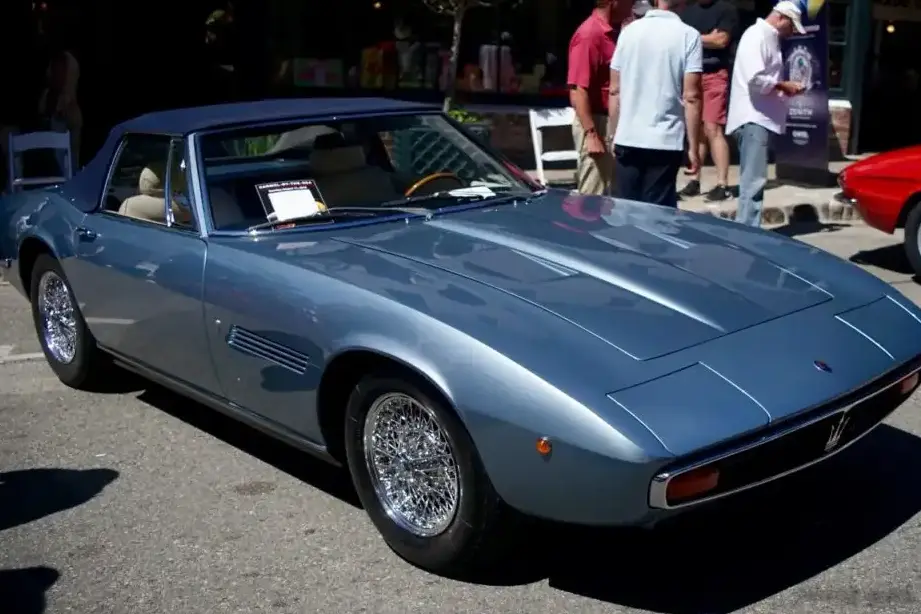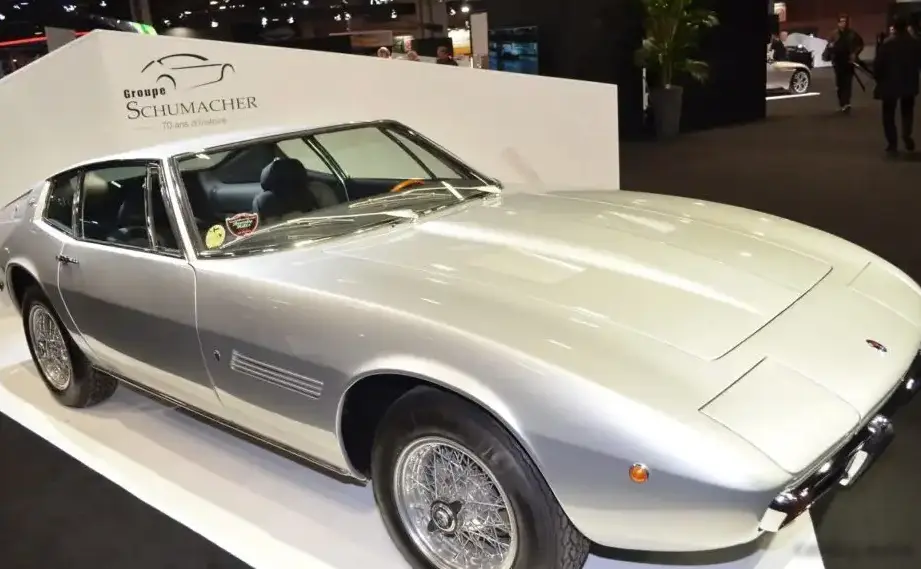
The Maserati Ghibli I (AM115) SS 5.0 V8, produced between June 1969 and December 1973, represents a high-performance iteration of the first-generation Ghibli. Positioned as the flagship variant, the “SS” (Super Sport) model offered a significant power increase over the standard Ghibli, solidifying Maserati’s reputation for building luxurious, yet potent grand tourers. The AM115 chassis underpinned this model, a platform notable for its blend of Italian styling and robust mechanical engineering. This variant was aimed at discerning customers who desired both exhilarating performance and the prestige associated with the Maserati marque.
Technical Specifications
| Brand | Maserati |
| Model | Ghibli |
| Generation | Ghibli I (AM115) |
| Type (Engine) | SS 5.0 V8 (335 Hp) |
| Start of production | June, 1969 |
| End of production | December, 1973 |
| Powertrain Architecture | Internal Combustion engine |
| Body type | Coupe, Fastback |
| Seats | 2 |
| Doors | 2 |
| Fuel consumption (combined) | 15.7-14.7 l/100 km (15 – 16 US mpg, 18 – 19.2 UK mpg, 6.4 – 6.8 km/l) |
| Fuel Type | Petrol (Gasoline) |
| Acceleration 0 – 100 km/h | 5.3 sec |
| Acceleration 0 – 62 mph | 5.3 sec |
| Acceleration 0 – 60 mph | 5 sec |
| Maximum speed | 280 km/h (173.98 mph) |
| Weight-to-power ratio | 4.9 kg/Hp, 202.9 Hp/tonne |
| Weight-to-torque ratio | 3.6 kg/Nm, 279.2 Nm/tonne |
| Power | 335 Hp @ 5500 rpm |
| Power per litre | 68 Hp/l |
| Torque | 461 Nm @ 5500 rpm (340.02 lb.-ft. @ 5500 rpm) |
| Engine layout | Front, Longitudinal |
| Engine Model/Code | AM115/S49 |
| Engine displacement | 4930 cm3 (300.85 cu. in.) |
| Number of cylinders | 8 |
| Engine configuration | V-engine |
| Cylinder Bore | 93.9 mm (3.7 in.) |
| Piston Stroke | 89 mm (3.5 in.) |
| Compression ratio | 8.5:1 |
| Number of valves per cylinder | 2 |
| Fuel injection system | Carburettor |
| Engine aspiration | Naturally aspirated engine |
| Valvetrain | DOHC |
| Engine oil capacity | 13 l (13.74 US qt | 11.44 UK qt) |
| Coolant | 14 l (14.79 US qt | 12.32 UK qt) |
| Kerb Weight | 1651 kg (3639.83 lbs.) |
| Max. weight | 1850 kg (4078.55 lbs.) |
| Max load | 199 kg (438.72 lbs.) |
| Trunk (boot) space – minimum | 680 l (24.01 cu. ft.) |
| Fuel tank capacity | 100 l (26.42 US gal | 22 UK gal) |
| Length | 4690 mm (184.65 in.) |
| Width | 1790 mm (70.47 in.) |
| Height | 1160 mm (45.67 in.) |
| Wheelbase | 2550 mm (100.39 in.) |
| Front track | 1440 mm (56.69 in.) |
| Rear (Back) track | 1420 mm (55.91 in.) |
| Drivetrain Architecture | Rear wheel drive |
| Drive wheel | Rear wheel drive |
| Number of gears and type of gearbox | 5 gears, manual transmission |
| Front suspension | Independent coil spring, Torsion |
| Rear suspension | Coil spring, Torsion |
| Front brakes | Ventilated discs |
| Rear brakes | Ventilated discs |
| Steering type | Cone worm with recirculation balls |
| Tires size | 215/70 R15 |
| Wheel rims size | 7.5J x 15 |
Powertrain & Engine Architecture
The heart of the Ghibli SS 5.0 was its 4.9-liter, naturally aspirated V8 engine, designated AM115/S49. This engine was a significant upgrade from the standard Ghibli’s 4.7-liter unit, achieving the 335 horsepower output through a combination of increased displacement, revised cylinder heads, and higher compression. The engine utilized a traditional carburetor fuel system, a common practice for high-performance engines of the era. The dual overhead camshaft (DOHC) valvetrain, with two valves per cylinder, contributed to the engine’s strong breathing and high-revving nature. The engine was mounted longitudinally in the front of the chassis, driving the rear wheels. The five-speed manual transmission was the only gearbox option for this model, chosen to complement the engine’s power and provide a more engaging driving experience.
Driving Characteristics
The Ghibli SS 5.0 delivered a thrilling driving experience. Its 335 horsepower and 340 lb-ft of torque allowed for a 0-60 mph sprint in around 5 seconds and a top speed of 174 mph. The five-speed manual transmission provided precise gear changes, and the rear-wheel-drive layout offered a classic sports car feel. Compared to the standard Ghibli, the SS model felt noticeably more responsive and eager to accelerate. While not as nimble as some contemporary sports cars due to its size and weight, the Ghibli SS offered a comfortable and refined ride, making it well-suited for long-distance grand touring. The gear ratios were tuned to maximize acceleration in the mid-range, providing strong pull for overtaking maneuvers.
Equipment & Trim Levels
The Ghibli SS 5.0 was a luxury vehicle, and as such, came standard with a comprehensive list of features. The interior was typically trimmed in high-quality leather, with wood veneer accents on the dashboard and door panels. Power steering, electric windows, and a sophisticated heating and ventilation system were standard. Optional extras included air conditioning, a sunroof, and a premium sound system. The instrument panel featured a full complement of gauges, including a speedometer, tachometer, oil pressure gauge, and water temperature gauge. The overall aesthetic was one of understated elegance, reflecting Maserati’s commitment to craftsmanship and refinement.
Chassis & Braking
The Ghibli I utilized a steel unibody construction, providing a strong and rigid chassis. The suspension system consisted of independent coil springs and torsion bars at the front, and a coil spring and torsion bar setup at the rear. This configuration provided a good balance between ride comfort and handling. The Ghibli SS 5.0 was equipped with ventilated disc brakes on all four wheels, providing ample stopping power. The steering system was a cone worm with recirculation balls, offering precise and responsive control. The car rode on 7.5J x 15 inch wheels, fitted with 215/70 R15 tires.
Market Reception & Comparison
The Ghibli SS 5.0 was well-received by automotive critics, who praised its performance, styling, and luxurious interior. It was often compared to other high-performance grand tourers of the era, such as the Ferrari Daytona and the Lamborghini Espada. While the Ghibli SS was generally considered to be more refined and comfortable than its Italian rivals, it was also more expensive than some competitors. Fuel economy was, unsurprisingly, poor, averaging around 15-16 mpg. Compared to the standard Ghibli, the SS model offered a significant performance upgrade, but at a higher price point. The standard Ghibli appealed to buyers seeking a stylish and comfortable grand tourer, while the SS model catered to those who prioritized performance.
Legacy
The Maserati Ghibli I SS 5.0 remains a highly sought-after classic car today. Its combination of Italian styling, powerful V8 engine, and luxurious interior has made it a favorite among collectors and enthusiasts. The AM115/S49 engine is generally considered to be a robust and reliable unit, although regular maintenance is essential to keep it in good condition. Parts availability can be a challenge, but a dedicated network of specialists and suppliers exists to support owners. The Ghibli SS 5.0 represents a high point in Maserati’s history, and its enduring appeal is a testament to the quality of its design and engineering.