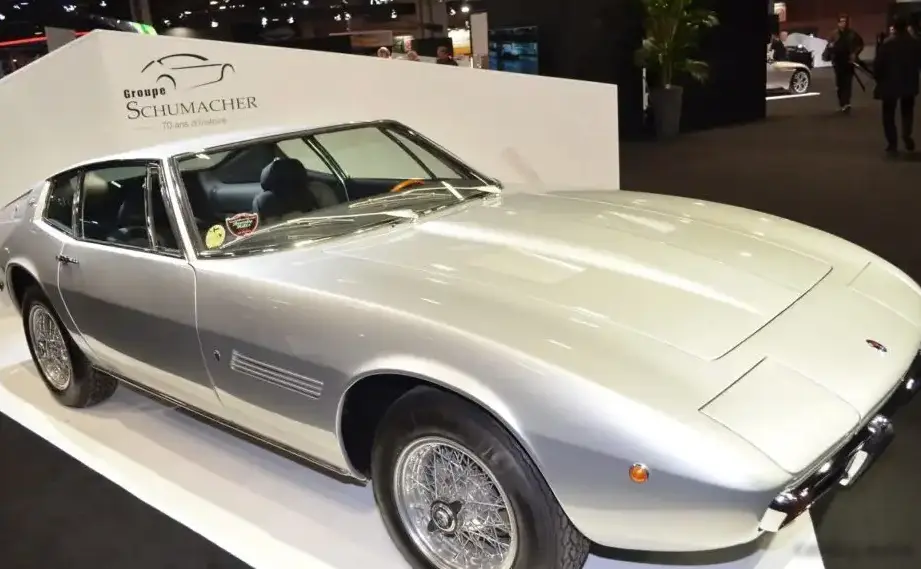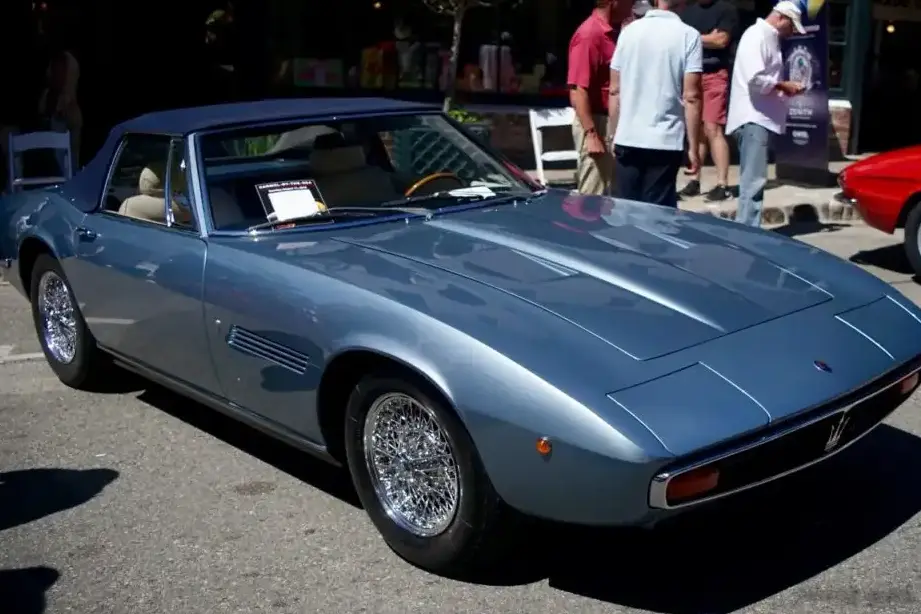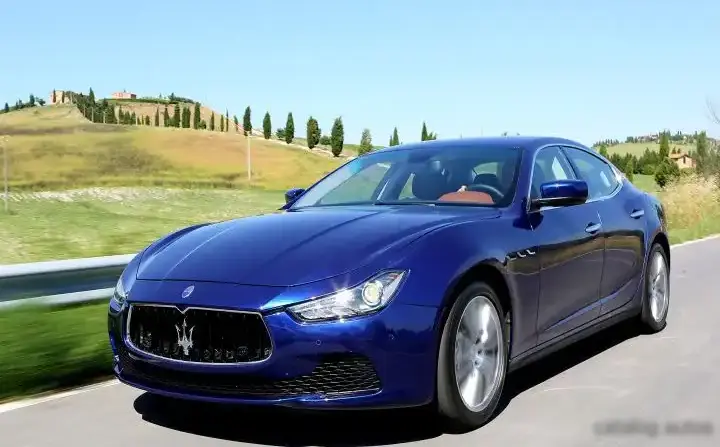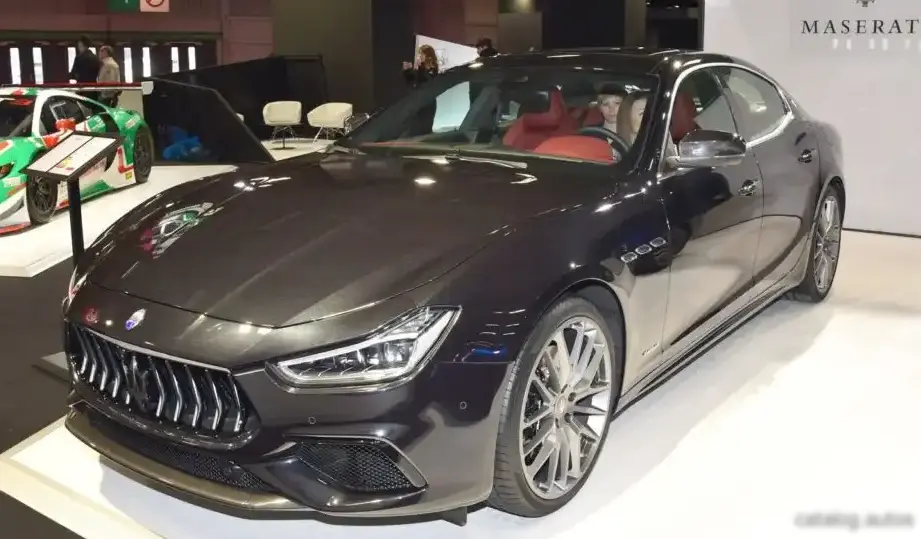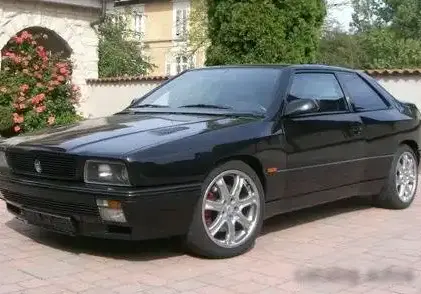
The Maserati Ghibli II 2.8 24V Biturbo, produced between 1992 and 1997, represented a significant evolution of the Ghibli nameplate. Falling within the second generation (1992-1997) of the Ghibli, this variant aimed to blend Maserati’s grand touring heritage with the forced induction technology becoming increasingly prevalent in the early 1990s. Positioned as a performance-oriented offering within the Ghibli II range, it served as a more accessible alternative to the flagship models while still delivering a distinctly Italian driving experience. The Ghibli II was a departure from the earlier, more classically styled Ghibli, adopting a more contemporary, wedge-shaped design penned by Marcello Gandini of Bertone.
Technical Specifications
| Brand | Maserati |
| Model | Ghibli |
| Generation | Ghibli II |
| Type (Engine) | 2.8 24V Biturbo (284 Hp) |
| Start of production | 1992 |
| End of production | 1997 |
| Powertrain Architecture | Internal Combustion engine |
| Body type | Coupe |
| Seats | 4 |
| Doors | 2 |
| Fuel consumption (urban) | 17.9 l/100 km (13.1 US mpg) |
| Fuel consumption (extra urban) | 12.9 l/100 km (18.2 US mpg) |
| Fuel Type | Petrol (Gasoline) |
| Acceleration 0 – 100 km/h | 5.8 sec |
| Acceleration 0 – 62 mph | 5.8 sec |
| Acceleration 0 – 60 mph | 5.5 sec |
| Maximum speed | 260 km/h (161.56 mph) |
| Weight-to-power ratio | 4.8 kg/Hp |
| Weight-to-torque ratio | 3.4 kg/Nm |
| Power | 284 Hp @ 6000 rpm |
| Power per litre | 101.8 Hp/l |
| Torque | 397 Nm @ 3500 rpm (292.81 lb.-ft. @ 3500 rpm) |
| Engine layout | Front, Longitudinal |
| Engine Model/Code | AM336 |
| Engine displacement | 2790 cm3 (170.26 cu. in.) |
| Number of cylinders | 6 |
| Engine configuration | V-engine |
| Cylinder Bore | 94 mm (3.7 in.) |
| Piston Stroke | 67 mm (2.64 in.) |
| Compression ratio | 7.6:1 |
| Number of valves per cylinder | 4 |
| Fuel injection system | Multi-port manifold injection |
| Engine aspiration | Turbocharger, Intercooler |
| Valvetrain | DOHC |
| Engine oil capacity | 6 l (6.34 US qt | 5.28 UK qt) |
| Coolant | 8.5 l (8.98 US qt | 7.48 UK qt) |
| Kerb Weight | 1365 kg (3009.31 lbs.) |
| Max. weight | 1850 kg (4078.55 lbs.) |
| Max load | 485 kg (1069.24 lbs.) |
| Trunk (boot) space – minimum | 420 l (14.83 cu. ft.) |
| Fuel tank capacity | 80 l (21.13 US gal | 17.6 UK gal) |
| Length | 4223 mm (166.26 in.) |
| Width | 1775 mm (69.88 in.) |
| Height | 1300 mm (51.18 in.) |
| Wheelbase | 2541 mm (100.04 in.) |
| Front track | 1515 mm (59.65 in.) |
| Rear (Back) track | 1510 mm (59.45 in.) |
| Drivetrain Architecture | Rear wheel drive |
| Number of gears | 6 |
| Type of gearbox | Manual transmission |
| Front suspension | Wishbone |
| Rear suspension | Coil spring |
| Front brakes | Ventilated discs |
| Rear brakes | Ventilated discs |
| Assisting systems | ABS (Anti-lock braking system) |
| Steering type | Steering rack and pinion |
| Power steering | Hydraulic Steering |
| Tires size | 205/45 R16; 225/45 R16 |
| Wheel rims size | 16 |
Powertrain & Engine Architecture
At the heart of the Ghibli II 2.8 Biturbo lies the AM336 engine, a 2.8-liter V6. This engine was a key component of Maserati’s strategy to offer performance without the expense of their larger displacement V8s. The AM336 featured a 90-degree V-angle, contributing to a smoother engine operation. It employed a single turbocharger with an intercooler to boost power output. The engine utilized multi-port fuel injection, managed by an electronic control unit (ECU), for precise fuel delivery. The valvetrain consisted of a dual overhead camshaft (DOHC) design with four valves per cylinder, enhancing breathing and overall efficiency. The 6-speed manual transmission was the only transmission option available with this engine, providing drivers with full control over the power delivery. The engine’s longitudinal mounting and rear-wheel-drive configuration were consistent with Maserati’s traditional grand touring layout.
Driving Characteristics
The 284 horsepower and 292.81 lb-ft of torque delivered by the 2.8-liter Biturbo engine provided a spirited driving experience. Acceleration to 60 mph was achieved in approximately 5.5 seconds, and the car could reach a top speed of 161.56 mph. Compared to the larger displacement V6 and V8 Ghibli II models, the 2.8 Biturbo offered a more nimble feel due to its lighter weight. The turbocharger did introduce a degree of turbo lag, but once spooled up, the engine delivered a strong surge of power. The 6-speed manual transmission allowed for precise gear selection, maximizing the engine’s performance potential. While not as refined as the higher-end Ghibli models, the 2.8 Biturbo provided a satisfying balance of performance and driver engagement.
Equipment & Trim Levels
The Ghibli II 2.8 Biturbo was generally well-equipped, reflecting Maserati’s commitment to luxury. Standard features included leather upholstery, power windows, power locks, and air conditioning. The interior design was characterized by a blend of Italian craftsmanship and contemporary styling. Optional extras included a sunroof, upgraded audio systems, and various trim options. The dashboard layout was driver-focused, with clearly marked gauges and controls. While not as lavishly appointed as the top-of-the-line Ghibli models, the 2.8 Biturbo offered a comfortable and refined interior environment.
Chassis & Braking
The Ghibli II 2.8 Biturbo featured an independent suspension system, with wishbone suspension at the front and a coil spring setup at the rear. This configuration provided a good balance of ride comfort and handling performance. Ventilated disc brakes were fitted to all four wheels, providing ample stopping power. An anti-lock braking system (ABS) was standard, enhancing safety and control. The steering system utilized a rack and pinion design with hydraulic power assistance, offering precise and responsive steering feel. The car rode on 16-inch alloy wheels, typically fitted with 205/45 or 225/45 series tires.
Market Reception & Comparison
The Ghibli II 2.8 Biturbo was generally well-received by automotive critics, who praised its performance, handling, and styling. However, some critics noted the presence of turbo lag and the relatively high price compared to other sports coupes. Compared to the Ghibli II 3.2, the 2.8 Biturbo offered a more affordable entry point into the Maserati lineup, but with a noticeable reduction in power and refinement. The 2.8 Biturbo also offered better fuel economy than the larger displacement models, although fuel consumption remained relatively high by modern standards. Reliability was a mixed bag, with some owners reporting issues with the turbocharger and electrical systems.
Legacy
The Maserati Ghibli II 2.8 Biturbo represents a transitional period for the brand, bridging the gap between traditional Italian grand touring and the adoption of modern forced induction technology. While not as iconic as some of Maserati’s earlier models, the Ghibli II 2.8 Biturbo remains a desirable classic car for enthusiasts. The AM336 engine, while prone to some reliability issues, is still regarded as a capable and engaging powerplant. Today, well-maintained examples of the Ghibli II 2.8 Biturbo are sought after by collectors and enthusiasts, offering a unique blend of Italian style, performance, and exclusivity. The car’s relative affordability compared to other classic Maseratis has also contributed to its enduring appeal in the used car market.