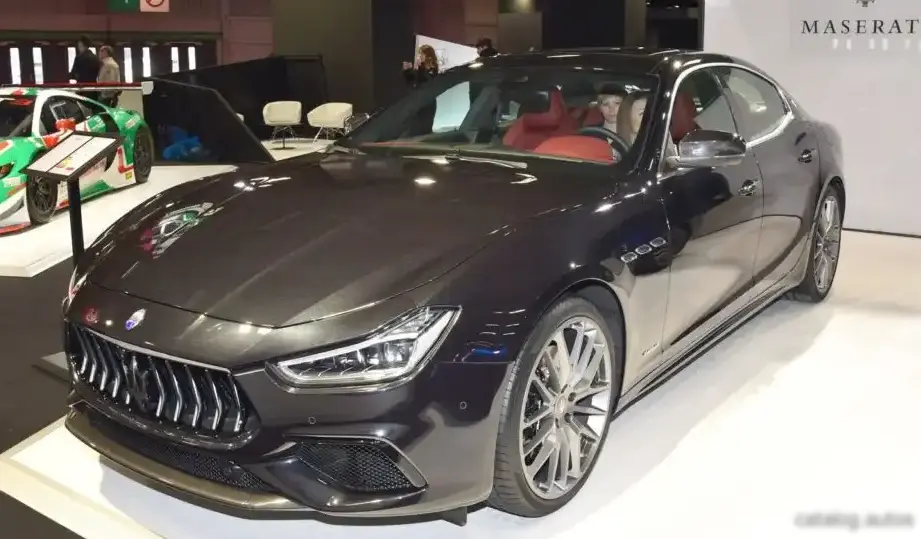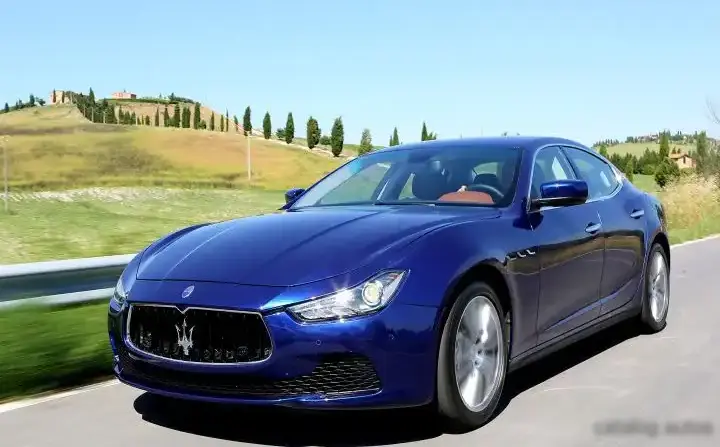
The Maserati Ghibli III (M157), specifically the 3.0 V6 275 horsepower variant with an automatic transmission, represents a pivotal moment in Maserati’s strategy to broaden its appeal and compete more directly with established German luxury sedans. Introduced in 2013 and continuing through 2017, this iteration of the Ghibli marked a departure from the brand’s traditionally ultra-exclusive positioning, aiming for a higher volume sales bracket. It was built on the M157 platform, a modified version of the Chrysler/Lancia Thema platform, reflecting Maserati’s then-recent alliance with Chrysler Group. This particular engine and transmission combination served as a core offering within the Ghibli range, balancing performance with accessibility.
Technical Specifications
| Brand | Maserati |
| Model | Ghibli |
| Generation | Ghibli III (M157) |
| Type (Engine) | 3.0 V6 (275 Hp) Automatic |
| Start of production | 2013 |
| End of production | 2017 |
| Powertrain Architecture | Internal Combustion engine |
| Body type | Sedan |
| Seats | 5 |
| Doors | 4 |
| Fuel consumption (urban) | 7.7 l/100 km (30.5 US mpg) |
| Fuel consumption (extra urban) | 4.9 l/100 km (48 US mpg) |
| Fuel consumption (combined) | 5.9 l/100 km (39.9 US mpg) |
| CO2 emissions | 158 g/km |
| Fuel Type | Diesel |
| Acceleration 0 – 100 km/h | 6.3 sec |
| Acceleration 0 – 62 mph | 6.3 sec |
| Acceleration 0 – 60 mph | 6 sec |
| Maximum speed | 250 km/h (155.34 mph) |
| Power | 275 Hp @ 4000 rpm |
| Torque | 600 Nm @ 2000-2600 rpm (442.54 lb.-ft.) |
| Engine layout | Front, Longitudinal |
| Engine Model/Code | A630HP |
| Engine displacement | 2987 cm3 (182.28 cu. in.) |
| Number of cylinders | 6 |
| Engine configuration | V-engine |
| Cylinder Bore | 83 mm (3.27 in.) |
| Piston Stroke | 92 mm (3.62 in.) |
| Compression ratio | 16.5:1 |
| Fuel injection system | Diesel Commonrail |
| Engine aspiration | Turbocharger, Intercooler |
| Engine oil capacity | 9.1 l (9.62 US qt | 8.01 UK qt) |
| Coolant capacity | 13 l (13.74 US qt | 11.44 UK qt) |
| Kerb Weight | 1835 kg (4045.48 lbs.) |
| Trunk (boot) space (minimum) | 500 l (17.66 cu. ft.) |
| Fuel tank capacity | 70 l (18.49 US gal | 15.4 UK gal) |
| Length | 4971 mm (195.71 in.) |
| Width | 1945 mm (76.57 in.) |
| Width including mirrors | 2100 mm (82.68 in.) |
| Height | 1461 mm (57.52 in.) |
| Wheelbase | 2998 mm (118.03 in.) |
| Front track | 1635 mm (64.37 in.) |
| Rear track | 1653 mm (65.08 in.) |
| Minimum turning circle | 11.7 m (38.39 ft.) |
| Drivetrain Architecture | Rear wheel drive |
| Number of gears | 8 |
| Gearbox type | Automatic transmission |
| Front brakes | Ventilated discs |
| Rear brakes | Ventilated discs |
| Tire size | 235/50 R18 |
| Wheel rims size | 18 |
Powertrain & Engine Architecture
The heart of this Ghibli variant is the A630HP 3.0-liter V6 diesel engine. This engine, developed in collaboration with VM Motori, utilizes a common-rail direct injection system and a variable geometry turbocharger with an intercooler. The engine’s design prioritizes torque delivery, making it well-suited for effortless cruising and responsive acceleration. The 600 Nm (442.54 lb-ft) of torque, available from 2000-2600 rpm, provides strong pulling power. The 16.5:1 compression ratio is typical for a diesel engine, contributing to its efficiency. The engine is longitudinally mounted in the front of the vehicle, driving the rear wheels. Paired with the engine is an 8-speed automatic transmission, sourced from ZF. This transmission offers smooth shifts and contributes to the Ghibli’s refined driving experience. The transmission’s gear ratios are tuned for a balance between fuel economy and performance, with closer ratios in the lower gears for quicker acceleration and taller ratios for efficient highway cruising.
Driving Characteristics
The 275 hp and 600 Nm of torque deliver a 0-60 mph time of around 6 seconds, making it a reasonably quick sedan. However, the focus isn’t on outright speed, but rather on providing a relaxed and refined driving experience. The automatic transmission contributes to this, offering seamless gear changes and eliminating the need for constant shifting. Compared to the more powerful Ghibli S Q4 (with its 404 hp V6 and all-wheel drive), this variant feels less urgent in its acceleration. It also differs significantly from the Ghibli’s petrol engine options, offering superior fuel economy and a broader torque curve. The rear-wheel-drive configuration provides a balanced feel, although it lacks the added traction of the all-wheel-drive models in inclement weather.
Equipment & Trim Levels
The 3.0 V6 Automatic Ghibli typically came standard with leather upholstery, dual-zone climate control, a touchscreen infotainment system, and a suite of safety features including ABS, stability control, and multiple airbags. Optional extras included premium audio systems (Harman Kardon), navigation, adaptive cruise control, and various cosmetic enhancements. Trim levels varied by market, but generally, this engine/transmission combination represented a mid-range offering, positioned above the base models but below the higher-performance S Q4 variants. Interior trim options included a range of wood veneers and leather colors, allowing for a degree of personalization.
Chassis & Braking
The Ghibli III utilizes a double-wishbone front suspension and a multi-link rear suspension, providing a comfortable ride and good handling characteristics. The suspension is tuned to prioritize comfort over outright sportiness, but still offers a reasonably engaging driving experience. Braking duties are handled by ventilated discs on all four wheels, providing ample stopping power. The braking system is assisted by ABS and electronic brakeforce distribution. Stabilizer bars are fitted front and rear to reduce body roll during cornering. The Ghibli’s chassis is relatively lightweight, contributing to its agility.
Market Reception & Comparison
Critics generally praised the Ghibli III for its stylish design, luxurious interior, and comfortable ride. The 3.0 V6 diesel variant was particularly well-received for its fuel efficiency and strong torque output. However, some reviewers noted that the Ghibli’s build quality wasn’t quite on par with its German rivals. Compared to the petrol-powered Ghibli models, the diesel offered significantly better fuel economy, making it a popular choice for drivers who prioritize efficiency. Against competitors like the BMW 5 Series, Mercedes-Benz E-Class, and Audi A6, the Ghibli offered a more distinctive design and a more emotional driving experience, but often at a slightly higher price point.
Legacy
The Maserati Ghibli III, and specifically the 3.0 V6 diesel automatic variant, played a crucial role in Maserati’s attempt to expand its market share. While the car wasn’t without its flaws, it offered a compelling combination of luxury, performance, and efficiency. On the used car market, these Ghiblis represent a relatively affordable entry point into the Maserati brand. The A630HP engine has proven to be reasonably reliable, although regular maintenance is essential. Common issues include turbocharger wear and potential problems with the diesel particulate filter. Overall, the 3.0 V6 Automatic Ghibli remains a stylish and capable luxury sedan that offers a unique alternative to the more mainstream German offerings.