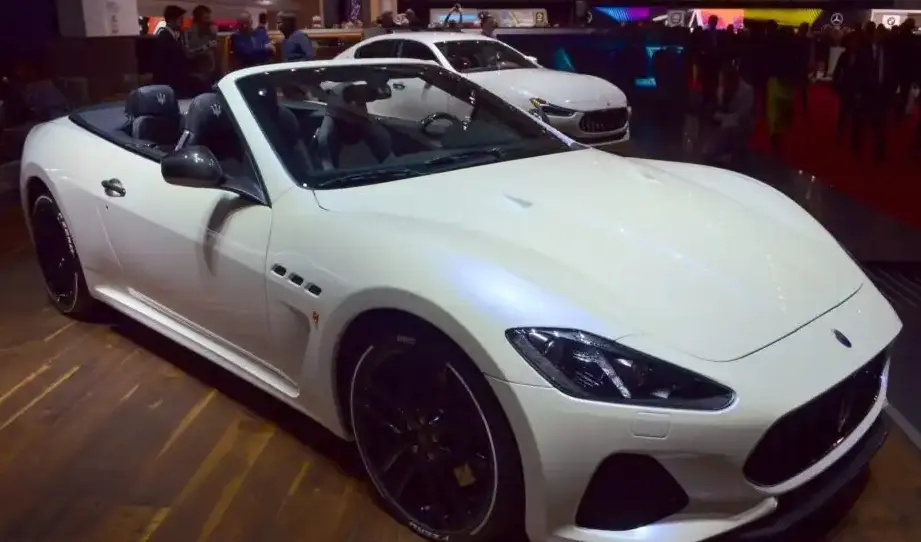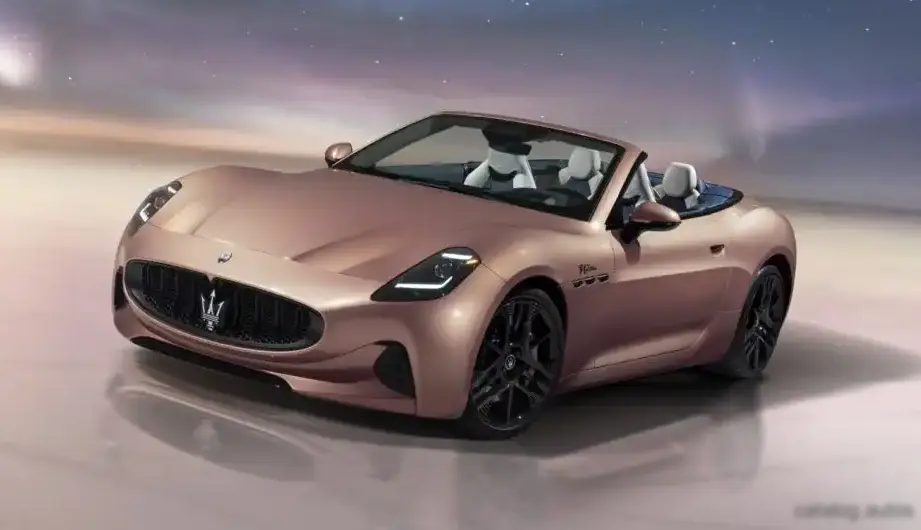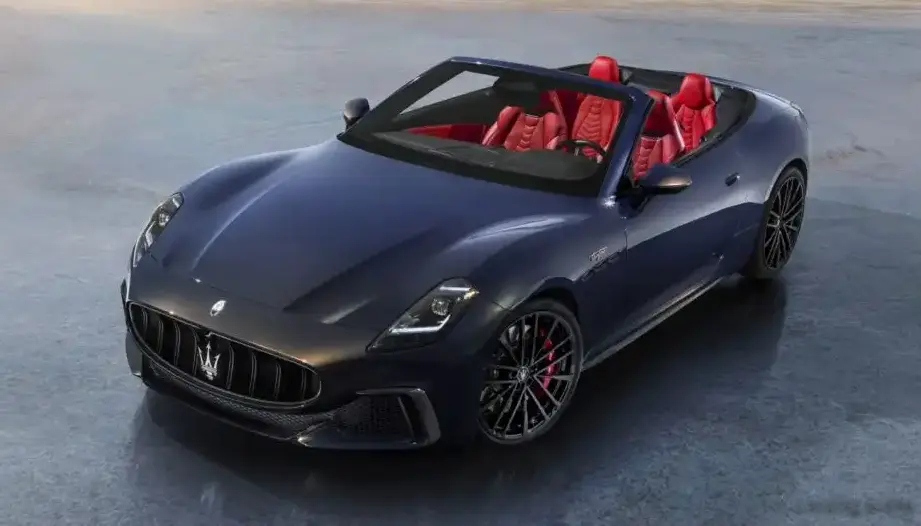
The Maserati GranCabrio I 4.7 V8 (450 Hp) Automatic, produced from 2011 to 2012, represents a luxurious and high-performance iteration of Maserati’s open-top grand tourer. Positioned as the flagship engine option within the GranCabrio range during its brief production run, it offered a compelling blend of Italian styling, a naturally aspirated V8 engine, and the convenience of an automatic transmission. This model is based on the GranCabrio platform, sharing its underpinnings with the coupe version, and falls within the broader Maserati GranTurismo family, known for its focus on driver engagement and refined comfort. It was primarily aimed at the North American and European markets, where demand for high-end, four-seat convertibles remained strong.
Technical Specifications
| Brand | Maserati |
| Model | GranCabrio |
| Generation | GranCabrio I |
| Type (Engine) | 4.7 V8 (450 Hp) Automatic |
| Start of production | 2011 |
| End of production | 2012 |
| Powertrain Architecture | Internal Combustion engine |
| Body type | Cabriolet |
| Seats | 4 |
| Doors | 2 |
| Fuel consumption (urban) | 22.5 l/100 km (10.5 US mpg, 12.6 UK mpg, 4.4 km/l) |
| Fuel consumption (extra urban) | 9.8 l/100 km (24 US mpg, 28.8 UK mpg, 10.2 km/l) |
| Fuel consumption (combined) | 14.5 l/100 km (16.2 US mpg, 19.5 UK mpg, 6.9 km/l) |
| CO2 emissions | 337 g/km |
| Fuel Type | Petrol (Gasoline) |
| Acceleration 0 – 100 km/h | 5.2 sec |
| Acceleration 0 – 62 mph | 5.2 sec |
| Acceleration 0 – 60 mph | 4.9 sec |
| Maximum speed | 285 km/h (177.09 mph) |
| Emission standard | Euro 5 |
| Weight-to-power ratio | 4.4 kg/Hp, 227.3 Hp/tonne |
| Weight-to-torque ratio | 3.9 kg/Nm, 257.6 Nm/tonne |
| Power | 450 Hp @ 7000 rpm |
| Power per litre | 95.9 Hp/l |
| Torque | 510 Nm @ 4750 rpm (376.16 lb.-ft. @ 4750 rpm) |
| Maximum engine speed | 7200 rpm |
| Engine layout | Front, Longitudinal |
| Engine Model/Code | M145S |
| Engine displacement | 4691 cm3 (286.26 cu. in.) |
| Number of cylinders | 8 |
| Engine configuration | V-engine |
| Cylinder Bore | 94 mm (3.7 in.) |
| Piston Stroke | 84.5 mm (3.33 in.) |
| Compression ratio | 11.3:1 |
| Fuel injection system | Direct injection |
| Engine aspiration | Naturally aspirated engine |
| Engine oil capacity | 9 l (9.51 US qt | 7.92 UK qt) |
| Coolant capacity | 13 l (13.74 US qt | 11.44 UK qt) |
| Kerb Weight | 1980 kg (4365.15 lbs.) |
| Max. weight | 2350 kg (5180.86 lbs.) |
| Max load | 370 kg (815.71 lbs.) |
| Trunk (boot) space – minimum | 173 l (6.11 cu. ft.) |
| Fuel tank capacity | 75 l (19.81 US gal | 16.5 UK gal) |
| Length | 4881 mm (192.17 in.) |
| Width | 1915 mm (75.39 in.) |
| Width with mirrors folded | 2056 mm (80.94 in.) |
| Height | 1353 mm (53.27 in.) |
| Wheelbase | 2942 mm (115.83 in.) |
| Front track | 1586 mm (62.44 in.) |
| Rear (Back) track | 1590 mm (62.6 in.) |
| Front overhang | 873 mm (34.37 in.) |
| Rear overhang | 1066 mm (41.97 in.) |
| Minimum turning circle | 12.3 m (40.35 ft.) |
| Drivetrain Architecture | Rear wheel drive |
| Number of gears | 6 |
| Gearbox type | Automatic transmission |
| Front brakes | Ventilated discs |
| Rear brakes | Ventilated discs |
Powertrain & Engine Architecture
At the heart of the GranCabrio I 4.7 V8 Automatic lies Maserati’s M145S engine, a 4.7-liter naturally aspirated V8. This engine is a direct descendant of the Ferrari-engineered powerplant found in earlier Maserati models, though significantly modified for grand touring duty. It features a 90-degree V-angle, four valves per cylinder, and a dual overhead camshaft design. Direct fuel injection is employed to optimize combustion efficiency and power delivery. The engine produces 450 horsepower at 7,000 rpm and 510 Nm (376 lb-ft) of torque at 4,750 rpm. The engine’s character is defined by its linear power delivery and distinctive exhaust note. The six-speed automatic transmission, sourced from ZF, was chosen for its smoothness and responsiveness. While not offering the outright speed of a dual-clutch transmission, it provided a more relaxed driving experience suitable for long-distance cruising.
Driving Characteristics
The combination of the 450 hp V8 and the six-speed automatic transmission resulted in a GranCabrio that was both quick and comfortable. Acceleration from 0 to 60 mph took approximately 4.9 seconds, and the car could reach a top speed of 177 mph. The automatic transmission, while smooth, wasn’t particularly focused on maximizing fuel efficiency or providing aggressive downshifts. Gear ratios were tuned for grand touring, prioritizing comfortable cruising over outright performance. Compared to the six-speed manual version, the automatic offered slightly slower acceleration but a more accessible driving experience for a wider range of drivers. The weight distribution, favoring the front, contributed to predictable handling, but the GranCabrio was a relatively heavy car, which could be felt during spirited driving.
Equipment & Trim Levels
The GranCabrio I 4.7 V8 Automatic came standard with a comprehensive list of luxury features. Interior appointments included leather upholstery, wood trim, and a premium audio system. Standard equipment also included automatic climate control, power-adjustable seats, and bi-xenon headlights. Optional extras included a panoramic sunroof, upgraded leather options, and a more powerful audio system. The GranCabrio’s interior was designed to be a comfortable and refined space, emphasizing craftsmanship and luxury materials. The convertible top was a fully automatic soft top, available in a range of colors.
Chassis & Braking
The GranCabrio’s chassis was based on a steel monocoque construction, providing a solid foundation for the car’s performance and handling. The suspension utilized double wishbones at the front and a multi-link setup at the rear. The braking system consisted of ventilated discs on all four wheels, providing ample stopping power. Anti-lock brakes (ABS) were standard, as was electronic stability control. The GranCabrio’s suspension was tuned for a balance between comfort and handling, offering a relatively compliant ride without sacrificing too much cornering ability.
Market Reception & Comparison
The Maserati GranCabrio I 4.7 V8 Automatic was generally well-received by automotive critics. It was praised for its stylish design, luxurious interior, and powerful engine. However, some critics noted the car’s relatively high price and its somewhat dated technology compared to newer competitors. Compared to the GranCabrio Sport, which featured a more aggressive suspension and a slightly more powerful engine, the 4.7 V8 Automatic prioritized comfort and ease of use. Fuel economy was a significant drawback, with combined fuel consumption averaging around 16.2 US mpg. Reliability was generally good, but maintenance costs were high, as expected for a luxury Italian sports car.
Legacy
The Maserati GranCabrio I 4.7 V8 Automatic, despite its short production run, remains a desirable vehicle in the used car market. Its combination of Italian style, V8 power, and convertible practicality continues to appeal to enthusiasts. The M145S engine, while not the most fuel-efficient, is known for its durability and distinctive sound. Maintenance costs remain a concern, but well-maintained examples command a premium price. The GranCabrio represents a high point in Maserati’s modern history, showcasing the brand’s commitment to luxury, performance, and Italian design.