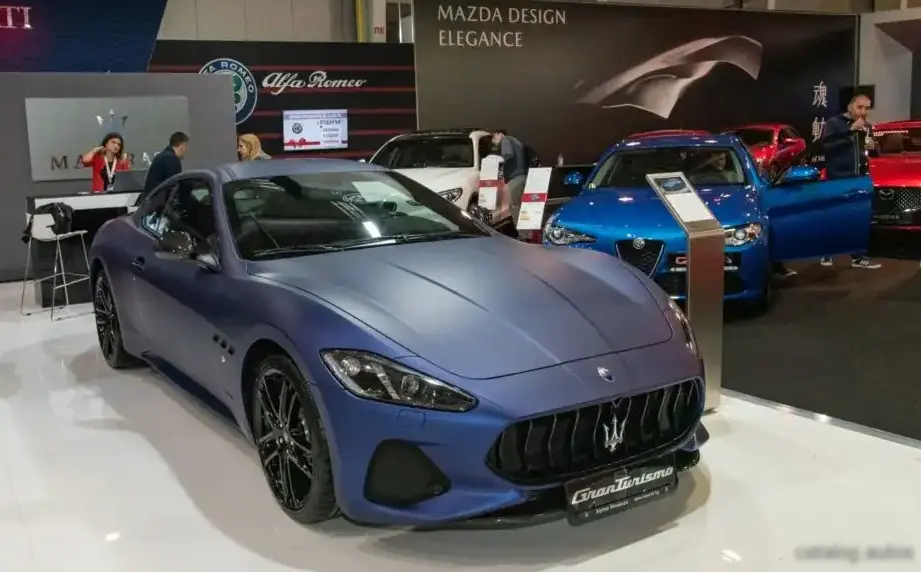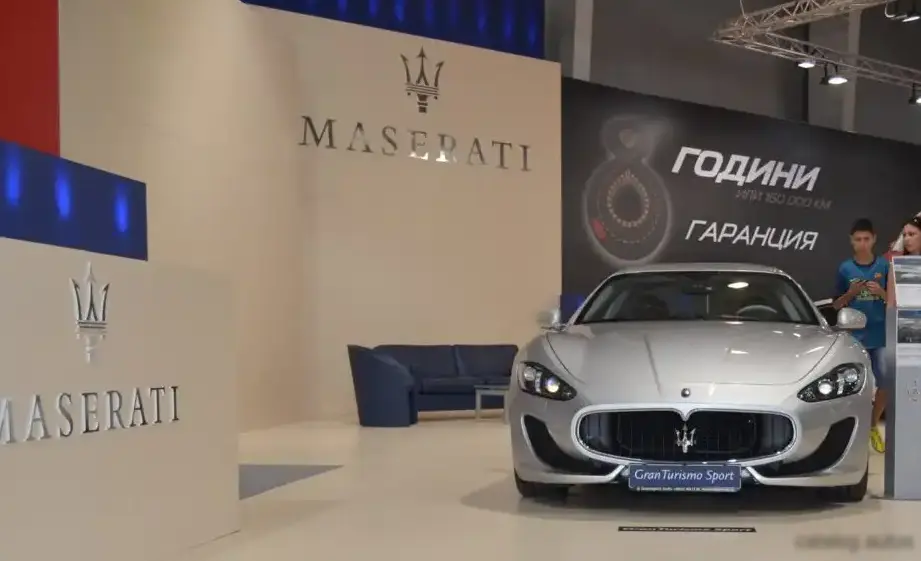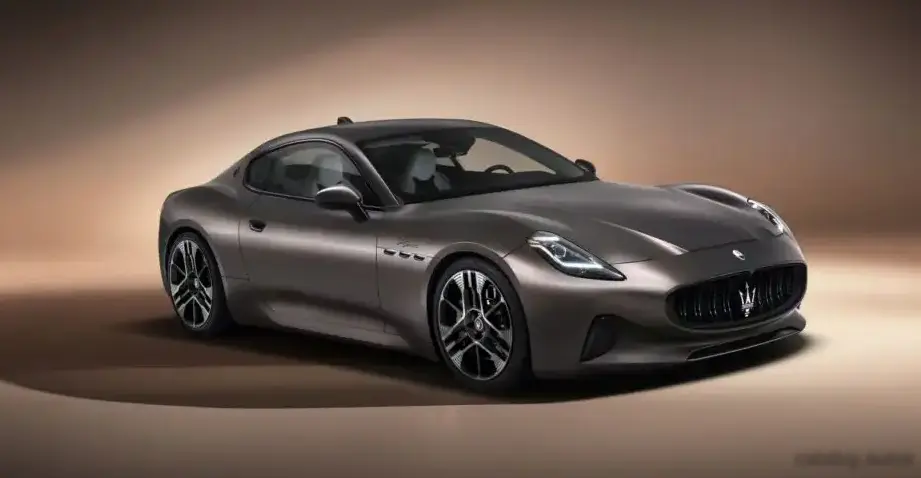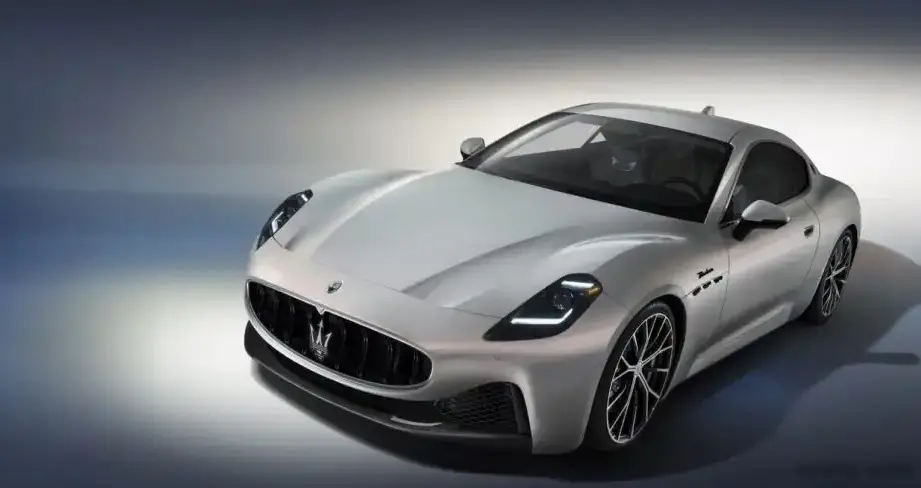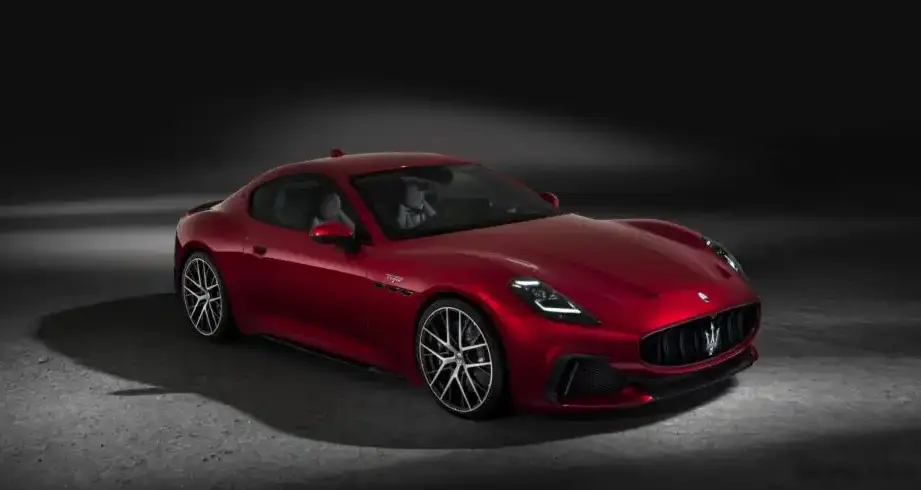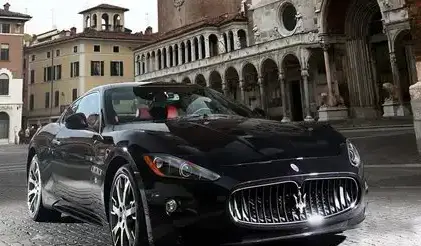
The Maserati GranTurismo I MC Stradale 4.7 V8 (460 Hp) Automatic, produced between 2013 and 2017, represents a focused, high-performance iteration of Maserati’s flagship coupe. Positioned as the most track-oriented version of the GranTurismo, the MC Stradale aimed to bridge the gap between the luxurious GT and a full-fledged sports car. It built upon the already successful GranTurismo platform (Maserati’s “M145” chassis) and was designed to evoke the spirit of Maserati’s racing heritage, particularly its success in the MC (Maserati Corse) championships. This variant offered a more aggressive aesthetic, a revised suspension setup, and a significant power increase over the standard GranTurismo models, all paired with a six-speed automatic transmission.
Technical Specifications
| Brand | Maserati |
| Model | GranTurismo |
| Generation | GranTurismo I |
| Type (Engine) | MC Stradale 4.7 V8 (460 Hp) Automatic |
| Start of production | 2013 |
| End of production | 2017 |
| Powertrain Architecture | Internal Combustion engine |
| Body type | Coupe |
| Seats | 4 |
| Doors | 2 |
| Fuel consumption (economy) – urban | 23.8 l/100 km (9.9 US mpg, 11.9 UK mpg, 4.2 km/l) |
| Fuel consumption (economy) – extra urban | 10.7 l/100 km (22 US mpg, 26.4 UK mpg, 9.3 km/l) |
| Fuel consumption (economy) – combined | 15.5 l/100 km (15.2 US mpg, 18.2 UK mpg, 6.5 km/l) |
| CO2 emissions | 360 g/km |
| Fuel Type | Petrol (Gasoline) |
| Acceleration 0 – 100 km/h | 4.5 sec |
| Acceleration 0 – 62 mph | 4.5 sec |
| Acceleration 0 – 60 mph | 4.3 sec |
| Maximum speed | 303 km/h (188.28 mph) |
| Weight-to-power ratio | 3.9 kg/Hp, 255.6 Hp/tonne |
| Weight-to-torque ratio | 3.5 kg/Nm, 288.9 Nm/tonne |
| Power | 460 Hp @ 7000 rpm |
| Power per litre | 98.1 Hp/l |
| Torque | 520 Nm @ 4750 rpm (383.53 lb.-ft. @ 4750 rpm) |
| Maximum engine speed | 7200 rpm |
| Engine layout | Front, Longitudinal |
| Engine Model/Code | M145A |
| Engine displacement | 4691 cm3 (286.26 cu. in.) |
| Number of cylinders | 8 |
| Engine configuration | V-engine |
| Cylinder Bore | 94 mm (3.7 in.) |
| Piston Stroke | 84.5 mm (3.33 in.) |
| Compression ratio | 11:1 |
| Number of valves per cylinder | 4 |
| Fuel injection system | Direct injection |
| Engine aspiration | Naturally aspirated engine |
| Engine oil capacity | 9 l (9.51 US qt | 7.92 UK qt) |
| Coolant | 13 l (13.74 US qt | 11.44 UK qt) |
| Kerb Weight | 1800 kg (3968.32 lbs.) |
| Trunk (boot) space – minimum | 260 l (9.18 cu. ft.) |
| Fuel tank capacity | 90 l (23.78 US gal | 19.8 UK gal) |
| Length | 4933 mm (194.21 in.) |
| Width | 1915 mm (75.39 in.) |
| Width including mirrors | 2044 mm (80.47 in.) |
| Height | 1343 mm (52.87 in.) |
| Wheelbase | 2942 mm (115.83 in.) |
| Front track | 1568 mm (61.73 in.) |
| Rear (Back) track | 1590 mm (62.6 in.) |
| Front overhang | 925 mm (36.42 in.) |
| Rear overhang | 1066 mm (41.97 in.) |
| Minimum turning circle | 10.5-10.7 m (34.45 – 35.1 ft.) |
| Drivetrain Architecture | Rear wheel drive |
| Number of gears and type of gearbox | 6 gears, automatic transmission |
| Front brakes | Ventilated discs |
| Rear brakes | Ventilated discs |
Powertrain & Engine Architecture
At the heart of the MC Stradale lies Maserati’s 4.7-liter V8 engine, designated the M145A. This engine is a naturally aspirated, 90-degree V8 featuring four valves per cylinder and a direct fuel injection system. The 4.7-liter engine produced 460 horsepower at 7,000 rpm and 520 Nm (383.53 lb-ft) of torque at 4,750 rpm. The engine’s architecture is relatively traditional, prioritizing smooth power delivery and a distinctive exhaust note over outright technological complexity. The six-speed automatic transmission, sourced from ZF, was specifically calibrated for quicker shifts and a more responsive feel compared to the standard GranTurismo automatic. While not a dual-clutch transmission, Maserati engineers optimized the software to minimize shift times and provide a more engaging driving experience.
Driving Characteristics
The MC Stradale’s driving experience is noticeably more focused than other GranTurismo variants. The automatic transmission, while not as lightning-fast as a modern dual-clutch, provides smooth and relatively quick gear changes. The revised suspension, featuring stiffer springs and dampers, reduces body roll and improves handling precision. The car feels planted and confident in corners, though the substantial weight (approximately 3,968 lbs) is still apparent. Compared to the manual transmission versions of the MC Stradale, the automatic offers a more relaxed driving experience, particularly in city traffic. However, it sacrifices some of the driver engagement and control offered by the manual. The power delivery is linear and predictable, making the car accessible to drivers of varying skill levels, but the 460 hp provides ample power for spirited driving.
Equipment & Trim Levels
The MC Stradale came generously equipped, reflecting its positioning as the performance flagship. Standard features included leather sport seats, carbon fiber interior trim, a sport steering wheel, and a premium audio system. Exterior styling cues included a more aggressive front bumper, side skirts, and a rear diffuser. Optional extras included a variety of interior and exterior customization options, such as different leather colors, carbon fiber accents, and upgraded wheels. The interior generally maintained the GranTurismo’s luxurious ambiance, but with a more sporting aesthetic.
Chassis & Braking
The chassis of the MC Stradale was based on the GranTurismo’s steel spaceframe, but with several modifications to enhance rigidity and handling. The suspension featured revised geometry and stiffer components. Brakes consisted of ventilated discs at all four corners, providing ample stopping power. The MC Stradale did not feature carbon ceramic brakes as an option, unlike some of its competitors. The steering system utilized a hydraulic rack and pinion setup, offering precise and communicative steering feel.
Market Reception & Comparison
The MC Stradale was generally well-received by automotive critics, who praised its performance, handling, and distinctive styling. However, some reviewers noted that the automatic transmission, while improved, didn’t quite match the engagement of the manual version. Compared to other GranTurismo variants, the MC Stradale offered a significant performance upgrade, but at a higher price point. Against competitors like the Porsche 911, the MC Stradale offered a more luxurious and comfortable experience, but lacked the ultimate track performance of the Porsche. Fuel economy, as expected for a high-performance V8, was relatively poor, averaging around 15.5 l/100 km (15.2 US mpg).
Legacy
The Maserati GranTurismo I MC Stradale 4.7 V8 Automatic remains a desirable and collectible vehicle. The 4.7-liter V8 engine, while not known for exceptional reliability, is generally robust when properly maintained. Common issues include oil leaks and occasional electrical gremlins. The automatic transmission has proven to be relatively reliable, but regular fluid changes are essential. In the used car market, the MC Stradale commands a premium over other GranTurismo variants, reflecting its performance and exclusivity. It represents a compelling option for enthusiasts seeking a luxurious and engaging grand tourer with a distinctive Italian flair.