
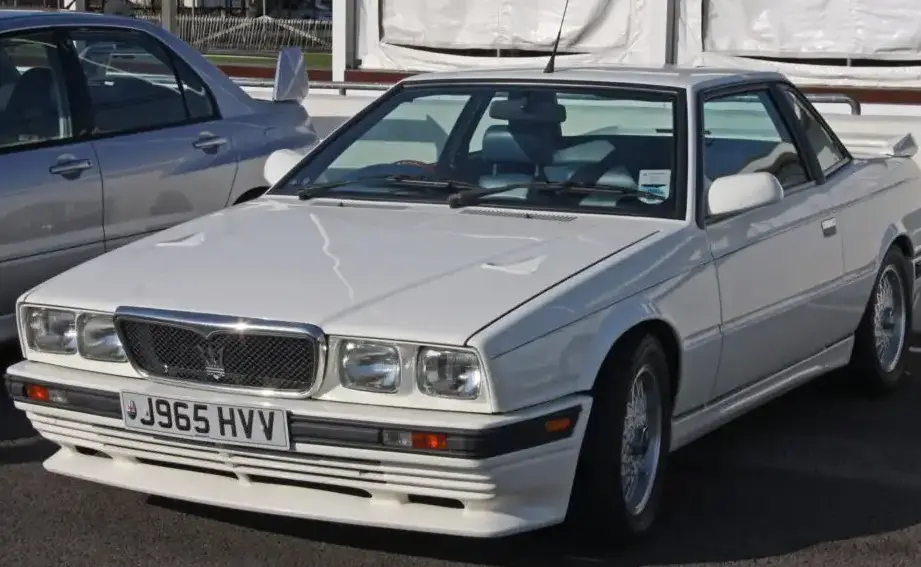
The Maserati Karif 2.8 CAT, produced between 1988 and 1991, represents a relatively short-lived but significant chapter in Maserati’s history. Positioned as a more accessible entry point into the Maserati lineup, the Karif aimed to blend Italian styling and performance with a more manageable price tag compared to the brand’s flagship models. Built on a shortened version of the Maserati Biturbo platform (specifically the Type 90 chassis), the Karif was intended to broaden Maserati’s appeal, particularly in markets outside of Italy. The “CAT” designation refers to the catalytic converter equipped models, essential for meeting increasingly stringent emissions regulations in key export markets like the United States.
Technical Specifications
| Brand | Maserati |
| Model | Karif |
| Generation | Karif |
| Type (Engine) | 2.8 CAT (225 Hp) |
| Start of Production | 1988 |
| End of Production | 1991 |
| Powertrain Architecture | Internal Combustion Engine |
| Body Type | Coupe |
| Fuel Type | Petrol (Gasoline) |
| Power | 225 Hp |
| Engine Model/Code | AM339 |
| Engine Aspiration | Naturally Aspirated |
Powertrain & Engine Architecture
The heart of the Karif 2.8 CAT is the AM339 engine, a 2.8-liter V6. This engine is a 90-degree V6, a configuration favored by Maserati for its inherent balance and smoothness. It utilizes a single overhead camshaft (SOHC) design per cylinder bank, operating two valves per cylinder. Fuel delivery is managed by Bosch mechanical fuel injection, a system chosen for its reliability and relatively straightforward maintenance. The engine’s 225 horsepower output at 5800 rpm, and 256 lb-ft of torque at 4800 rpm, were respectable for the late 1980s, providing a good balance of performance and drivability. The engine block is constructed from cast iron, while the cylinder heads are aluminum alloy, contributing to a reasonable weight distribution. The Karif exclusively used a four-speed automatic transmission, a Torqueflite unit sourced from Chrysler, a company that held a significant stake in Maserati during this period. This transmission was selected to enhance the car’s ease of use and appeal to a broader customer base, prioritizing comfort over outright performance.
Driving Characteristics
The Karif 2.8 CAT, with its automatic transmission, offered a distinctly different driving experience compared to the manual-equipped Biturbo models. While lacking the immediacy of a manual gearbox, the automatic provided smooth and effortless cruising. Acceleration from 0 to 60 mph was achieved in around 7.5 seconds, a respectable figure for the time, but noticeably slower than the manual versions. The four-speed automatic, while reliable, did have relatively widely spaced gear ratios, which could sometimes result in the engine feeling slightly strained during hard acceleration or when climbing hills. The suspension, derived from the Biturbo, provided a comfortable ride, but the Karif’s slightly longer wheelbase and softer spring rates resulted in a bit more body roll in corners compared to its more sporting siblings. Steering was power-assisted and relatively light, making the Karif easy to maneuver in urban environments.
Equipment & Trim Levels
The Karif 2.8 CAT was generally well-equipped for its price point, though it wasn’t as lavishly appointed as the more expensive Maserati models. Standard features included leather upholstery, power windows, central locking, and an AM/FM stereo. Air conditioning was also standard. The interior design was typically Italian, with a focus on style and comfort. The dashboard featured wood trim and analog gauges. Optional extras included a sunroof, upgraded audio systems, and metallic paint finishes. The Karif’s interior, while comfortable, was not without its critics, some of whom found the build quality to be somewhat inconsistent compared to German rivals. The Karif was offered in a limited range of colors, typically featuring classic Maserati hues like Rosso Corsa and Grigio Silver.
Chassis & Braking
The Karif’s chassis was based on the shortened Biturbo platform, featuring independent suspension all around. The front suspension utilized double wishbones with coil springs and anti-roll bar, while the rear suspension employed a semi-trailing arm setup with coil springs. Braking was provided by ventilated disc brakes on all four wheels, offering adequate stopping power for the car’s weight and performance. However, the Karif did not feature ABS (Anti-lock Braking System) as standard equipment, which was a notable omission given the increasing prevalence of ABS in other vehicles of the era. The steering was a power-assisted rack and pinion system, providing responsive and precise control.
Market Reception & Comparison
The Maserati Karif 2.8 CAT received mixed reviews from automotive critics. While praised for its stylish design and comfortable ride, it was often criticized for its relatively modest performance and somewhat questionable build quality. Compared to its siblings, such as the Biturbo 2.5, the Karif offered a more relaxed and refined driving experience, but at the expense of outright speed and agility. The automatic transmission was seen as a plus by some buyers, but a drawback by enthusiasts who preferred the engagement of a manual gearbox. Fuel economy was also a concern, averaging around 18 mpg in city driving and 24 mpg on the highway. The Karif’s price positioned it as a competitor to other luxury coupes, such as the BMW 6 Series and the Mercedes-Benz coupe models, but it often struggled to gain traction in these markets due to its relatively limited brand recognition and perceived reliability issues.
Legacy
The Maserati Karif 2.8 CAT, despite its short production run, remains a collectible car for enthusiasts of Italian automotive design. The AM339 engine, while not known for its exceptional durability, is generally considered to be relatively reliable if properly maintained. Common issues include oil leaks and occasional problems with the Bosch fuel injection system. The Torqueflite automatic transmission is generally robust, but can require occasional servicing. Today, the Karif 2.8 CAT is a relatively rare sight on the road, and well-maintained examples command a premium in the used car market. It represents a unique and often overlooked chapter in Maserati’s history, a testament to the brand’s enduring commitment to style, performance, and Italian craftsmanship. Its value is steadily increasing as collectors recognize its place as a distinctive and relatively affordable entry point into the world of classic Maseratis.
