
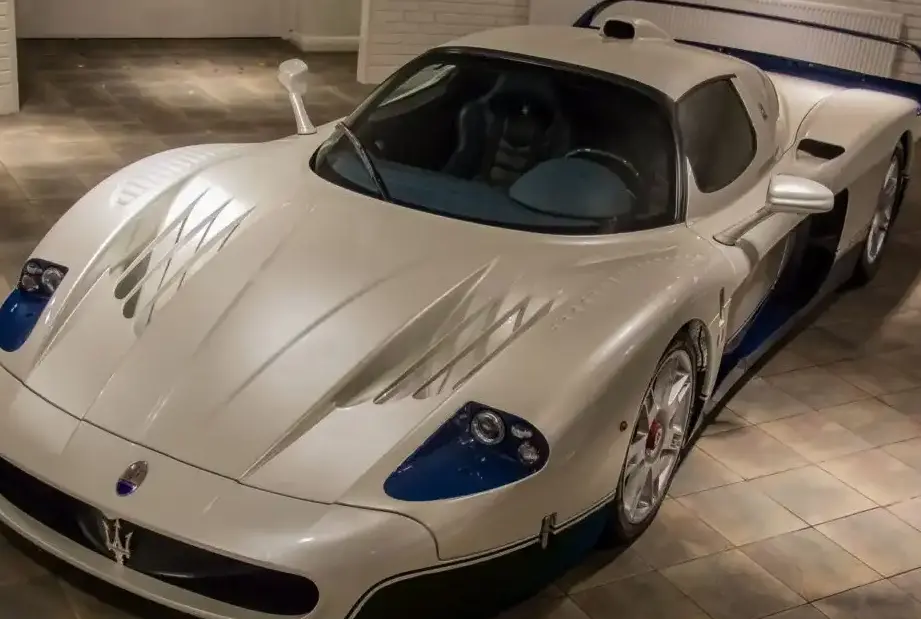
The Maserati MC12, a homologation special built between 2004 and 2006, represents a significant chapter in Maserati’s racing heritage and a return to high-performance, limited-production vehicles. Designed to allow Maserati to compete in the FIA GT Championship, the MC12 was based heavily on the Maserati Bora, though extensively modified for racing and road use. Only around 50 road-going examples were produced, making it an exceptionally rare and sought-after automobile. The MC12 marked a departure from Maserati’s more traditionally grand-touring focused models, embracing a more aggressive and track-oriented philosophy. It served as a halo car, showcasing Maserati’s engineering prowess and rekindling the brand’s sporting image.
Technical Specifications
| Brand | Maserati |
| Model | MC12 |
| Generation | MC12 |
| Type (Engine) | 6.0 V12 (624 Hp) |
| Start of production | 2004 |
| End of production | 2006 |
| Powertrain Architecture | Internal Combustion engine |
| Body type | Coupe |
| Seats | 2 |
| Doors | 2 |
| Fuel Type | Petrol (Gasoline) |
| Acceleration 0 – 100 km/h | 3.8 sec |
| Acceleration 0 – 62 mph | 3.8 sec |
| Acceleration 0 – 60 mph | 3.6 sec |
| Maximum speed | 330 km/h (205.05 mph) |
| Weight-to-power ratio | 2.1 kg/Hp, 467.4 Hp/tonne |
| Weight-to-torque ratio | 2 kg/Nm, 488.4 Nm/tonne |
| Power | 624 Hp @ 5500 rpm |
| Power per litre | 104 Hp/l |
| Torque | 652 Nm @ 5500 rpm (480.89 lb.-ft. @ 5500 rpm) |
| Engine layout | Middle, Longitudinal |
| Engine Model/Code | M144A |
| Engine displacement | 5998 cm3 (366.02 cu. in.) |
| Number of cylinders | 12 |
| Engine configuration | V-engine |
| Compression ratio | 11.2:1 |
| Number of valves per cylinder | 4 |
| Engine aspiration | Naturally aspirated engine |
| Engine oil capacity | 11.5 l (12.15 US qt | 10.12 UK qt) |
| Coolant capacity | 19.8 l (20.92 US qt | 17.42 UK qt) |
| Kerb Weight | 1335 kg (2943.17 lbs) |
| Fuel tank capacity | 115 l (30.38 US gal | 25.3 UK gal) |
| Length | 5143 mm (202.48 in) |
| Width | 2100 mm (82.68 in) |
| Height | 1205 mm (47.44 in) |
| Wheelbase | 2800 mm (110.24 in) |
| Drivetrain Architecture | Rear wheel drive |
Powertrain & Engine Architecture
The heart of the MC12 is its 6.0-liter V12 engine, designated the M144A. This engine is derived from the Ferrari F140 engine, but significantly modified by Maserati engineers. It features a 65-degree V-angle, four valves per cylinder, and a dry-sump lubrication system, essential for maintaining oil supply during high-G cornering. The engine utilizes a naturally aspirated setup, producing 624 horsepower at 5500 rpm and 652 Nm (480.89 lb-ft) of torque at the same engine speed. Fuel delivery is managed by a sophisticated fuel injection system, optimized for both performance and efficiency. The engine is mounted longitudinally in a mid-engine configuration, contributing to the car’s balanced handling characteristics. The MC12 employed a six-speed Cambiocorsa automated manual transmission, derived from Ferrari’s F1 gearbox. This transmission features paddle shifters and allows for rapid gear changes, crucial for both track performance and spirited road driving.
Driving Characteristics
The MC12 delivers a visceral and engaging driving experience. The mid-engine layout and rear-wheel drive configuration provide exceptional balance and responsiveness. Acceleration is breathtaking, with 0-60 mph achieved in approximately 3.6 seconds and a top speed exceeding 205 mph. The Cambiocorsa transmission, while quick, can be somewhat jerky at low speeds, requiring a skilled driver to master smooth transitions. The suspension is firm, prioritizing handling over outright comfort, but still manages to provide a reasonably compliant ride for a high-performance vehicle. The steering is direct and communicative, offering excellent feedback to the driver. Compared to a hypothetical manual transmission version (which never existed in road-going form), the Cambiocorsa offers faster shift times but lacks the direct engagement preferred by some enthusiasts. The MC12’s performance is significantly higher than most contemporary grand tourers, placing it firmly in the supercar category.
Equipment & Trim Levels
Given its limited production run and focus on performance, the MC12 was relatively sparsely equipped compared to other luxury vehicles. The interior is driver-focused, with carbon fiber trim and racing-style seats. Standard features included air conditioning, power windows, and a basic audio system. However, many options were available, including leather upholstery, navigation system, and upgraded audio. The MC12 was not offered in multiple trim levels; customization was largely achieved through the selection of optional extras. The interior, while functional, prioritized weight savings over lavish luxury. The overall aesthetic was purposeful and reflected the car’s racing origins.
Chassis & Braking
The MC12’s chassis is a carbon fiber monocoque, providing exceptional rigidity and minimizing weight. The suspension utilizes double wishbones with adjustable dampers and springs, allowing for fine-tuning of the handling characteristics. The braking system consists of ventilated carbon ceramic discs with six-piston calipers at the front and four-piston calipers at the rear, providing immense stopping power. The car rides on large diameter alloy wheels, fitted with high-performance tires. The combination of a lightweight chassis, advanced suspension, and powerful brakes results in a vehicle capable of exceptional track performance and confident handling on the road.
Market Reception & Comparison
The Maserati MC12 was widely praised by automotive journalists for its performance, handling, and exclusivity. Critics lauded the engine’s power and responsiveness, as well as the car’s balanced chassis. However, some criticized the Cambiocorsa transmission for its occasional jerkiness. Compared to other supercars of the era, such as the Ferrari Enzo and the Porsche Carrera GT, the MC12 offered a unique blend of Italian style and racing pedigree. Its limited production run and high price tag ensured its exclusivity, making it a highly desirable collector’s item. Fuel economy was, unsurprisingly, poor, reflecting the car’s high-performance nature. Reliability was generally good, although maintenance costs were substantial due to the car’s complex engineering and exotic components.
Legacy
The Maserati MC12 remains a highly collectible and sought-after automobile. Its racing success in the FIA GT Championship further cemented its legacy as a true performance icon. The MC12 demonstrated Maserati’s ability to compete with the world’s best supercar manufacturers and helped to revitalize the brand’s image. Today, the MC12 represents a pinnacle of Italian automotive engineering and a testament to Maserati’s racing heritage. Well-maintained examples command significant prices in the used car market, reflecting their rarity and historical significance. The powertrain, while demanding in terms of maintenance, has proven to be relatively durable when properly cared for, ensuring that these exceptional machines will continue to be enjoyed by enthusiasts for years to come.
