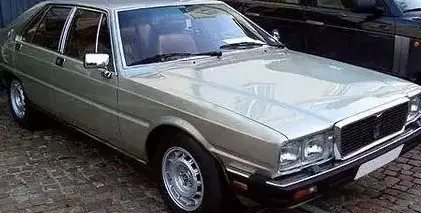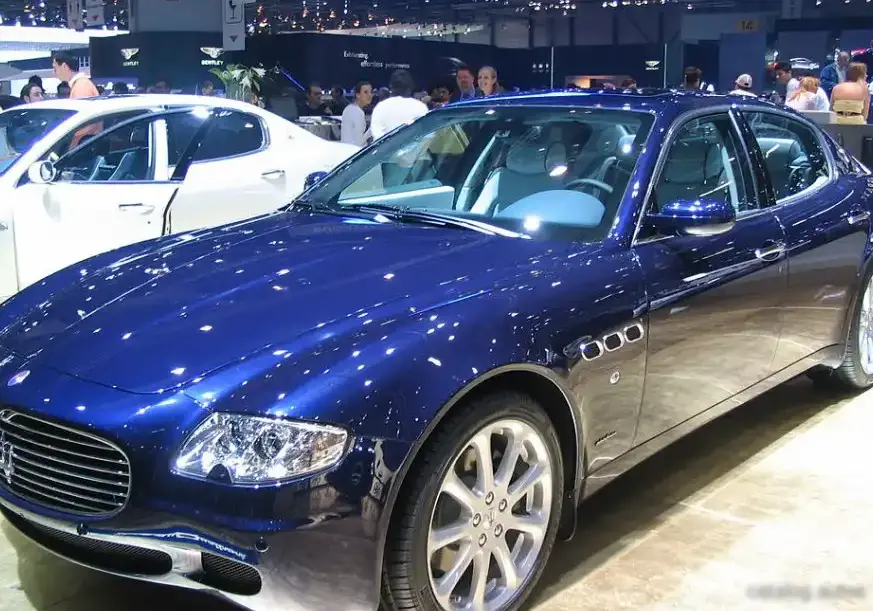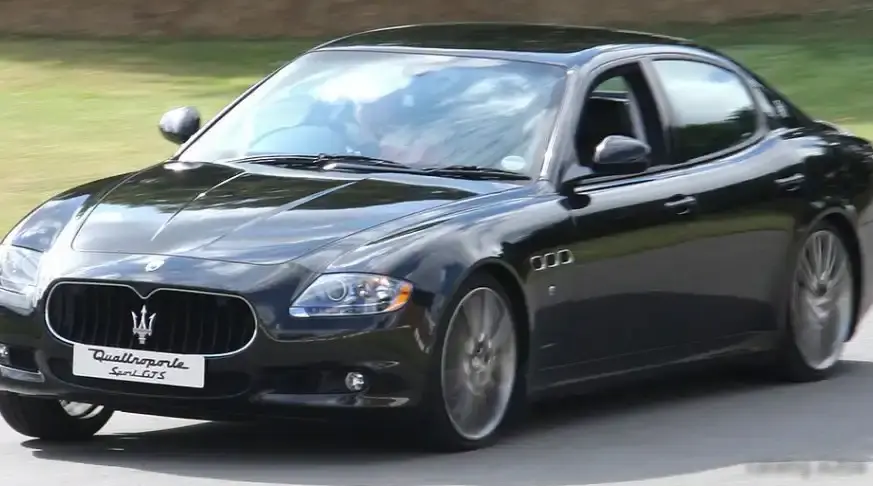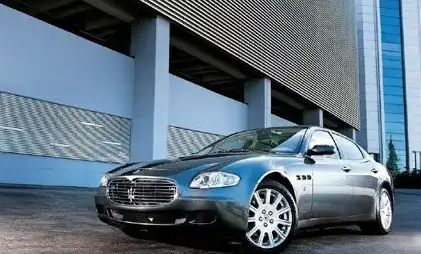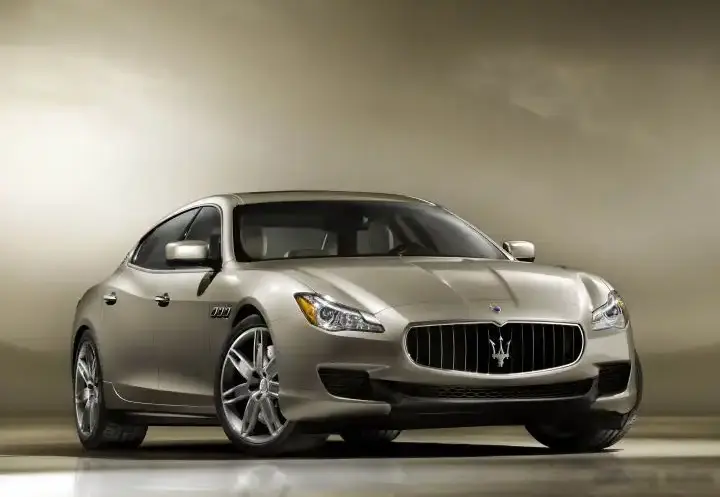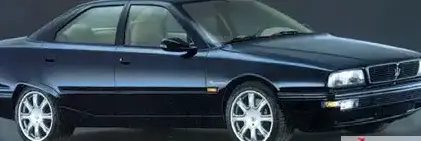
The Maserati Quattroporte IV 2.8 Biturbo, produced between 1994 and 1998, represents a pivotal moment in the storied history of Maserati’s flagship sedan. Falling within the fourth generation of the Quattroporte (1994-2001), this variant aimed to broaden the car’s appeal by offering a more accessible entry point into the luxury performance segment, while still retaining the brand’s core values of Italian craftsmanship and spirited driving. It was positioned as a slightly more attainable alternative to the range-topping 4.2-liter V8 models, appealing to buyers who desired the Quattroporte experience with a focus on a blend of performance and relative fuel efficiency. The 2.8 Biturbo utilized a twin-turbocharged V6 engine, a configuration that would become increasingly common in Maserati’s lineup.
Technical Specifications
| Brand | Maserati |
| Model | Quattroporte |
| Generation | Quattroporte IV |
| Type (Engine) | 2.8 Biturbo (284 Hp) |
| Start of production | 1994 |
| End of production | 1998 |
| Powertrain Architecture | Internal Combustion engine |
| Body type | Sedan |
| Seats | 5 |
| Doors | 4 |
| Fuel consumption (urban) | 18.8 l/100 km (12.5 US mpg, 15 UK mpg, 5.3 km/l) |
| Fuel consumption (extra urban) | 9.3 l/100 km (25.3 US mpg, 30.4 UK mpg, 10.8 km/l) |
| Fuel consumption (combined) | 10.8 l/100 km (21.8 US mpg, 26.2 UK mpg, 9.3 km/l) |
| Fuel Type | Petrol (Gasoline) |
| Acceleration 0 – 100 km/h | 5.9 sec |
| Acceleration 0 – 62 mph | 5.9 sec |
| Acceleration 0 – 60 mph | 5.6 sec |
| Maximum speed | 260 km/h (161.56 mph) |
| Weight-to-power ratio | 5.4 kg/Hp, 184.1 Hp/tonne |
| Weight-to-torque ratio | 3.9 kg/Nm, 257.3 Nm/tonne |
| Power | 284 Hp @ 6000 rpm |
| Power per litre | 101.8 Hp/l |
| Torque | 397 Nm @ 3500 rpm (292.81 lb.-ft. @ 3500 rpm) |
| Engine layout | Front, Longitudinal |
| Engine displacement | 2790 cm3 (170.26 cu. in.) |
| Number of cylinders | 6 |
| Engine configuration | V-engine |
| Cylinder Bore | 94 mm (3.7 in.) |
| Piston Stroke | 67 mm (2.64 in.) |
| Compression ratio | 7.6:1 |
| Number of valves per cylinder | 4 |
| Fuel injection system | Multi-port manifold injection |
| Engine aspiration | Turbocharger, Intercooler |
| Valvetrain | DOHC |
| Kerb Weight | 1543 kg (3401.73 lbs.) |
| Max. weight | 1960 kg (4321.06 lbs.) |
| Max load | 417 kg (919.33 lbs.) |
| Trunk (boot) space – maximum | 475 l (16.77 cu. ft.) |
| Fuel tank capacity | 80 l (21.13 US gal, 17.6 UK gal) |
| Length | 4550 mm (179.13 in.) |
| Width | 1810 mm (71.26 in.) |
| Height | 1380 mm (54.33 in.) |
| Wheelbase | 2650 mm (104.33 in.) |
| Front track | 1522 mm (59.92 in.) |
| Rear (Back) track | 1502 mm (59.13 in.) |
| Drivetrain Architecture | The Internal combustion engine (ICE) drives the rear wheels of the vehicle. |
| Drive wheel | Rear wheel drive |
| Number of gears and type of gearbox | 6 gears, manual transmission |
| Front suspension | Coil spring |
| Rear suspension | Coil spring |
| Front brakes | Ventilated discs |
| Rear brakes | Ventilated discs |
| Assisting systems | ABS (Anti-lock braking system) |
| Steering type | Steering rack and pinion |
| Power steering | Hydraulic Steering |
| Tires size | 205/55 R16; 225/50 R16 |
| Wheel rims size | 7J x 16; 8J x 16 |
Powertrain & Engine Architecture
The heart of the Quattroporte IV 2.8 Biturbo is its 2.8-liter (2790 cc) V6 engine, designated as the AM314 engine. This engine is notable for its use of two turbochargers and an intercooler, a setup designed to mitigate turbo lag and deliver a broad, usable powerband. The engine utilizes a multi-port fuel injection system and a double overhead camshaft (DOHC) valvetrain, contributing to its relatively high specific output. The 7.6:1 compression ratio was a compromise to accommodate the forced induction. The engine’s longitudinal front-engine layout and rear-wheel drive configuration were consistent with Maserati’s traditional approach to performance handling. The 6-speed manual transmission was the only transmission option available for this variant, providing drivers with full control over the engine’s power delivery.
Driving Characteristics
The 2.8 Biturbo offered a distinct driving experience compared to its siblings. While not possessing the outright power of the 4.2-liter V8 models, the turbocharged V6 delivered strong acceleration, achieving 0-60 mph in approximately 5.6 seconds. The twin-turbo setup provided a noticeable surge of power in the mid-range, making it well-suited for both spirited driving on winding roads and comfortable high-speed cruising. The 6-speed manual transmission allowed for precise gear selection, enhancing driver engagement. Compared to the later automatic transmissions offered on other Quattroporte IV variants, the manual gearbox provided a more direct connection to the engine and a more sporting feel. However, the turbo lag, while minimized by the intercooler, was still present, requiring drivers to anticipate power delivery.
Equipment & Trim Levels
The 2.8 Biturbo typically came equipped with a respectable level of standard features, befitting a luxury sedan. These included leather upholstery, power-adjustable front seats, air conditioning, and an upgraded audio system. While not as lavishly appointed as the higher-end models, the 2.8 Biturbo offered a comfortable and refined interior. Optional extras included a sunroof, upgraded leather trim, and a more sophisticated audio system. The exterior styling was consistent with the broader Quattroporte IV range, characterized by its elegant Italian design and understated luxury.
Chassis & Braking
The Quattroporte IV 2.8 Biturbo utilized a coil spring suspension system at both the front and rear, providing a comfortable ride while maintaining good handling characteristics. Ventilated disc brakes were fitted on all four wheels, offering ample stopping power. An anti-lock braking system (ABS) was standard, enhancing safety and control. The chassis was designed to balance rigidity with weight reduction, contributing to the car’s overall handling performance. The steering employed a rack and pinion system with hydraulic power assistance, providing precise and responsive steering feel.
Market Reception & Comparison
The Quattroporte IV 2.8 Biturbo was generally well-received by automotive critics, who praised its blend of performance, luxury, and relative affordability. It was seen as a compelling alternative to German luxury sedans, offering a more distinctive character and a more engaging driving experience. Fuel economy, while not exceptional, was considered reasonable for a performance sedan of its class. Compared to the 4.2-liter V8 models, the 2.8 Biturbo offered a more accessible price point and slightly better fuel efficiency, but at the expense of outright power. Reliability was generally good, although the complex twin-turbo system required regular maintenance.
Legacy
The Maserati Quattroporte IV 2.8 Biturbo holds a significant place in Maserati’s history as a model that helped to broaden the brand’s appeal and introduce a wider audience to the Quattroporte experience. Today, these cars are sought after by collectors and enthusiasts who appreciate their unique combination of Italian style, performance, and character. While maintenance can be more involved than with some contemporary vehicles, the 2.8 Biturbo remains a rewarding and enjoyable car to own and drive. The engine, while complex, is generally considered robust when properly maintained, and parts availability is reasonable. The Quattroporte IV 2.8 Biturbo represents a sweet spot in the model range, offering a compelling blend of performance, luxury, and value in the used car market.