Technical Specifications
| Brand | Maserati |
| Model | Quattroporte |
| Generation | Quattroporte VI (M156) |
| Type (Engine) | GTS 3.8 V8 (530 Hp) Automatic |
| Start of production | 2013 |
| End of production | 2016 |
| Powertrain Architecture | Internal Combustion engine |
| Body type | Sedan |
| Seats | 5 |
| Doors | 4 |
| Fuel consumption (urban) | 15.6 l/100 km (15.1 US mpg, 18.1 UK mpg, 6.4 km/l) |
| Fuel consumption (extra urban) | 7.9 l/100 km (29.8 US mpg, 35.8 UK mpg, 12.7 km/l) |
| Fuel consumption (combined) | 10.7 l/100 km (22 US mpg, 26.4 UK mpg, 9.3 km/l) |
| CO2 emissions | 250 g/km |
| Fuel Type | Petrol (Gasoline) |
| Acceleration 0 – 100 km/h | 4.7 sec |
| Acceleration 0 – 62 mph | 4.7 sec |
| Acceleration 0 – 60 mph | 4.5 sec |
| Maximum speed | 307 km/h (190.76 mph) |
| Emission standard | Euro 6 |
| Weight-to-power ratio | 3.6 kg/Hp, 278.9 Hp/tonne |
| Weight-to-torque ratio | 2.7 kg/Nm, 373.7 Nm/tonne |
| Power | 530 Hp @ 6500-6800 rpm |
| Power per litre | 139.5 Hp/l |
| Torque | 710 Nm @ 2250-3500 rpm (523.67 lb.-ft. @ 2250-3500 rpm) |
| Engine layout | Front, Longitudinal |
| Engine Model/Code | M156A |
| Engine displacement | 3799 cm3 (231.83 cu. in.) |
| Number of cylinders | 8 |
| Engine configuration | V-engine |
| Cylinder Bore | 86.5 mm (3.41 in.) |
| Piston Stroke | 80.8 mm (3.18 in.) |
| Compression ratio | 9.5:1 |
| Fuel injection system | Direct injection |
| Engine aspiration | BiTurbo, Intercooler |
| Engine oil capacity | 8.6 l (9.09 US qt | 7.57 UK qt) |
| Coolant | 14.2 l (15 US qt | 12.49 UK qt) |
| Kerb Weight | 1900 kg (4188.78 lbs.) |
| Trunk (boot) space – minimum | 530 l (18.72 cu. ft.) |
| Fuel tank capacity | 80 l (21.13 US gal | 17.6 UK gal) |
| Length | 5262 mm (207.17 in.) |
| Width | 1948 mm (76.69 in.) |
| Width including mirrors | 2100 mm (82.68 in.) |
| Height | 1481 mm (58.31 in.) |
| Wheelbase | 3171 mm (124.84 in.) |
| Front track | 1634 mm (64.33 in.) |
| Rear (Back) track | 1647 mm (64.84 in.) |
| Drivetrain Architecture | Rear wheel drive |
| Number of gears and type of gearbox | 8 gears, automatic transmission |
| Front brakes | Ventilated discs |
| Rear brakes | Ventilated discs |
| Assisting systems | ABS (Anti-lock braking system) |
| Steering type | Steering rack and pinion |
| Power steering | Electric Steering |
| Tires size | 245/40 R20; 285/35 R20 |
| Wheel rims size | 20 |
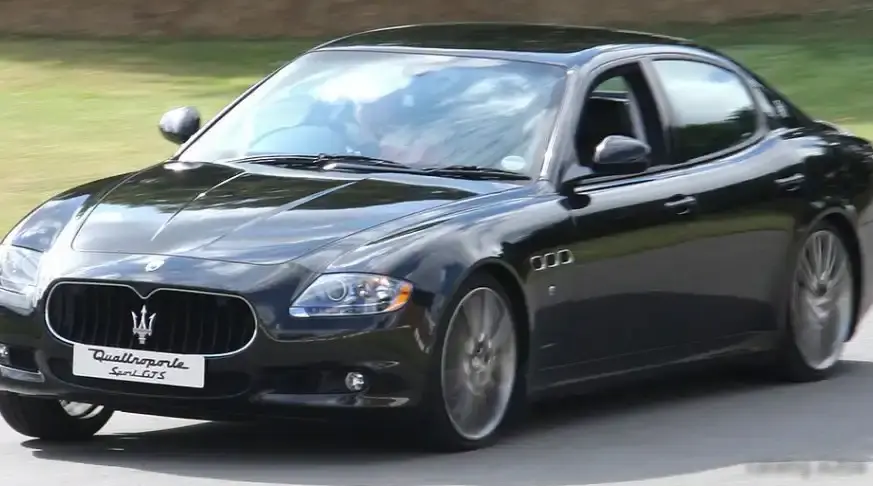
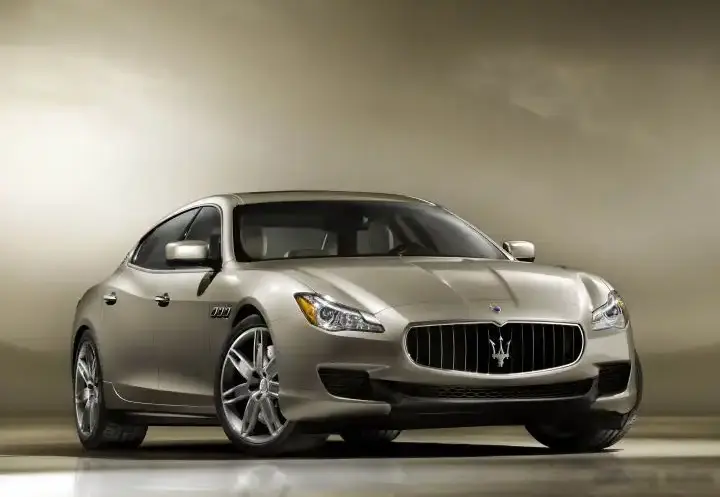
The Maserati Quattroporte VI (M156) GTS 3.8 V8 Automatic, produced from 2013 to 2016, represents a significant evolution in Maserati’s flagship sedan lineage. This sixth generation of the Quattroporte, internally designated M156, marked a departure from previous iterations with its increased size, more luxurious appointments, and a focus on blending Italian styling with modern performance technology. The GTS variant, powered by the twin-turbocharged 3.8-liter V8, occupied the top performance tier of the M156 range, positioned above the base V6 models and aimed at buyers seeking a more potent and exclusive grand touring experience. It was Maserati’s answer to the high-performance luxury sedans offered by Porsche and BMW.
Powertrain & Engine Architecture
The heart of the Quattroporte GTS is the M156A 3.8-liter V8 engine. This engine, developed in collaboration with Ferrari, is a 90-degree V8 featuring twin turbochargers, direct fuel injection, and variable valve timing. The twin-turbo setup utilizes two BorgWarner turbochargers, providing significant boost and contributing to the engine’s impressive 530 horsepower and 710 Nm (523.67 lb-ft) of torque. The direct injection system optimizes fuel delivery for improved efficiency and performance. The engine’s architecture is longitudinally mounted at the front of the vehicle, driving the rear wheels. The eight-speed automatic transmission, sourced from ZF, is a crucial component of the GTS’s performance profile. This transmission offers smooth and quick shifts, contributing to the car’s acceleration and overall driving experience. It features a traditional torque converter and is electronically controlled, adapting shift points based on driving conditions and driver input.
Driving Characteristics
The Quattroporte GTS delivers a distinctly grand touring experience. The combination of the powerful V8 and the eight-speed automatic transmission results in brisk acceleration – 0 to 60 mph in approximately 4.5 seconds and a top speed of 190.76 mph. The automatic transmission is well-tuned for both comfortable cruising and spirited driving. In normal driving modes, shifts are smooth and almost imperceptible. Selecting Sport mode sharpens throttle response, holds gears longer, and provides quicker downshifts. Compared to the base V6 models, the GTS offers a significantly more engaging driving experience, with substantially more power and torque available throughout the rev range. While not as raw or focused as some dedicated sports sedans, the GTS provides a compelling blend of performance and luxury. The rear-wheel-drive configuration contributes to a balanced feel, although the car’s considerable weight (approximately 4189 lbs) is noticeable during aggressive cornering.
Equipment & Trim Levels
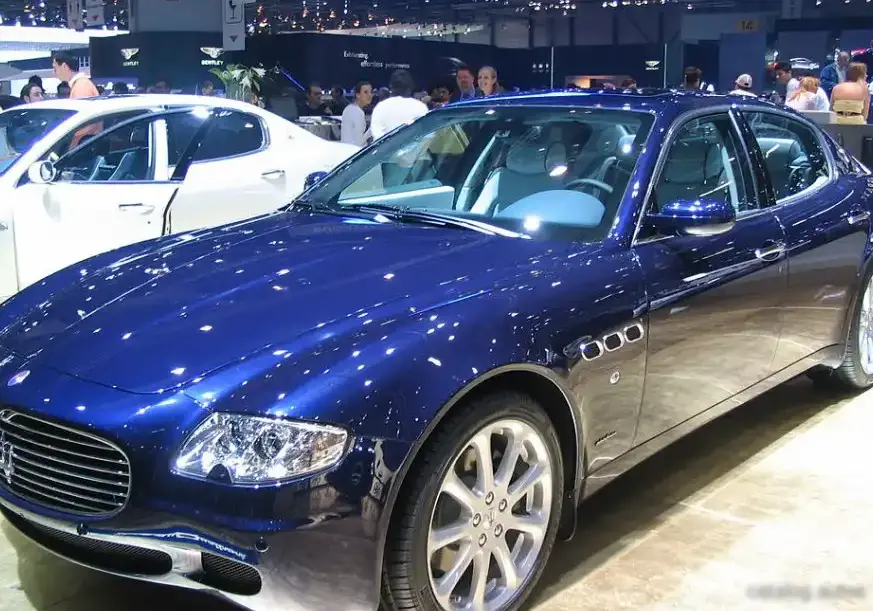
The GTS trim level came standard with a comprehensive array of luxury features. Interior appointments included premium leather upholstery, wood trim, and aluminum pedals. Standard equipment also included a touchscreen infotainment system, navigation, a premium sound system, and a suite of driver-assistance features such as adaptive cruise control and blind-spot monitoring. Optional extras included a panoramic sunroof, upgraded leather options, and a rear-seat entertainment system. The exterior styling of the GTS was further enhanced by unique front and rear bumpers, side skirts, and larger wheels and tires (20-inch alloys were standard).
Chassis & Braking
The Quattroporte GTS utilizes a double-wishbone front suspension and a multi-link rear suspension. The suspension is tuned to provide a comfortable ride while maintaining good handling characteristics. The GTS featured larger brakes compared to the V6 models, with ventilated discs at all four corners. An advanced anti-lock braking system (ABS) and electronic stability control (ESC) were standard, enhancing safety and control. The steering system is a power-assisted rack-and-pinion setup, providing precise and responsive steering feel.
Market Reception & Comparison
The Quattroporte GTS was generally well-received by automotive critics. Praise was directed towards its powerful engine, luxurious interior, and refined driving experience. However, some critics noted the car’s considerable weight and its relatively high price tag. Compared to the V6 models, the GTS offered a significant performance upgrade but came at a substantial cost premium. Fuel economy, while respectable for a V8-powered luxury sedan, was not a strong point, with combined fuel consumption around 22 US mpg. Reliability reports have been mixed, with some owners experiencing issues with the infotainment system and certain engine components.
Legacy
The Maserati Quattroporte VI (M156) GTS 3.8 V8 Automatic remains a desirable vehicle in the used car market. Its combination of Italian style, powerful performance, and luxurious appointments continues to appeal to enthusiasts. While maintenance costs can be higher than those of some competitors, the GTS offers a unique and rewarding driving experience. The M156 engine, while complex, is generally considered robust when properly maintained. The GTS represents a high point in Maserati’s modern history, showcasing the brand’s ability to create compelling and luxurious grand touring sedans.