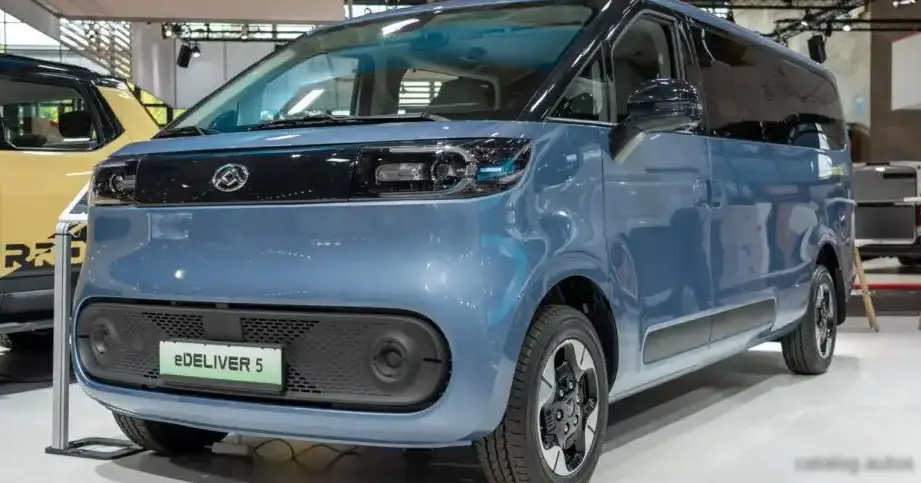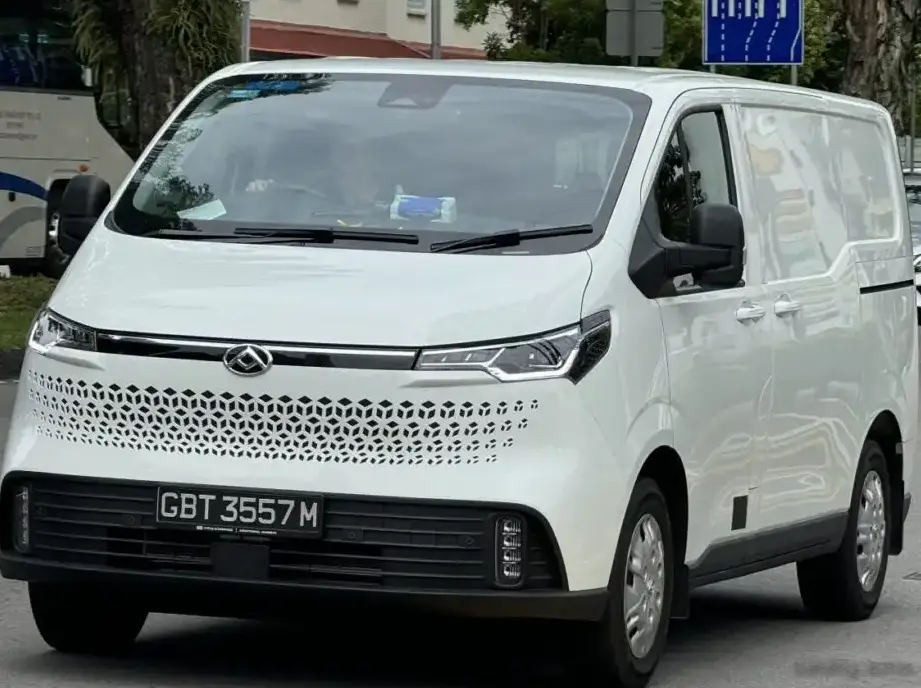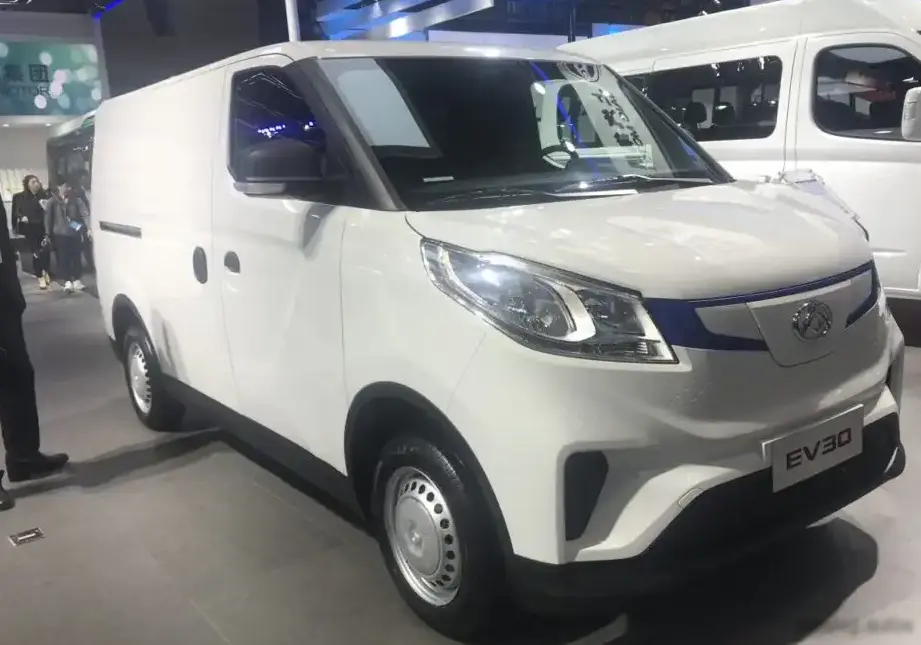
The Maxus eDeliver 3 L1, produced from 2020 to 2023, represents a significant entry by SAIC Motor, under the Maxus brand, into the burgeoning electric light commercial vehicle (LCV) market. Specifically, the 35 kWh variant, delivering 122 horsepower, was positioned as an entry-level offering aimed at urban delivery services and businesses seeking a cost-effective and environmentally friendly transportation solution. This model is primarily sold in European and Asian markets, and represents a shift towards electric mobility in the commercial sector. The eDeliver 3 L1 is built on a dedicated electric vehicle platform, prioritizing cargo space and practicality over outright performance.
Technical Specifications
| Brand | Maxus |
| Model | Deliver 3 |
| Generation | eDeliver 3 L1 |
| Type (Engine) | 35 kWh (122 Hp) Electric |
| Start of production | 2020 |
| End of production | 2023 |
| Powertrain Architecture | BEV (Electric Vehicle) |
| Body type | Van |
| Seats | 2 |
| Doors | 4 |
| Fuel Type | Electricity |
| Acceleration 0 – 100 km/h | 11 sec |
| Acceleration 0 – 62 mph | 11 sec |
| Acceleration 0 – 60 mph | 10.5 sec |
| Maximum speed | 120 km/h (74.56 mph) |
| Weight-to-power ratio | 11.8 kg/Hp, 84.4 Hp/tonne |
| Weight-to-torque ratio | 5.7 kg/Nm, 176.5 Nm/tonne |
| Gross battery capacity | 35 kWh |
| Battery technology | Lithium iron phosphate (LiFePO4) |
| Battery location | Below the floor |
| All-electric range (WLTP) | 159 km (98.8 mi) |
| Average Energy consumption (WLTP) | 24.36 kWh/100 km (39.2 kWh/100 mi, 86 MPGe, 4.1 km/kWh, 2.6 mi/kWh) |
| Electric motor power | 122 Hp |
| Electric motor Torque | 255 Nm (188.08 lb.-ft.) |
| Electric motor model/code | TZ204XS85K05 |
| Electric motor location | Front axle, Transverse |
| Electric motor type | Synchronous |
| System power | 122 Hp |
| System torque | 255 Nm (188.08 lb.-ft.) |
| Kerb Weight | 1445 kg (3185.68 lbs.) |
| Max. weight | 2310 kg (5092.68 lbs.) |
| Max load | 865 kg (1907 lbs.) |
| Trunk (boot) space – maximum | 4800 l (169.51 cu. ft.) |
| Max. roof load | 75 kg (165.35 lbs.) |
| Permitted trailer load with brakes (12%) | 1200 kg (2645.55 lbs.) |
| Permitted trailer load without brakes | 750 kg (1653.47 lbs.) |
| Length | 4555 mm (179.33 in.) |
| Width | 1780 mm (70.08 in.) |
| Height | 1895 mm (74.61 in.) |
| Wheelbase | 2910 mm (114.57 in.) |
| Minimum turning circle | 11.74 m (38.52 ft.) |
| Drivetrain | Front wheel drive, BEV |
| Number of gears | 1, automatic transmission |
| Front brakes | Disc |
| Rear brakes | Disc |
| Tires size | 185/65 R15C |
| Wheel rims size | 15 |
Powertrain & Engine Architecture
The eDeliver 3 L1 utilizes a fully electric powertrain, centered around a 35 kWh Lithium Iron Phosphate (LiFePO4) battery pack. LiFePO4 chemistry is favored for its inherent safety, longer cycle life, and lower cost compared to Nickel Manganese Cobalt (NMC) batteries, although it typically offers a lower energy density. The battery is mounted under the floor, contributing to a lower center of gravity and maximizing cargo space. The electric motor, designated TZ204XS85K05, is a synchronous motor producing 122 horsepower and 255 Nm (188.08 lb.-ft.) of torque. This motor is transversely mounted and drives the front wheels. The vehicle employs a single-speed automatic transmission, typical of electric vehicles, providing seamless acceleration. The onboard charger handles AC charging, while DC fast charging capability allows for quicker replenishment of the battery.
Driving Characteristics
The 122 hp and 255 Nm of instant torque provide adequate performance for urban delivery tasks. Acceleration to 60 mph takes approximately 10.5 seconds, and the top speed is limited to 120 km/h (74.56 mph). The single-speed transmission delivers a linear power curve, making it easy to modulate speed in city traffic. Compared to potential higher-powered variants (not widely available in all markets), the 35 kWh version prioritizes efficiency over outright speed. The front-wheel-drive configuration offers predictable handling, but can exhibit some torque steer under hard acceleration. The regenerative braking system helps to recapture energy and extend the vehicle’s range.
Equipment & Trim Levels
The eDeliver 3 L1, in its base configuration, is geared towards functionality and affordability. Standard equipment typically includes air conditioning, a basic infotainment system with Bluetooth connectivity, power windows, and central locking. Safety features such as ABS (Anti-lock Braking System) and driver/passenger airbags are standard. The interior is utilitarian, with durable plastic trim and cloth upholstery. Optional extras, depending on the market, could include a rearview camera, parking sensors, and upgraded infotainment systems. The focus remains on providing a practical and reliable work vehicle rather than luxury features.
Chassis & Braking
The eDeliver 3 L1 features a conventional front-wheel-drive chassis with MacPherson strut front suspension and a twist-beam rear axle. The suspension is tuned for comfort and load-carrying capacity. Disc brakes are fitted to all four wheels, providing adequate stopping power. Electric power steering offers light and precise control. The vehicle’s relatively low weight, thanks to the battery placement and efficient design, contributes to its maneuverability. The 185/65 R15C tires are designed for durability and load-bearing capability.
Market Reception & Comparison
The Maxus eDeliver 3 L1 was generally well-received as a competitive entry in the electric LCV segment. Critics praised its affordability, practicality, and decent range for urban delivery applications. Compared to other electric vans like the Renault Kangoo E-Tech or Citroen e-Berlingo, the eDeliver 3 L1 often offered a lower price point, making it an attractive option for businesses on a budget. However, some reviewers noted the relatively basic interior and limited range compared to more expensive models. Fuel economy, expressed as energy consumption, is rated at 24.36 kWh/100 km, translating to approximately 86 MPGe.
Legacy
The Maxus eDeliver 3 L1 played a role in accelerating the adoption of electric commercial vehicles. While newer models with increased range and improved technology have since emerged, the eDeliver 3 L1 remains a viable option in the used market. The LiFePO4 battery technology is known for its longevity, and reports suggest good long-term reliability. As businesses continue to transition to electric fleets, the eDeliver 3 L1 serves as a testament to the growing feasibility and affordability of electric transportation for commercial purposes. Its impact lies in demonstrating that electric vans can be a practical and cost-effective solution for last-mile delivery and urban logistics.