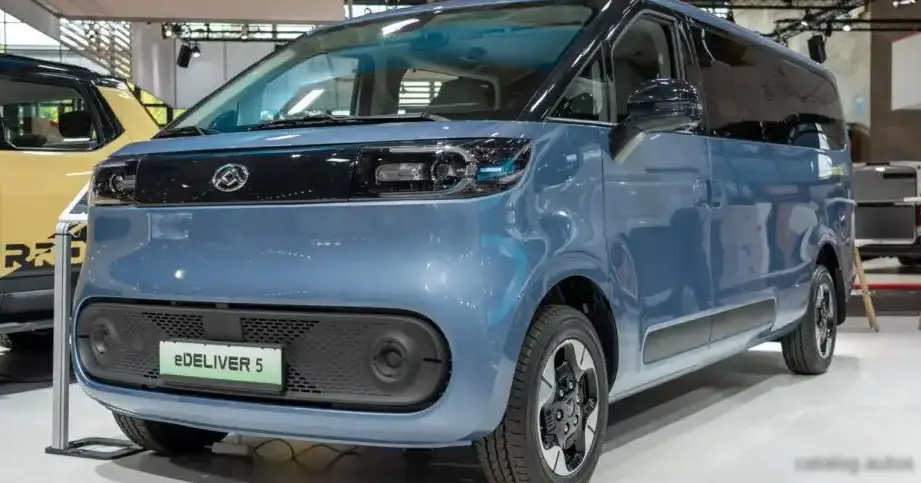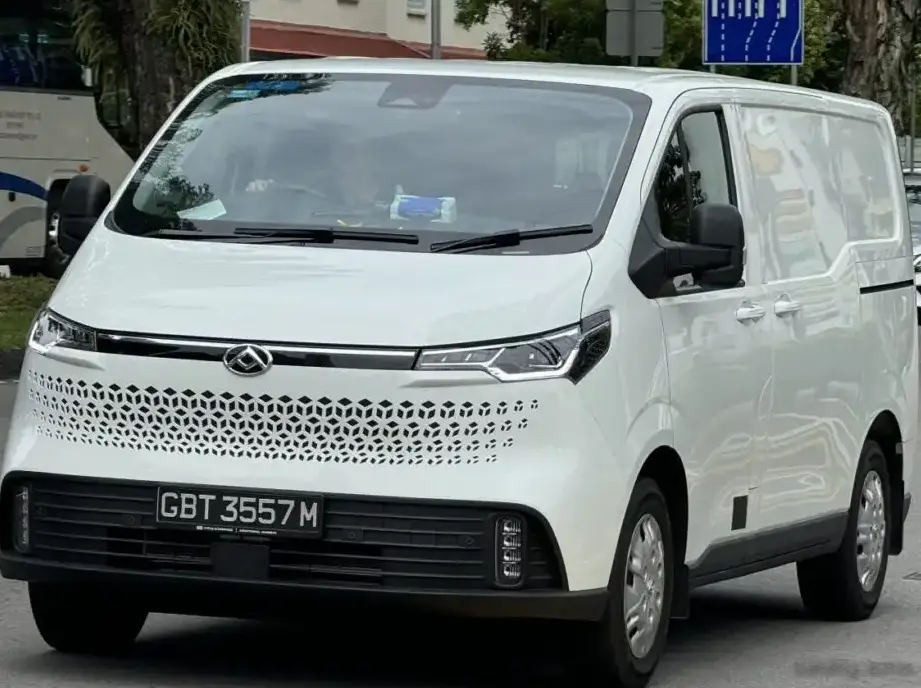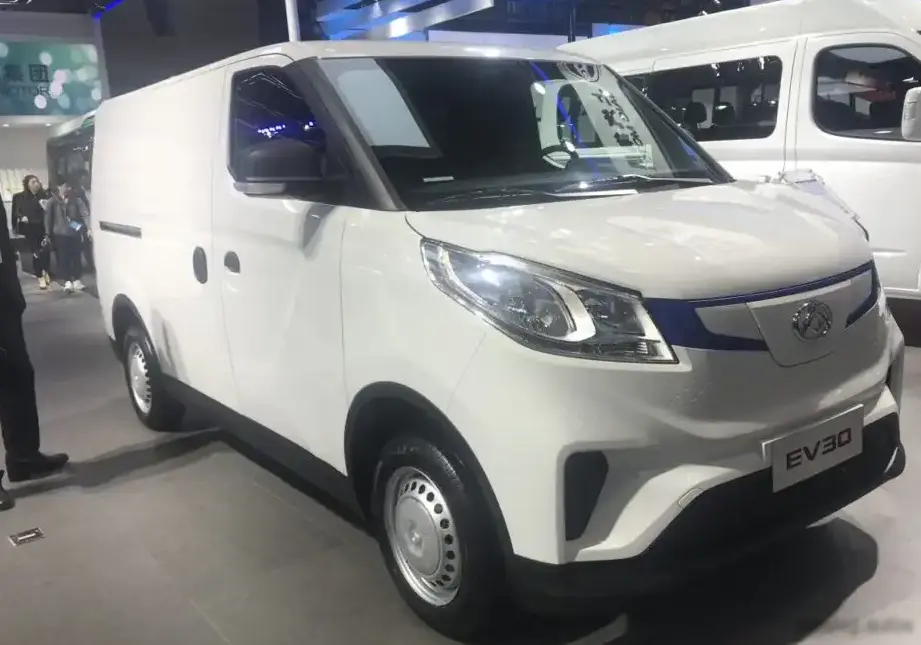
The Maxus eDeliver 3 L1 50 kWh is a compact, all-electric commercial van introduced in 2023 by SAIC Motor, marketed under the Maxus brand. Primarily aimed at the European and Asian markets, and increasingly available in North America, the eDeliver 3 represents Maxus’s entry into the burgeoning electric light commercial vehicle segment. It’s positioned as a practical and cost-effective solution for last-mile delivery, small business operations, and urban logistics, offering a compelling alternative to traditional internal combustion engine vans. The L1 designation refers to the short wheelbase version, making it particularly maneuverable in congested city environments. This specific 50 kWh, 160 horsepower configuration serves as the base model within the eDeliver 3 lineup.
Technical Specifications
| Brand | Maxus |
| Model | Deliver 3 |
| Generation | eDeliver 3 L1 |
| Type (Engine) | 50 kWh (160 Hp) Electric |
| Start of production | 2023 |
| Powertrain Architecture | BEV (Electric Vehicle) |
| Body type | Van |
| Seats | 2 |
| Doors | 4 |
| Fuel Type | Electricity |
| Acceleration 0 – 100 km/h | 8.85 sec |
| Acceleration 0 – 62 mph | 8.85 sec |
| Acceleration 0 – 60 mph | 8.4 sec |
| Maximum speed | 120 km/h (74.56 mph) |
| Weight-to-power ratio | 10.1 kg/Hp, 99.1 Hp/tonne |
| Weight-to-torque ratio | 7.2 kg/Nm, 139.3 Nm/tonne |
| Gross battery capacity | 50 kWh |
| Battery technology | Lithium iron phosphate (LiFePO4) |
| Battery location | Below the floor |
| All-electric range (WLTP) | 269 km (167.15 mi) |
| Average Energy consumption (WLTP) | 20.2 kWh/100 km (32.51 kWh/100 mi) |
| Average Energy consumption (MPGe) | 104 MPGe |
| Average Energy consumption (km/kWh) | 5 km/kWh |
| Average Energy consumption (mi/kWh) | 3.1 mi/kWh |
| Electric motor power | 160 Hp |
| Electric motor Torque | 225 Nm (165.95 lb.-ft.) |
| Electric motor model/code | TZ200XSSQA |
| Electric motor location | Front axle, Transverse |
| Electric motor type | Synchronous |
| System power | 160 Hp |
| System torque | 225 Nm (165.95 lb.-ft.) |
| Kerb Weight | 1615 kg (3560.47 lbs.) |
| Max. weight | 2660 kg (5864.3 lbs.) |
| Max load | 1045 kg (2303.83 lbs.) |
| Trunk (boot) space – maximum | 4800 l (169.51 cu. ft.) |
| Permitted trailer load with brakes (12%) | 1030 kg (2270.76 lbs.) |
| Permitted trailer load without brakes | 750 kg (1653.47 lbs.) |
| Length | 4555 mm (179.33 in.) |
| Width | 1780 mm (70.08 in.) |
| Height | 1900 mm (74.8 in.) |
| Wheelbase | 2910 mm (114.57 in.) |
| Ride height (ground clearance) | 144 mm (5.67 in.) |
| Minimum turning circle | 11.74 m (38.52 ft.) |
| Drivetrain Architecture | One electric motor drives the front wheels. |
| Drive wheel | Front wheel drive |
| Number of gears and type of gearbox | 1 gears, automatic transmission |
| Front brakes | Disc |
| Rear brakes | Disc |
| Assisting systems | ABS (Anti-lock braking system) |
| Steering type | Steering rack and pinion |
| Power steering | Electric Steering |
| Tires size | 185/65 R15C |
| Wheel rims size | 15 |
Powertrain & Engine Architecture
The eDeliver 3 L1 utilizes a front-wheel-drive, all-electric powertrain. The heart of the system is a synchronous electric motor, designated TZ200XSSQA, producing 160 horsepower and 225 Nm (165.95 lb.-ft.) of torque. This motor is powered by a 50 kWh lithium iron phosphate (LiFePO4) battery pack, strategically positioned under the vehicle floor to optimize weight distribution and maximize cargo space. LiFePO4 chemistry is favored for its inherent thermal stability and longer cycle life compared to other lithium-ion variants, contributing to enhanced safety and durability. The van employs a single-speed automatic transmission, typical of electric vehicles, delivering seamless and linear acceleration. The charging port location is not publicly available.
Driving Characteristics
The 160 hp electric motor provides adequate performance for urban and suburban delivery routes. Acceleration from 0 to 60 mph is achieved in approximately 8.4 seconds, and the van has a top speed of 74.56 mph. While not designed for high-speed highway driving, the eDeliver 3 offers sufficient power for merging onto freeways and maintaining a reasonable pace. The single-speed transmission provides instant torque, resulting in brisk acceleration from a standstill. Compared to potential higher-output versions (if offered in the future), this base model prioritizes efficiency and range over outright performance. The front-wheel-drive configuration provides predictable handling, but may exhibit some torque steer under hard acceleration.
Equipment & Trim Levels
The eDeliver 3 L1 50 kWh, as the entry-level trim, typically includes standard features geared towards practicality and functionality. These generally include air conditioning, a basic infotainment system with Bluetooth connectivity, power windows, and central locking. Safety features such as ABS, electronic stability control, and driver/passenger airbags are standard. Interior upholstery is typically durable and easy-to-clean, reflecting the van’s commercial purpose. Optional extras may include a rearview camera, parking sensors, and upgraded infotainment systems with navigation. The interior is designed with functionality in mind, offering a driver-focused layout with easy-to-reach controls.
Chassis & Braking
The eDeliver 3 L1 features a conventional front-wheel-drive chassis with independent suspension at the front and a semi-independent suspension at the rear. Disc brakes are fitted on all four wheels, providing adequate stopping power for the vehicle’s weight. The electric power steering system offers light and precise steering feel, enhancing maneuverability in tight spaces. The van’s relatively low center of gravity, due to the underfloor battery pack, contributes to stable handling. Ride height is modest, providing a balance between comfort and practicality.
Market Reception & Comparison
The Maxus eDeliver 3 L1 has been generally well-received by critics as a viable and affordable electric van option. Its competitive pricing, decent range, and practical cargo capacity make it an attractive choice for businesses seeking to electrify their fleets. Compared to other electric vans in the same segment, such as the Ford E-Transit or the Renault Kangoo E-Tech, the eDeliver 3 often offers a lower price point, but may lack some of the advanced features and refinement of its competitors. Fuel economy, expressed as energy consumption, is rated at 20.2 kWh/100 km (32.51 kWh/100 mi), translating to approximately 104 MPGe. Reliability reports are still emerging, but the LiFePO4 battery technology is expected to contribute to long-term durability.
Legacy
The Maxus eDeliver 3 L1 represents a significant step towards the electrification of the light commercial vehicle market. Its affordability and practicality make it accessible to a wider range of businesses, accelerating the adoption of zero-emission delivery solutions. The use of LiFePO4 battery technology is a notable feature, potentially offering improved longevity and safety compared to other battery chemistries. As the electric vehicle market continues to evolve, the eDeliver 3 is likely to play an increasingly important role in shaping the future of urban logistics and last-mile delivery. The long-term reliability of the powertrain remains to be fully assessed, but early indications suggest that it is a robust and dependable system.