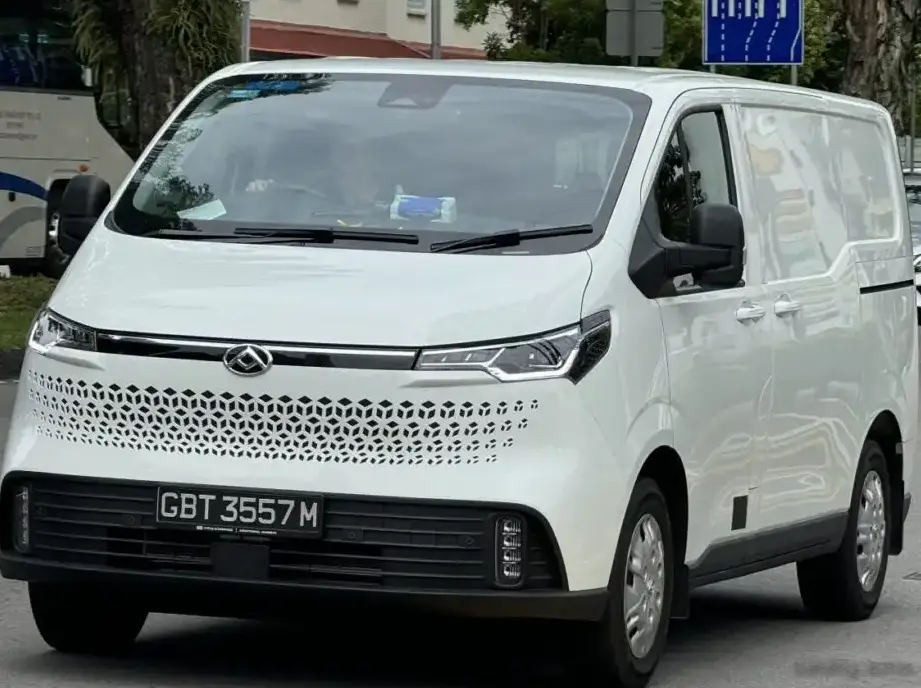
The Maxus eDeliver 9 Double Cab L3H3 77 kWh is an all-electric van introduced in November 2024, marking Maxus’s entry into the rapidly expanding electric commercial vehicle market. Built upon the Deliver 9 platform, this variant specifically caters to businesses needing both cargo space and passenger capacity, offering seating for up to seven occupants. Positioned as a versatile workhorse, the eDeliver 9 aims to provide a zero-emission alternative to traditional internal combustion engine vans, appealing to companies focused on sustainability and reduced operating costs. The L3H3 designation refers to the body length and roof height, indicating a long wheelbase and high roof configuration, maximizing interior volume. This model is primarily targeted towards the European and Asian markets, with growing interest in North America as electric vehicle infrastructure expands.
Technical Specifications
| Brand | Maxus |
| Model | Deliver 9 |
| Generation | eDeliver 9 Double Cab L3H3 |
| Type (Engine) | 77 kWh (204 Hp) Electric |
| Start of production | November, 2024 |
| Powertrain Architecture | BEV (Electric Vehicle) |
| Body type | Van |
| Seats | 7 |
| Doors | 4 |
| Fuel Type | Electricity |
| Acceleration 0 – 100 km/h | 19 sec |
| Acceleration 0 – 62 mph | 19 sec |
| Acceleration 0 – 60 mph | 18.1 sec |
| Maximum speed | 100 km/h (62.14 mph) |
| Weight-to-power ratio | 13.2 kg/Hp, 75.7 Hp/tonne |
| Weight-to-torque ratio | 8.2 kg/Nm, 122.4 Nm/tonne |
| Gross battery capacity | 77 kWh |
| Battery technology | Lithium iron phosphate (LiFePO4) |
| Battery location | Below the floor |
| All-electric range (WLTP) | 308 km (191.38 mi) |
| Average Energy consumption (WLTP) | 26.2 kWh/100 km (42.16 kWh/100 mi) |
| MPGe | 80 |
| km/kWh | 3.8 |
| mi/kWh | 2.4 |
| Electric motor power | 204 Hp |
| Electric motor Torque | 330 Nm (243.4 lb.-ft.) |
| Electric motor model/code | TZ202XSSQC |
| Electric motor location | Front axle, Transverse |
| Electric motor type | Synchronous |
| System power | 204 Hp |
| System torque | 330 Nm (243.4 lb.-ft.) |
| Kerb Weight | 2695 kg (5941.46 lbs.) |
| Max. weight | 3500 kg (7716.18 lbs.) |
| Max load | 805 kg (1774.72 lbs.) |
| Trunk (boot) space – maximum | 7800 l (275.45 cu. ft.) |
| Permitted trailer load with brakes (12%) | 1400 kg (3086.47 lbs.) |
| Permitted trailer load without brakes | 750 kg (1653.47 lbs.) |
| Length | 5940 mm (233.86 in.) |
| Width | 2062 mm (81.18 in.) |
| Height | 2730 mm (107.48 in.) |
| Wheelbase | 3760 mm (148.03 in.) |
| Ride height (ground clearance) | 190 mm (7.48 in.) |
| Minimum turning circle | 14.8 m (48.56 ft.) |
| Approach angle | 18.5° |
| Departure angle | 17.9° |
| Drivetrain Architecture | One electric motor drives the front wheels. |
| Drive wheel | Front wheel drive |
| Number of gears and type of gearbox | 1 gears, automatic transmission |
| Front brakes | Disc |
| Rear brakes | Disc |
| Assisting systems | ABS (Anti-lock braking system) |
| Steering type | Steering rack and pinion |
| Power steering | Electric Steering |
| Tires size | 215/75 R16C |
| Wheel rims size | 16 |
Powertrain & Engine Architecture
The eDeliver 9 Double Cab L3H3 utilizes a fully electric powertrain, centered around a 77 kWh Lithium Iron Phosphate (LiFePO4) battery pack. LiFePO4 chemistry is favored for its enhanced thermal stability and longer lifespan compared to traditional Nickel Manganese Cobalt (NMC) batteries, although it typically offers slightly lower energy density. The battery is mounted under the floor, contributing to a lower center of gravity and maximizing interior space. A single synchronous electric motor, designated TZ202XSSQC, drives the front wheels, producing 204 horsepower and 330 Nm (243.4 lb.-ft.) of torque. The powertrain employs a single-speed automatic transmission, typical of electric vehicles, providing seamless acceleration. The electric motor’s transverse mounting optimizes packaging within the front-wheel-drive configuration.
Driving Characteristics
With 204 hp and 330 Nm of torque, the eDeliver 9 Double Cab L3H3 offers adequate, though not exceptional, performance for commercial applications. Acceleration from 0-100 km/h (0-62 mph) takes approximately 19 seconds, and 0-60 mph is achieved in around 18.1 seconds. The single-speed transmission delivers instant torque, making it responsive in urban driving conditions. However, the van’s weight (2695 kg / 5941.46 lbs) is noticeable, particularly when fully loaded. The focus is on efficiency and usability rather than outright speed. Compared to potential future variants with higher power outputs, this version prioritizes range and lower operating costs. The front-wheel-drive configuration provides predictable handling, but traction can be limited in slippery conditions when carrying heavy loads.
Equipment & Trim Levels
The eDeliver 9 Double Cab L3H3 is generally equipped with a functional, work-oriented interior. Standard features typically include air conditioning, a basic infotainment system with Bluetooth connectivity, and a driver’s seat with adjustable lumbar support. The double cab configuration provides seating for seven passengers, with a second row of seats behind the driver. Interior upholstery is durable and easy to clean, reflecting the van’s commercial purpose. Optional extras may include a more advanced infotainment system with navigation, parking sensors, a rearview camera, and upgraded safety features like lane departure warning and automatic emergency braking. Trim levels are relatively limited, focusing on providing essential features for commercial use.
Chassis & Braking
The eDeliver 9 Double Cab L3H3 features a conventional front-wheel-drive chassis with independent suspension at the front and a semi-independent suspension at the rear. Disc brakes are fitted on all four wheels, providing adequate stopping power. An Anti-lock Braking System (ABS) is standard. The suspension is tuned for comfort and load-carrying capacity, prioritizing stability over sporty handling. The steering utilizes an electric power steering system, offering light and precise control. The van rides on 16-inch wheels with 215/75 R16C tires, designed for durability and load-bearing capability.
Market Reception & Comparison
The Maxus eDeliver 9 Double Cab L3H3 has been generally well-received as a practical and affordable electric van option. Critics have praised its spacious interior, decent range (308 km / 191.38 mi WLTP), and competitive pricing. Compared to other electric vans in its class, such as the Ford E-Transit and Mercedes-Benz eSprinter, the eDeliver 9 offers a compelling value proposition. Its energy consumption of 26.2 kWh/100 km (42.16 kWh/100 mi) is competitive, and its LiFePO4 battery chemistry offers potential longevity benefits. However, some reviewers have noted its relatively slow acceleration and basic interior compared to more premium offerings.
Legacy
As a relatively new entrant to the electric van market, the long-term reliability of the eDeliver 9 Double Cab L3H3 remains to be fully established. However, Maxus has a growing reputation for building durable commercial vehicles. The LiFePO4 battery pack is expected to provide a long service life, and the relatively simple electric powertrain should require less maintenance than a traditional internal combustion engine. In the used car market, the eDeliver 9 is likely to appeal to businesses seeking a cost-effective and environmentally friendly transportation solution. Its value will depend on battery health, mileage, and overall condition. The eDeliver 9 represents a significant step towards the electrification of commercial fleets, contributing to reduced emissions and a more sustainable transportation future.