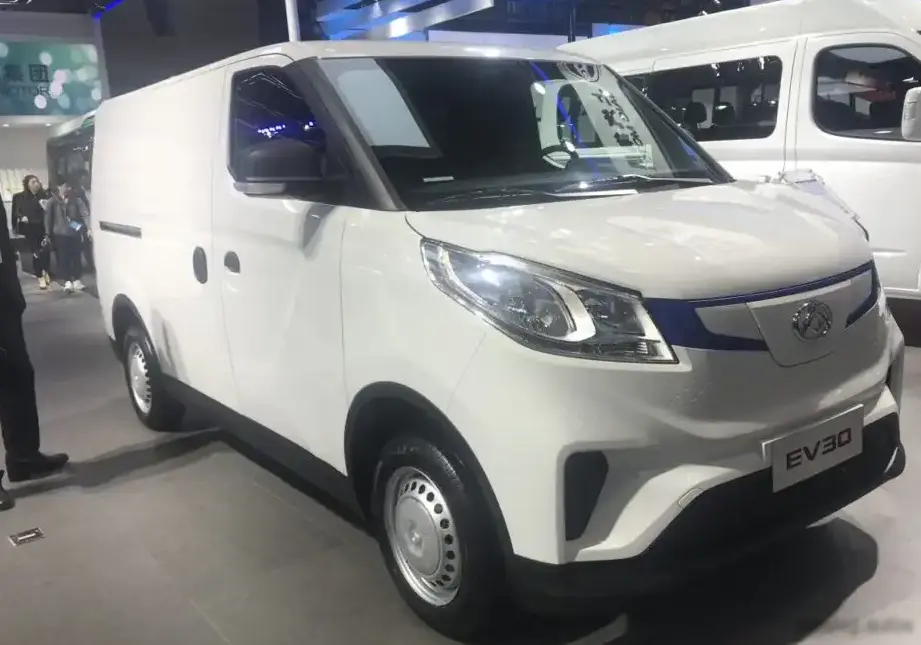
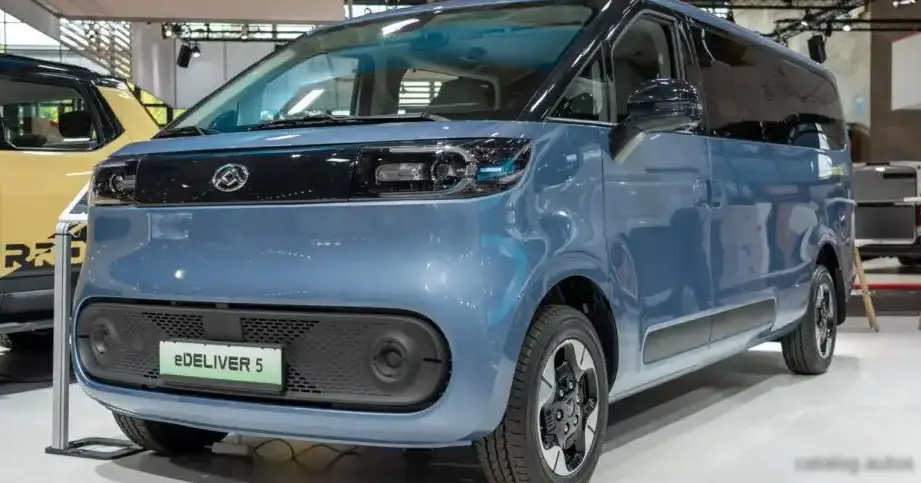
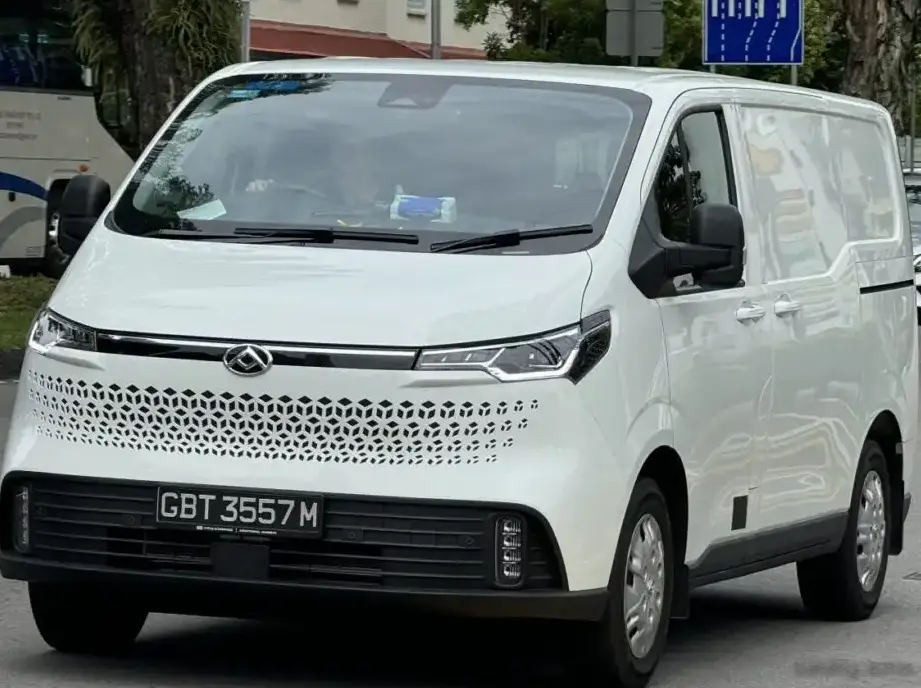
The Maxus eDeliver 9 L3H3 77 kWh is a fully electric commercial van introduced in November 2024. Representing Maxus’s entry into the rapidly expanding electric van market, the eDeliver 9 is designed for last-mile delivery, logistics, and commercial transport applications. It’s positioned as a practical and environmentally conscious alternative to traditional internal combustion engine vans, offering a substantial cargo capacity and a competitive range. The L3H3 designation refers to the body length and roof height, indicating a larger variant within the eDeliver 9 range. This model is primarily targeted towards the European and Asian markets, with increasing interest in North America as electric vehicle adoption grows.
Technical Specifications
| Brand | Maxus |
| Model | Deliver 9 |
| Generation | eDeliver 9 L3H3 |
| Type (Engine) | 77 kWh (204 Hp) Electric |
| Start of production | November, 2024 |
| Powertrain Architecture | BEV (Electric Vehicle) |
| Body type | Van |
| Seats | 3 |
| Doors | 4-5 |
| Fuel Type | Electricity |
| Acceleration 0 – 100 km/h | 19 sec |
| Acceleration 0 – 62 mph | 19 sec |
| Acceleration 0 – 60 mph | 18.1 sec |
| Maximum speed | 100 km/h (62.14 mph) |
| Weight-to-power ratio | 12.6 kg/Hp, 79.1 Hp/tonne |
| Weight-to-torque ratio | 7.8 kg/Nm, 127.9 Nm/tonne |
| Gross battery capacity | 77 kWh |
| Battery technology | Lithium iron phosphate (LiFePO4) |
| Battery location | Below the floor |
| All-electric range (WLTP) | 287-308 km (178.33 – 191.38 mi) |
| Average Energy consumption (WLTP) | 26.2-30.8 kWh/100 km (42.16 – 49.57 kWh/100 mi) |
| MPGe | 80 – 68 |
| km/kWh | 3.8 – 3.2 |
| mi/kWh | 2.4 – 2 |
| Electric motor power | 204 Hp |
| Electric motor Torque | 330 Nm (243.4 lb.-ft.) |
| Electric motor model/code | TZ202XSSQC |
| Electric motor location | Front axle, Transverse |
| Electric motor type | Synchronous |
| System power | 204 Hp |
| System torque | 330 Nm (243.4 lb.-ft.) |
| Kerb Weight | 2580-2600 kg (5687.93 – 5732.02 lbs.) |
| Max. weight | 3500 kg (7716.18 lbs.) |
| Max load | 900-920 kg (1984.16 – 2028.25 lbs.) |
| Trunk (boot) space – maximum | 12500 l (441.43 cu. ft.) |
| Permitted trailer load with brakes (12%) | 1500 kg (3306.93 lbs.) |
| Permitted trailer load without brakes | 750 kg (1653.47 lbs.) |
| Length | 5940 mm (233.86 in.) |
| Width | 2062 mm (81.18 in.) |
| Height | 2730 mm (107.48 in.) |
| Wheelbase | 3760 mm (148.03 in.) |
| Ride height (ground clearance) | 190 mm (7.48 in.) |
| Minimum turning circle | 14.8 m (48.56 ft.) |
| Approach angle | 18.5° |
| Departure angle | 17.9° |
| Drivetrain Architecture | One electric motor drives the front wheels. |
| Drive wheel | Front wheel drive |
| Number of gears and type of gearbox | 1 gears, automatic transmission |
| Front brakes | Disc |
| Rear brakes | Disc |
| Assisting systems | ABS (Anti-lock braking system) |
| Steering type | Steering rack and pinion |
| Power steering | Electric Steering |
| Tires size | 215/75 R16C |
| Wheel rims size | 16 |
The Maxus eDeliver 9 L3H3 utilizes a fully Battery Electric Vehicle (BEV) powertrain. At its heart is a 77 kWh Lithium Iron Phosphate (LiFePO4) battery pack, strategically positioned under the vehicle floor to optimize weight distribution and maximize cargo space. This battery powers a single synchronous electric motor, delivering 204 horsepower and 330 Nm (243.4 lb.-ft.) of torque. The motor is transversely mounted on the front axle, driving the front wheels. The single-speed automatic transmission simplifies operation and provides smooth, linear acceleration. The use of LiFePO4 chemistry is notable for its enhanced thermal stability and longer lifespan compared to traditional Nickel Manganese Cobalt (NMC) batteries, although it typically offers slightly lower energy density. The motor itself is identified by the code TZ202XSSQC.
Driving Characteristics
The eDeliver 9 L3H3, with its 204 hp and single-speed automatic, offers adequate performance for urban and suburban delivery routes. Acceleration is not its strong suit, taking approximately 19 seconds to reach 62 mph. However, the instant torque delivery characteristic of electric motors provides brisk acceleration from a standstill, making it well-suited for frequent stop-and-go traffic. The single-gear ratio simplifies driving, and the lack of traditional gear changes contributes to a smooth and quiet driving experience. Compared to potential future higher-performance variants, this configuration prioritizes efficiency and practicality over outright speed. The front-wheel-drive layout provides predictable handling, but may exhibit some torque steer under hard acceleration.
Equipment & Trim Levels
The eDeliver 9 L3H3 is generally equipped with a functional and practical interior focused on driver comfort and utility. Standard features typically include air conditioning, a basic infotainment system with Bluetooth connectivity, and a driver’s seat with adjustable lumbar support. Safety features such as ABS (Anti-lock Braking System) and multiple airbags are also standard. The van’s interior is designed for durability and ease of cleaning. Optional extras may include a more advanced infotainment system with navigation, parking sensors, a reversing camera, and upgraded interior trim materials. The L3H3 variant, being a larger model, offers a substantial 12,500 liters (441.43 cubic feet) of cargo space.
Chassis & Braking
The eDeliver 9 L3H3 features a robust chassis designed to handle substantial payloads. The suspension system consists of independent suspension at the front and a semi-independent setup at the rear. Disc brakes are fitted on all four wheels, providing adequate stopping power for the van’s weight. Electric power steering provides light and precise steering control. The van’s ride height is 190 mm (7.48 inches), offering reasonable ground clearance for navigating urban environments. The relatively low center of gravity, due to the underfloor battery pack, contributes to improved stability.
Market Reception & Comparison
The Maxus eDeliver 9 L3H3 has been generally well-received in the commercial vehicle market, particularly in Europe, as businesses seek to electrify their fleets. Critics have praised its spacious cargo area, competitive range, and relatively affordable price point compared to some rivals. Its energy consumption of 26.2-30.8 kWh/100 km translates to a respectable MPGe rating of 80-68. Compared to internal combustion engine equivalents, the eDeliver 9 offers significantly lower running costs due to reduced fuel and maintenance expenses. Competitors include the Ford E-Transit, Mercedes-Benz eSprinter, and Fiat E-Ducato. The Maxus often positions itself as a value-oriented option within this segment.
Legacy
As a relatively new entrant to the electric van market, the long-term reliability of the Maxus eDeliver 9 L3H3 is still being established. However, the use of LiFePO4 battery technology suggests a potentially long battery lifespan. The simplicity of the electric powertrain, with fewer moving parts than a traditional internal combustion engine, is expected to contribute to lower maintenance costs. In the used car market, the eDeliver 9 is likely to appeal to businesses seeking a cost-effective and environmentally friendly delivery solution. Its success will depend on continued improvements in battery technology, charging infrastructure, and overall market acceptance of electric commercial vehicles.