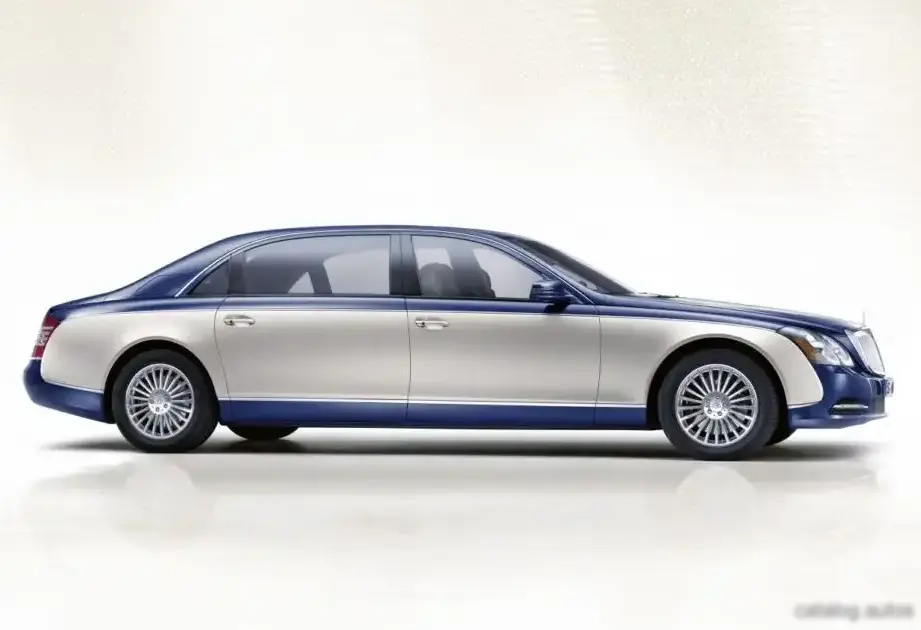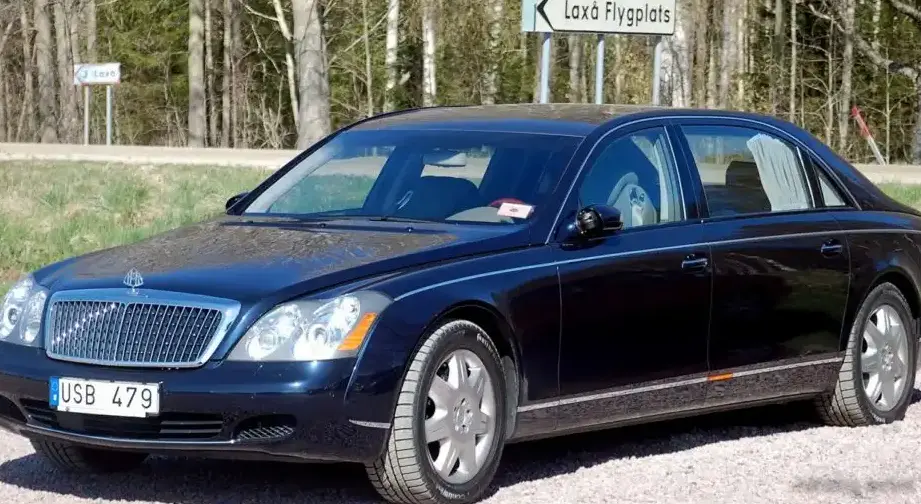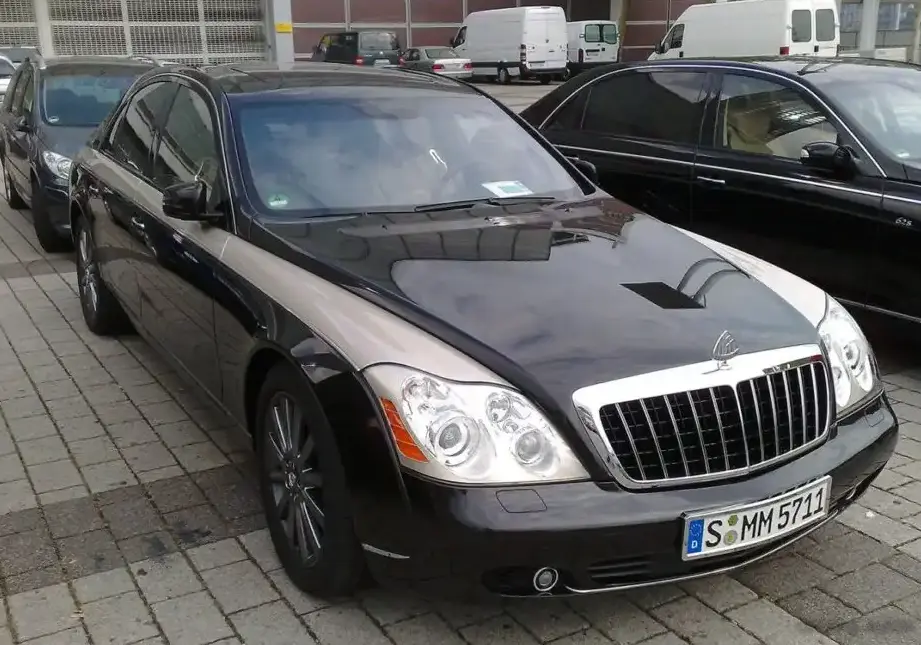
The Maybach 62 S (V240), produced from 2006 to 2009, represented the pinnacle of ultra-luxury sedan design and engineering. Positioned as the high-performance variant of the 62 model, the 62 S aimed to deliver a more dynamic driving experience without sacrificing the opulent comfort expected of a Maybach. It was built upon the W240 platform, a bespoke chassis developed specifically for Maybach, and served as a direct competitor to the Rolls-Royce Phantom. The “S” designation denoted a sportier tune, primarily achieved through engine enhancements and a revised suspension setup. This model was a relatively short-lived offering, as Maybach production was ultimately absorbed back into Mercedes-Benz.
Technical Specifications
| Brand | Maybach |
| Model | 62 S |
| Generation | 62 S (V240) |
| Type (Engine) | 6.0 V12 (612 Hp) Automatic |
| Start of production | 2006 |
| End of production | 2009 |
| Powertrain Architecture | Internal Combustion engine |
| Body type | Sedan |
| Seats | 4 |
| Doors | 4 |
| Fuel consumption (economy) – urban (NEDC) | 24.6 l/100 km (9.6 US mpg, 11.5 UK mpg, 4.1 km/l) |
| Fuel consumption (economy) – extra urban (NEDC) | 11.8 l/100 km (19.9 US mpg, 23.9 UK mpg, 8.5 km/l) |
| Fuel consumption (economy) – combined (NEDC) | 16.4 l/100 km (14.3 US mpg, 17.2 UK mpg, 6.1 km/l) |
| CO2 emissions (NEDC) | 390 g/km |
| Fuel Type | Petrol (Gasoline) |
| Acceleration 0 – 100 km/h | 5.2 sec |
| Acceleration 0 – 62 mph | 5.2 sec |
| Acceleration 0 – 60 mph | 4.9 sec |
| Acceleration 0 – 200 km/h | 16.2 sec |
| Maximum speed | 250 km/h (155.34 mph), Electronically limited |
| Emission standard | Euro 4 |
| Weight-to-power ratio | 4.5 kg/Hp, 220.1 Hp/tonne |
| Weight-to-torque ratio | 2.8 kg/Nm, 359.7 Nm/tonne |
| Power | 612 Hp @ 4800-5100 rpm |
| Power per litre | 102.3 Hp/l |
| Torque | 1000 Nm @ 2000-4000 rpm (737.56 lb.-ft. @ 2000-4000 rpm) |
| Engine layout | Front, Longitudinal |
| Engine Model/Code | M 285.980 |
| Engine displacement | 5980 cm3 (364.92 cu. in.) |
| Number of cylinders | 12 |
| Engine configuration | V-engine |
| Cylinder Bore | 82.6 mm (3.25 in.) |
| Piston Stroke | 93 mm (3.66 in.) |
| Compression ratio | 9:1 |
| Number of valves per cylinder | 3 |
| Fuel injection system | Multi-port manifold injection |
| Engine aspiration | BiTurbo, Intercooler |
| Valvetrain | SOHC |
| Engine oil capacity | 10 l (10.57 US qt | 8.8 UK qt) |
| Coolant | 17 l (17.96 US qt | 14.96 UK qt) |
| Kerb Weight | 2780 kg (6128.85 lbs.) |
| Max. weight | 3380 kg (7451.62 lbs.) |
| Max load | 600 kg (1322.77 lbs.) |
| Trunk (boot) space – minimum | 605 l (21.37 cu. ft.) |
| Fuel tank capacity | 110 l (29.06 US gal | 24.2 UK gal) |
| Length | 6160 mm (242.52 in.) |
| Width | 1980 mm (77.95 in.) |
| Width including mirrors | 2134 mm (84.02 in.) |
| Height | 1573 mm (61.93 in.) |
| Wheelbase | 3827 mm (150.67 in.) |
| Front track | 1675 mm (65.94 in.) |
| Rear (Back) track | 1695 mm (66.73 in.) |
| Front overhang | 1009 mm (39.72 in.) |
| Rear overhang | 1324 mm (52.13 in.) |
| Ride height (ground clearance) | 156 mm (6.14 in.) |
| Minimum turning circle (turning diameter) | 14.8 m (48.56 ft.) |
| Approach angle | 14.5° |
| Departure angle | 13.7° |
| Ramp-over (brakeover) angle | 10.4° |
| Drivetrain Architecture | The Internal combustion engine (ICE) drives the rear wheels of the vehicle. |
| Drive wheel | Rear wheel drive |
| Number of gears and type of gearbox | 5 gears, automatic transmission |
| Front suspension | Double wishbone, Transverse stabilizer, Air suspension |
| Rear suspension | Independent multi-link suspension, Air suspension, Transverse stabilizer |
| Front brakes | Ventilated discs |
| Rear brakes | Ventilated discs |
| Assisting systems | ABS (Anti-lock braking system) |
| Steering type | Cone worm with recirculation balls |
| Power steering | Hydraulic Steering |
| Tires size | 275/45 R20 |
| Wheel rims size | 8.5J x 20 |
Powertrain & Engine Architecture
The heart of the Maybach 62 S is the M285.980 6.0-liter V12 engine, derived from the Mercedes-Benz M275 engine family. This engine is notable for its twin-turbocharged configuration, employing two turbochargers to significantly boost power and torque. The engine utilizes multi-port fuel injection and a single overhead camshaft (SOHC) valvetrain. The key difference between the standard 62’s engine and the 62 S’s was an increase in boost pressure, resulting in the higher 612 horsepower output and a substantial 1000 Nm (737 lb-ft) of torque. The engine is longitudinally mounted in the front of the vehicle. The 62 S exclusively came equipped with a 5-speed automatic transmission, specifically designed to handle the immense power output of the V12. This transmission was known for its smooth shifts, but by modern standards, the gear count is relatively low.
Driving Characteristics
Despite its considerable size and weight, the Maybach 62 S offered surprisingly agile performance for a car of its class. The increased power and torque, combined with the revised suspension tuning, resulted in quicker acceleration and more responsive handling compared to the standard 62. The 0-60 mph sprint was dispatched in approximately 4.9 seconds, and the electronically limited top speed of 155 mph was easily achievable. The 5-speed automatic transmission, while smooth, wasn’t particularly quick-shifting, and the gear ratios were geared more towards effortless cruising than outright performance. The air suspension provided a remarkably comfortable ride, effectively isolating passengers from road imperfections, even when driven spiritedly. However, the sheer mass of the vehicle was always present, making it feel less nimble than smaller, lighter luxury sedans.
Equipment & Trim Levels
The Maybach 62 S was comprehensively equipped as standard, reflecting its ultra-luxury positioning. Interior appointments included premium leather upholstery, extensive wood trim, and a high level of sound insulation. Rear passengers enjoyed a wealth of space and amenities, including reclining seats with massage functions, individual climate control, and a rear entertainment system. Standard features also included a premium audio system, bi-xenon headlights, and a sophisticated navigation system. Optional extras included a bespoke sound system, a champagne cooler, and a variety of customization options for the interior trim and paintwork. The 62 S generally featured more aggressive exterior styling cues than the standard 62, including a more prominent front grille and unique alloy wheel designs.
Chassis & Braking
The Maybach 62 S utilized a double wishbone suspension setup at the front and an independent multi-link suspension at the rear, both incorporating air suspension technology. This air suspension allowed for adjustable ride height and damping, providing a balance between comfort and handling. The braking system consisted of ventilated discs on all four wheels, coupled with an Anti-lock Braking System (ABS). While the brakes were powerful and effective, they weren’t particularly sporty in feel. The steering system employed a cone worm and recirculation balls setup with hydraulic power assistance, providing a smooth and precise steering experience, albeit lacking the directness of more modern steering systems.
Market Reception & Comparison
The Maybach 62 S was generally well-received by automotive critics, who praised its luxurious interior, powerful engine, and comfortable ride. However, it was also criticized for its high price tag, relatively low fuel economy, and the fact that it didn’t quite match the driving dynamics of its rival, the Rolls-Royce Phantom. Compared to the standard Maybach 62, the 62 S offered a more engaging driving experience, but at the expense of some fuel efficiency. The 62 S also represented a significant price premium over the standard 62. Against other V12-powered luxury sedans, the 62 S offered a unique blend of German engineering and opulent luxury.
Legacy
The Maybach 62 S, while a relatively rare and short-lived model, remains a highly sought-after vehicle among collectors and enthusiasts. The M285.980 V12 engine proved to be a robust and reliable powerplant, and well-maintained examples continue to provide years of service. However, the complexity of the vehicle and the cost of replacement parts can make maintenance expensive. On the used car market, the 62 S commands a premium price, reflecting its exclusivity and the prestige associated with the Maybach brand. It represents a unique chapter in automotive history, a bold attempt to revive the Maybach name and compete with the established ultra-luxury marques.