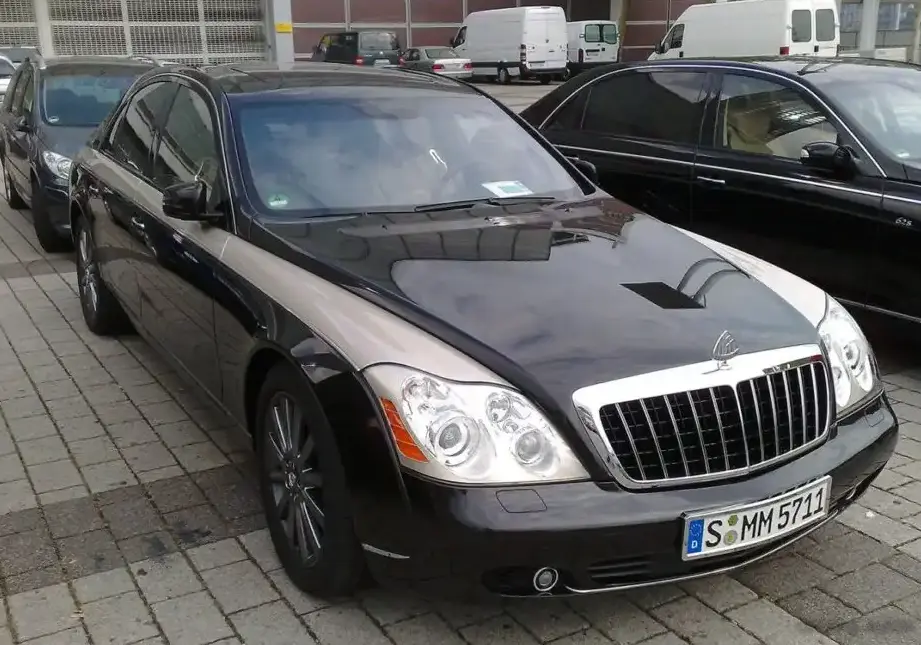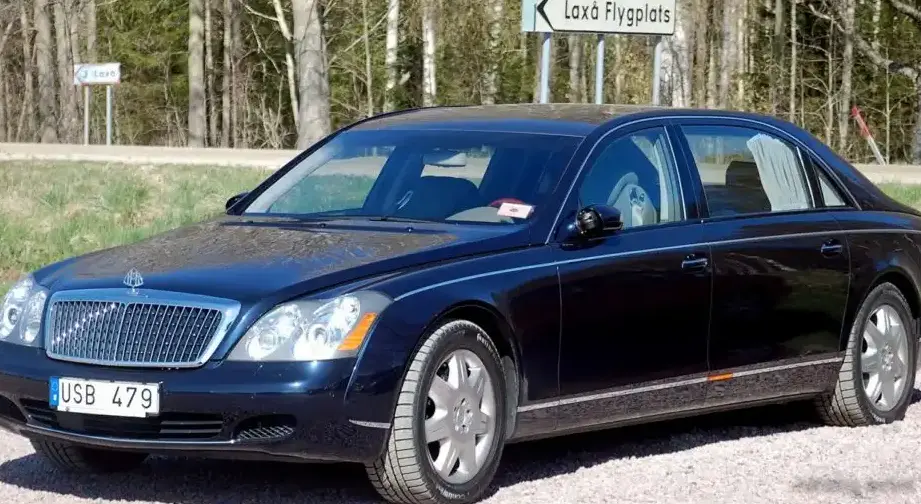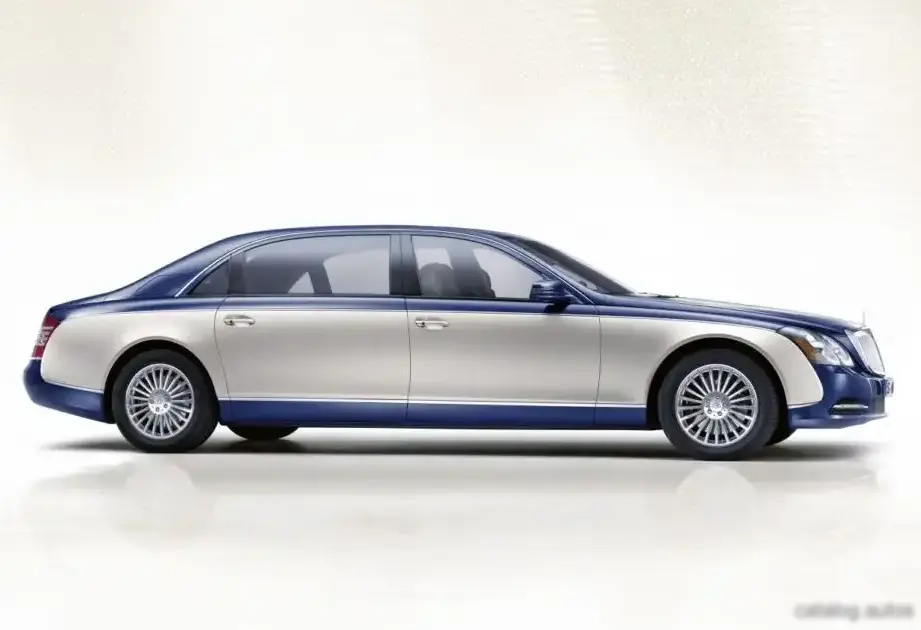
The Maybach 62 S (V240 facelift), produced from 2010 to 2013, represented the pinnacle of ultra-luxury sedan design and engineering from the marque. Positioned as the high-performance variant of the 62 model, the 62 S aimed to deliver a more dynamic driving experience without sacrificing the opulent comfort expected of a Maybach. This iteration, powered by a twin-turbocharged 6.0-liter V12 engine paired with a five-speed automatic transmission, was a statement of exclusivity and engineering prowess, though production numbers remained limited before the Maybach brand was ultimately absorbed into Mercedes-Benz.
Technical Specifications
| Brand | Maybach |
| Model | 62 S |
| Generation | 62 S (V240, facelift 2010) |
| Type (Engine) | 6.0 V12 (630 Hp) Automatic |
| Start of production | 2010 |
| End of production | 2013 |
| Powertrain Architecture | Internal Combustion engine |
| Body type | Sedan |
| Seats | 4 |
| Doors | 4 |
| Fuel consumption (economy) – urban (NEDC) | 24.6 l/100 km (9.6 US mpg, 11.5 UK mpg, 4.1 km/l) |
| Fuel consumption (economy) – extra urban (NEDC) | 11.8 l/100 km (19.9 US mpg, 23.9 UK mpg, 8.5 km/l) |
| Fuel consumption (economy) – combined (NEDC) | 15.8 l/100 km (14.9 US mpg, 17.9 UK mpg, 6.3 km/l) |
| CO2 emissions (NEDC) | 368 g/km |
| Fuel Type | Petrol (Gasoline) |
| Acceleration 0 – 100 km/h | 5.1 sec |
| Acceleration 0 – 62 mph | 5.1 sec |
| Acceleration 0 – 60 mph | 4.8 sec |
| Maximum speed | 275 km/h (170.88 mph) – Electronically limited |
| Emission standard | Euro 5 |
| Weight-to-power ratio | 4.4 kg/Hp, 226.6 Hp/tonne |
| Weight-to-torque ratio | 2.8 kg/Nm, 359.7 Nm/tonne |
| Power | 630 Hp @ 4800-5100 rpm |
| Power per litre | 105.4 Hp/l |
| Torque | 1000 Nm @ 2000-4000 rpm (737.56 lb.-ft. @ 2000-4000 rpm) |
| Engine layout | Front, Longitudinal |
| Engine Model/Code | M 285.980 |
| Engine displacement | 5980 cm3 (364.92 cu. in.) |
| Number of cylinders | 12 |
| Engine configuration | V-engine |
| Cylinder Bore | 82.6 mm (3.25 in.) |
| Piston Stroke | 93 mm (3.66 in.) |
| Compression ratio | 9:1 |
| Number of valves per cylinder | 3 |
| Fuel injection system | Multi-port manifold injection |
| Engine aspiration | BiTurbo, Intercooler |
| Valvetrain | SOHC |
| Engine oil capacity | 10 l (10.57 US qt | 8.8 UK qt) |
| Coolant | 17 l (17.96 US qt | 14.96 UK qt) |
| Kerb Weight | 2780 kg (6128.85 lbs.) |
| Max. weight | 3380 kg (7451.62 lbs.) |
| Max load | 600 kg (1322.77 lbs.) |
| Trunk (boot) space – minimum | 605 l (21.37 cu. ft.) |
| Fuel tank capacity | 110 l (29.06 US gal | 24.2 UK gal) |
| Length | 6171 mm (242.95 in.) |
| Width | 1980 mm (77.95 in.) |
| Width including mirrors | 2151 mm (84.69 in.) |
| Height | 1573 mm (61.93 in.) |
| Wheelbase | 3827 mm (150.67 in.) |
| Front track | 1675 mm (65.94 in.) |
| Rear (Back) track | 1695 mm (66.73 in.) |
| Front overhang | 1020 mm (40.16 in.) |
| Rear overhang | 1324 mm (52.13 in.) |
| Minimum turning circle (turning diameter) | 14.8 m (48.56 ft.) |
| Drivetrain Architecture | Rear wheel drive |
| Drive wheel | Rear wheel drive |
| Number of gears and type of gearbox | 5 gears, automatic transmission |
| Front suspension | Double wishbone, Air suspension |
| Rear suspension | Independent multi-link suspension, Air suspension |
| Front brakes | Ventilated discs |
| Rear brakes | Ventilated discs |
| Assisting systems | ABS (Anti-lock braking system) |
| Steering type | Cone worm with recirculation balls |
| Power steering | Hydraulic Steering |
| Tires size | 275/45 R20 |
| Wheel rims size | 8.5J x 20 |
INTRODUCTION
The Maybach 62 S, introduced as part of the V240 facelift in 2010, was designed to address criticisms that the original 62 was too focused on rear-seat comfort and lacked the driving engagement expected of a vehicle in its price bracket. Built on the W221 Mercedes-Benz S-Class platform (extended wheelbase), the 62 S offered a more potent version of the 6.0-liter V12 engine, along with subtle chassis revisions aimed at improving handling. It represented a final attempt to establish Maybach as a viable competitor to Rolls-Royce and Bentley before the brand was ultimately re-integrated into Mercedes-Benz’s high-performance offerings.
Powertrain & Engine Architecture
At the heart of the 62 S lies the M285.980 6.0-liter V12 engine. This engine, derived from Mercedes-Benz’s own V12 designs, features twin turbochargers and multi-port fuel injection. The engine produces 630 horsepower at 4800-5100 rpm and a massive 1000 Nm (737.56 lb-ft) of torque between 2000 and 4000 rpm. The engine’s architecture incorporates a single overhead camshaft (SOHC) valvetrain with three valves per cylinder. The five-speed automatic transmission, while robust, is a point of criticism in retrospect, as more modern transmissions offer smoother shifts and more gear ratios for optimized performance and fuel efficiency. The transmission was specifically tuned to provide smooth, yet relatively quick, gear changes suitable for the car’s luxury positioning.
Driving Characteristics
The 62 S offered a noticeably more engaging driving experience than the standard 62. While still prioritizing comfort, the increased power and torque, combined with subtle suspension tweaks, resulted in significantly improved acceleration. The 0-60 mph sprint was dispatched in around 4.8 seconds, and the electronically limited top speed of 275 km/h (170.88 mph) was readily achievable. However, the car’s substantial weight (2780 kg / 6128.85 lbs) was always apparent, and the five-speed automatic, while refined, lacked the responsiveness of more modern transmissions. Compared to other V12-powered luxury sedans of the era, the 62 S offered a unique blend of effortless power and substantial presence, but it wasn’t necessarily the most agile or dynamically focused vehicle in its class.
Equipment & Trim Levels
The Maybach 62 S came standard with an exceptionally high level of equipment. Interior appointments included premium leather upholstery, wood veneer trim (a variety of options were available), and a bespoke sound system. Rear passengers enjoyed reclining seats with massage functions, individual climate control, and entertainment systems. Standard features also included adaptive cruise control, a parking assist system, and a panoramic sunroof. Optional extras were extensive, allowing customers to personalize their vehicles to an almost limitless degree. These included custom paint colors, bespoke interior designs, and even champagne coolers integrated into the rear center console.
Chassis & Braking
The 62 S utilized an air suspension system, providing a remarkably smooth and comfortable ride. The suspension was electronically controlled and adjusted to road conditions and driving style. The car featured ventilated disc brakes on all four wheels, coupled with an anti-lock braking system (ABS). While the braking performance was adequate for the car’s weight and performance, it wasn’t particularly noteworthy compared to other high-performance luxury sedans. The chassis benefited from reinforced components compared to the standard 62, contributing to improved handling and stability.
Market Reception & Comparison
Critics generally praised the Maybach 62 S for its luxurious interior, powerful engine, and improved driving dynamics compared to the standard 62. However, the car’s high price tag, combined with the availability of more dynamically engaging alternatives from Bentley and Rolls-Royce, limited its market appeal. Fuel economy was, unsurprisingly, poor, with combined consumption figures of 15.8 l/100 km (14.9 US mpg). Compared to the standard 62, the ‘S’ model offered a significant performance upgrade, but at the expense of some fuel efficiency. The 62 S also faced competition from the Mercedes-Benz S65 AMG, which offered similar performance in a more sporting package.
Legacy
The Maybach 62 S represents a fascinating chapter in the history of ultra-luxury automobiles. While the Maybach brand ultimately failed to gain significant market share, the 62 S showcased the engineering capabilities and design aspirations of the marque. Today, the 62 S is a relatively rare and collectible vehicle. The twin-turbo V12 engine is generally considered reliable, but maintenance costs are exceptionally high due to the car’s complexity and the scarcity of parts. Well-maintained examples command significant prices on the used car market, appealing to collectors and enthusiasts who appreciate the car’s unique blend of luxury, performance, and exclusivity.