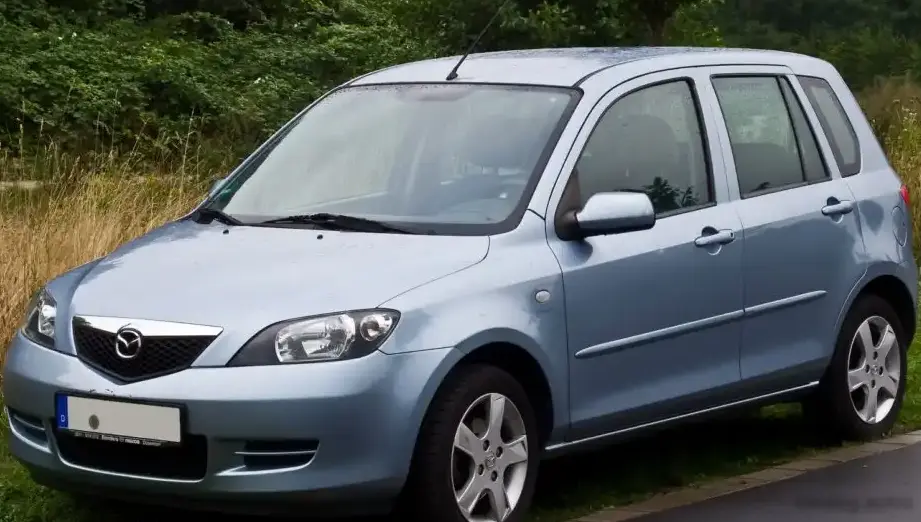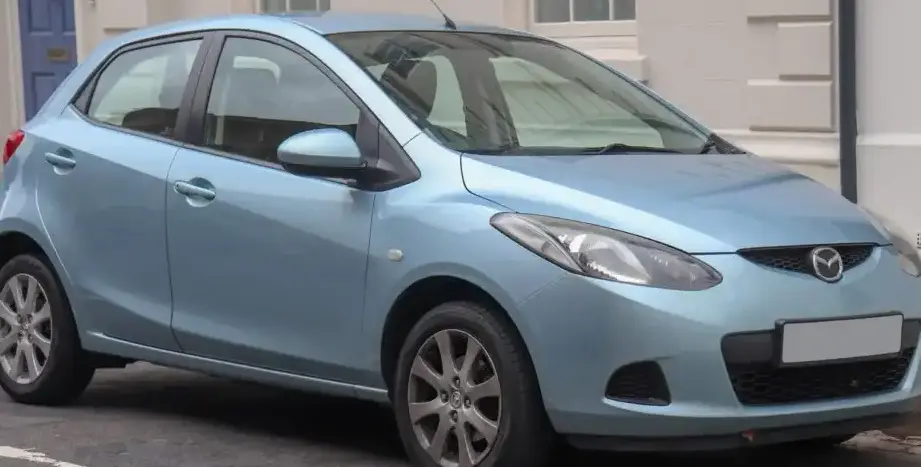
The Mazda2 II (DE) 1.4 CD, produced between 2008 and 2010, represented an entry-level diesel option within the second generation of Mazda’s subcompact hatchback. Positioned as a fuel-efficient and economical choice, this variant aimed to appeal to buyers prioritizing low running costs over outright performance. It was a key offering in the European market, where small diesel hatchbacks were – and continue to be – highly popular. The DE generation Mazda2, built on the DY platform shared with the Ford Fiesta Mk6, marked a significant step forward in terms of design, interior quality, and driving dynamics compared to its predecessor.
Technical Specifications
| Brand | Mazda |
| Model | 2 |
| Generation | 2 II (DE) |
| Type (Engine) | 1.4 CD (68 Hp) |
| Start of production | 2008 |
| End of production | 2010 |
| Powertrain Architecture | Internal Combustion engine |
| Body type | Hatchback |
| Seats | 5 |
| Doors | 5 |
| Fuel consumption (urban) | 5.3 l/100 km (44.4 US mpg, 53.3 UK mpg, 18.9 km/l) |
| Fuel consumption (extra urban) | 3.7 l/100 km (63.6 US mpg, 76.3 UK mpg, 27 km/l) |
| Fuel consumption (combined) | 4.3 l/100 km (54.7 US mpg, 65.7 UK mpg, 23.3 km/l) |
| CO2 emissions | 114 g/km |
| Fuel Type | Diesel |
| Acceleration 0 – 100 km/h | 15.5 sec |
| Acceleration 0 – 62 mph | 15.5 sec |
| Acceleration 0 – 60 mph | 14.7 sec |
| Maximum speed | 162 km/h (100.66 mph) |
| Emission standard | Euro 4 |
| Weight-to-power ratio | 14.3 kg/Hp |
| Weight-to-torque ratio | 6.1 kg/Nm |
| Power | 68 Hp @ 4000 rpm |
| Torque | 160 Nm @ 2000 rpm (118.01 lb.-ft. @ 2000 rpm) |
| Engine layout | Front, Transverse |
| Engine Model/Code | Y404 |
| Engine displacement | 1399 cm3 (85.37 cu. in.) |
| Number of cylinders | 4 |
| Engine configuration | Inline |
| Cylinder Bore | 73.7 mm (2.9 in.) |
| Piston Stroke | 82 mm (3.23 in.) |
| Compression ratio | 18:1 |
| Number of valves per cylinder | 2 |
| Fuel injection system | Diesel Commonrail |
| Engine aspiration | Turbocharger, Intercooler |
| Valvetrain | SOHC |
| Engine oil capacity | 3.8 l (4.02 US qt | 3.34 UK qt) |
| Kerb Weight | 975 kg (2149.51 lbs.) |
| Max. weight | 1520 kg (3351.03 lbs.) |
| Max load | 545 kg (1201.52 lbs.) |
| Trunk (boot) space – minimum | 250 l (8.83 cu. ft.) |
| Trunk (boot) space – maximum | 787 l (27.79 cu. ft.) |
| Fuel tank capacity | 43 l (11.36 US gal | 9.46 UK gal) |
| Permitted trailer load with brakes (12%) | 800 kg (1763.7 lbs.) |
| Permitted trailer load without brakes | 500 kg (1102.31 lbs.) |
| Length | 3900 mm (153.54 in.) |
| Width | 1695 mm (66.73 in.) |
| Height | 1475 mm (58.07 in.) |
| Wheelbase | 2490 mm (98.03 in.) |
| Front track | 1485 mm (58.46 in.) |
| Rear (Back) track | 1475 mm (58.07 in.) |
| Ride height (ground clearance) | 150 mm (5.91 in.) |
| Drag coefficient (Cd) | 0.31 |
| Minimum turning circle (turning diameter) | 9.8 m (32.15 ft.) |
| Drivetrain Architecture | The Internal combustion engine (ICE) drives the front wheels of the vehicle. |
| Drive wheel | Front wheel drive |
| Number of gears and type of gearbox | 5 gears, manual transmission |
| Front suspension | Spring Strut |
| Rear suspension | Coil spring |
| Front brakes | Ventilated discs |
| Rear brakes | Drum |
| Assisting systems | ABS (Anti-lock braking system) |
| Steering type | Steering rack and pinion |
| Tires size | 175/65 R14 |
| Wheel rims size | 14 |
INTRODUCTION
The Mazda2 II (DE) 1.4 CD, launched in 2008, was a crucial part of Mazda’s strategy to offer a compelling and efficient subcompact car in the European market. This variant utilized a 1.4-liter common-rail diesel engine, producing 68 horsepower. It was positioned as the entry-level diesel offering, slotting below the more powerful 1.6-liter diesel variants. The DE generation Mazda2 was praised for its stylish design, surprisingly spacious interior for its size, and enjoyable driving experience, attributes that helped it compete effectively against rivals like the Ford Fiesta, Volkswagen Polo, and Renault Clio.
Powertrain & Engine Architecture
The heart of the 1.4 CD variant is the Y404 engine, a 1399cc inline-four cylinder diesel. This engine employed a common-rail direct injection system, delivering fuel at extremely high pressure for improved combustion efficiency and reduced emissions. The Y404 featured a single overhead camshaft (SOHC) valvetrain operating two valves per cylinder. A turbocharger with an intercooler was utilized to boost power output and improve torque delivery. The engine’s 18:1 compression ratio was typical for diesel engines of the era. The 1.4 CD was exclusively offered with a five-speed manual transmission, prioritizing fuel economy over rapid acceleration. The transmission was a standard front-wheel-drive configuration.
Driving Characteristics
The 1.4 CD Mazda2 was not designed for outright speed. With only 68 horsepower and 160 Nm (118 lb-ft) of torque, acceleration was leisurely, taking around 15.5 seconds to reach 62 mph (100 km/h). However, the engine proved to be reasonably responsive at lower RPMs, making it suitable for urban driving and highway cruising. The five-speed manual transmission was well-matched to the engine’s characteristics, allowing drivers to keep the engine in its optimal power band. Compared to the more powerful 1.6-liter diesel or the gasoline-powered variants, the 1.4 CD offered a more economical driving experience, but at the expense of performance. The gear ratios were optimized for fuel efficiency, resulting in a slightly less engaging driving experience than the higher-performance models.
Equipment & Trim Levels
The 1.4 CD typically came with a modest level of standard equipment. Base models included power steering, central locking, electric front windows, and an ABS anti-lock braking system. Air conditioning was often an optional extra. Interior upholstery was typically cloth, with a functional but not luxurious design. Higher trim levels, such as the ‘Sport’ or ‘Luxury’ variants, added features like alloy wheels, a CD player with MP3 compatibility, and upgraded interior trim. Safety features included driver and passenger airbags. The dashboard layout was straightforward and user-friendly, prioritizing practicality over aesthetic flair.
Chassis & Braking
The Mazda2 II (DE) utilized a MacPherson strut front suspension and a coil spring rear suspension. This setup provided a good balance between ride comfort and handling. The front brakes were ventilated discs, offering adequate stopping power, while the rear brakes were drums, a cost-saving measure common in this segment. The chassis was relatively lightweight, contributing to the car’s fuel efficiency. A stabilizer bar was fitted to the front suspension to reduce body roll during cornering. The steering was a rack and pinion system, providing precise and responsive control.
Market Reception & Comparison
The Mazda2 II (DE) 1.4 CD was generally well-received by automotive critics, particularly for its fuel economy and low running costs. It was often praised as a practical and reliable choice for urban commuters. Compared to other diesel-powered subcompacts, the Mazda2 offered a more engaging driving experience than some of its rivals, such as the Renault Clio. However, it wasn’t as refined or powerful as the Volkswagen Polo TDI. Fuel economy figures of around 54.7 US mpg (65.7 UK mpg) were highly competitive for the time. Reliability was generally good, although some owners reported minor issues with the diesel particulate filter (DPF) system, a common concern with diesel engines of this era.
Legacy
The Mazda2 II (DE) 1.4 CD has proven to be a relatively durable and reliable vehicle. Used examples are still readily available today, often at affordable prices. The Y404 diesel engine, while not known for its blistering performance, is generally considered to be robust and long-lasting if properly maintained. Regular servicing, including oil changes and DPF maintenance, is crucial for ensuring the engine’s longevity. The 1.4 CD variant remains a popular choice for buyers seeking an economical and practical subcompact car, particularly those who prioritize fuel efficiency and low running costs over outright performance. Its reputation for reliability and affordability continues to make it a viable option in the used car market.