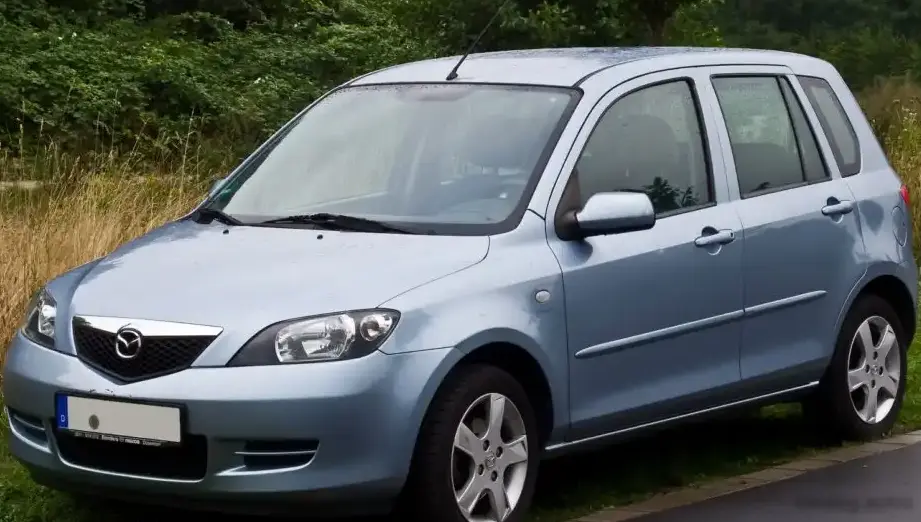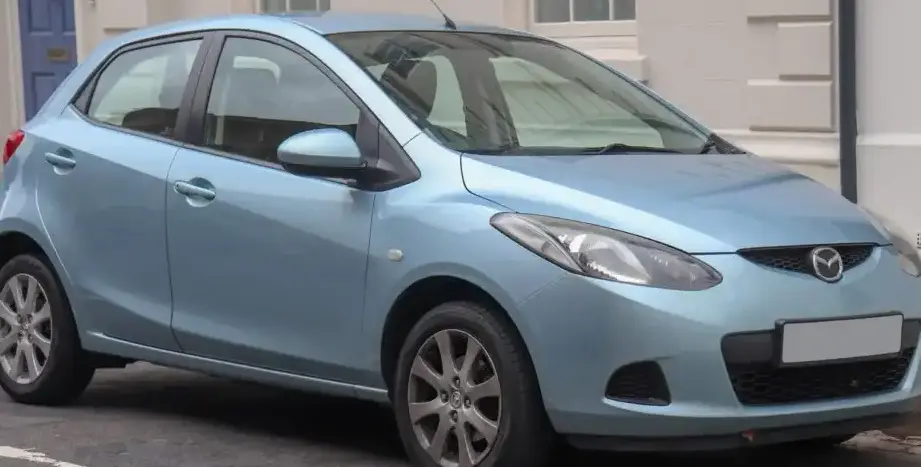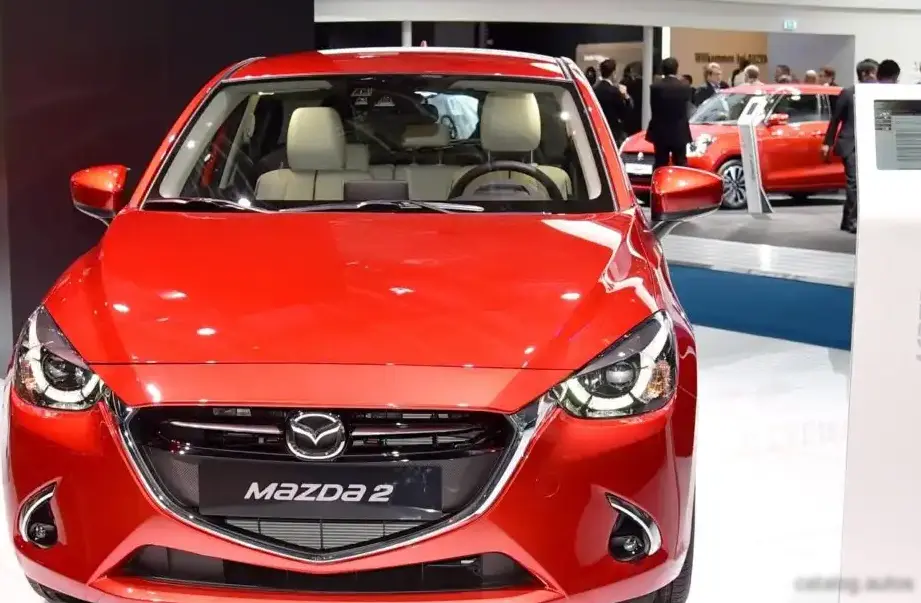
The Mazda 2 III (DJ) 1.5 SkyActiv-G 75 hp variant, produced from November 2014 to 2019, represented the entry point into the third generation of Mazda’s subcompact hatchback. Positioned within the DJ platform family – which also included more powerful engine options – this model focused on fuel efficiency and affordability. It was primarily marketed in Europe and Asia, where demand for economical and maneuverable city cars was high. This version offered a balance between practicality and Mazda’s signature driving dynamics, albeit with a more modest performance profile than its higher-spec siblings.
Technical Specifications
| Brand | Mazda |
| Model | 2 |
| Generation | III (DJ) |
| Type (Engine) | 1.5 SkyActiv-G (75 Hp) |
| Start of production | November, 2014 |
| End of production | 2019 |
| Powertrain Architecture | Internal Combustion engine |
| Body type | Hatchback |
| Seats | 5 |
| Doors | 5 |
| Fuel consumption (urban) | 6.1 l/100 km (38.6 US mpg, 46.3 UK mpg, 16.4 km/l) |
| Fuel consumption (extra urban) | 3.9 l/100 km (60.3 US mpg, 72.4 UK mpg, 25.6 km/l) |
| Fuel consumption (combined) | 4.7 l/100 km (50 US mpg, 60.1 UK mpg, 21.3 km/l) |
| CO2 emissions | 110 g/km |
| Fuel Type | Petrol (Gasoline) |
| Acceleration 0 – 100 km/h | 12.1 sec |
| Acceleration 0 – 62 mph | 12.1 sec |
| Acceleration 0 – 60 mph | 11.5 sec |
| Maximum speed | 171 km/h (106.25 mph) |
| Emission standard | Euro 6 |
| Weight-to-power ratio | 12.9 kg/Hp, 77.3 Hp/tonne |
| Weight-to-torque ratio | 7.2 kg/Nm, 139.2 Nm/tonne |
| Power | 75 Hp @ 6000 rpm |
| Power per litre | 50.1 Hp/l |
| Torque | 135 Nm @ 3800 rpm (99.57 lb.-ft. @ 3800 rpm) |
| Engine layout | Front, Transverse |
| Engine displacement | 1496 cm3 (91.29 cu. in.) |
| Number of cylinders | 4 |
| Engine configuration | Inline |
| Cylinder Bore | 74.5 mm (2.93 in.) |
| Piston Stroke | 85.8 mm (3.38 in.) |
| Compression ratio | 12:1 |
| Number of valves per cylinder | 4 |
| Fuel injection system | Direct injection |
| Engine aspiration | Naturally aspirated engine |
| Valvetrain | DOHC |
| Engine oil capacity | 4.2 l (4.44 US qt | 3.7 UK qt) |
| Coolant | 5.4 l (5.71 US qt | 4.75 UK qt) |
| Kerb Weight | 970 kg (2138.48 lbs.) |
| Max. weight | 1500 kg (3306.93 lbs.) |
| Max load | 530 kg (1168.45 lbs.) |
| Trunk (boot) space – minimum | 280 l (9.89 cu. ft.) |
| Trunk (boot) space – maximum | 950 l (33.55 cu. ft.) |
| Fuel tank capacity | 44 l (11.62 US gal | 9.68 UK gal) |
| Permitted trailer load with brakes (12%) | 1100 kg (2425.08 lbs.) |
| Permitted trailer load without brakes | 515 kg (1135.38 lbs.) |
| Length | 4060 mm (159.84 in.) |
| Width | 1695 mm (66.73 in.) |
| Width including mirrors | 1983 mm (78.07 in.) |
| Height | 1495 mm (58.86 in.) |
| Wheelbase | 2570 mm (101.18 in.) |
| Front track | 1495 mm (58.86 in.) |
| Rear (Back) track | 1485 mm (58.46 in.) |
| Ride height (ground clearance) | 143 mm (5.63 in.) |
| Drag coefficient (Cd) | 0.29 |
| Minimum turning circle (turning diameter) | 9.4 m (30.84 ft.) |
| Drivetrain Architecture | The Internal combustion engine (ICE) drives the front wheels of the vehicle. |
| Drive wheel | Front wheel drive |
| Number of gears and type of gearbox | 5 gears, manual transmission |
| Front brakes | Ventilated discs |
| Rear brakes | Drum |
| Assisting systems | ABS (Anti-lock braking system) |
| Steering type | Steering rack and pinion |
| Power steering | Electric Steering |
| Tires size | 185/65 R15 |
| Wheel rims size | 15 |
INTRODUCTION
The Mazda 2 III (DJ) 1.5 SkyActiv-G 75 hp, launched in late 2014, was a key component of Mazda’s strategy to offer a compelling subcompact option in the global market. Built on the 1HX0/DJ platform, this generation of the Mazda 2 represented a significant leap forward in design, technology, and driving experience compared to its predecessors. The 75 hp variant served as the entry-level model, prioritizing fuel economy and affordability for buyers seeking a practical and reliable city car. It was a popular choice in Europe and Asia, where smaller vehicles are favored due to congested urban environments and higher fuel costs.
Powertrain & Engine Architecture
At the heart of this Mazda 2 variant lies the 1.5-liter SkyActiv-G inline-four cylinder engine. This engine, designated as a PE-VPH, is a naturally aspirated powerplant known for its high compression ratio (12:1) and direct injection system. The direct injection system, coupled with optimized combustion chamber design, contributes to improved fuel efficiency and reduced emissions. The engine utilizes a double overhead camshaft (DOHC) valvetrain with four valves per cylinder, enhancing breathing and overall performance. The 75 hp output is achieved at 6000 rpm, with a torque figure of 135 Nm (99.57 lb-ft) delivered at 3800 rpm. The engine is paired with a five-speed manual transmission, optimized for fuel economy and smooth operation. While an automatic transmission was available on other 1.5L variants, the 75 hp model was primarily offered with the manual gearbox.
Driving Characteristics
The 1.5-liter 75 hp engine, coupled with the five-speed manual transmission, provides adequate, though not exhilarating, performance. Acceleration from 0 to 100 km/h (0-62 mph) takes approximately 12.1 seconds, and the top speed is rated at 171 km/h (106.25 mph). The gear ratios are tuned for maximizing fuel efficiency, resulting in a slightly less responsive feel compared to the more powerful 1.5L or 1.8L versions. However, the engine is willing to rev and provides a linear power delivery, making it suitable for urban driving and highway cruising. The relatively light weight of the vehicle (970 kg / 2138.48 lbs) helps to mitigate the lower horsepower, providing a reasonably engaging driving experience. Compared to the higher-output variants, this model prioritizes fuel economy over outright speed.
Equipment & Trim Levels
The 75 hp Mazda 2 typically came with a basic, yet functional, equipment list. Standard features generally included power windows, power door locks, air conditioning, and an audio system with USB connectivity. Safety features such as ABS (Anti-lock Braking System) and airbags were also standard. Interior upholstery was typically cloth, and the dashboard featured a straightforward design. Optional extras, depending on the market, could include alloy wheels, a rear parking sensor, and a more advanced audio system. This trim level was designed to appeal to budget-conscious buyers who prioritized practicality and reliability over luxury features.
Chassis & Braking
The Mazda 2 DJ utilizes a front-wheel-drive layout with a MacPherson strut suspension in the front and a torsion beam suspension in the rear. The torsion beam setup, while cost-effective, provides a comfortable ride quality for everyday driving. Braking duties are handled by ventilated discs on the front wheels and drum brakes on the rear. This configuration was common for entry-level models in this class to keep costs down. The steering system is a rack and pinion setup with electric power steering, providing light and precise steering feel. The relatively low weight of the vehicle contributes to its nimble handling characteristics.
Market Reception & Comparison
The Mazda 2 III (DJ) 1.5 SkyActiv-G 75 hp received generally positive reviews for its fuel efficiency, handling, and overall value. Critics praised its stylish design and surprisingly refined interior for a subcompact car. However, some reviewers noted that the engine could feel underpowered, especially when fully loaded or driving uphill. Compared to other trims in the Mazda 2 lineup, such as the 1.5L 90 hp or 1.8L variants, this model offered the most affordable entry point but sacrificed some performance. In terms of fuel economy, it consistently outperformed many of its competitors, making it an attractive option for cost-conscious buyers. Reliability was also a strong point, with the SkyActiv-G engine proving to be durable and dependable.
Legacy
The 1.5 SkyActiv-G 75 hp powertrain has proven to be remarkably reliable over the long term. Common issues are relatively rare, and the engine is known for its longevity with proper maintenance. In the used car market, this variant remains a popular choice for buyers seeking an affordable and fuel-efficient city car. Its reputation for reliability and low running costs makes it a sensible option for first-time car owners or those looking for a practical second vehicle. While not the most powerful or feature-rich version of the Mazda 2, the 75 hp model represents a well-rounded and dependable choice in the subcompact segment.