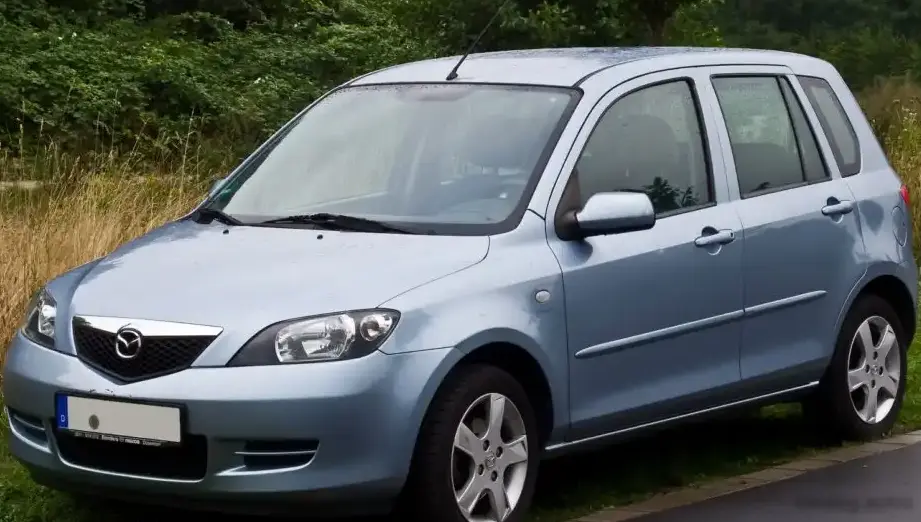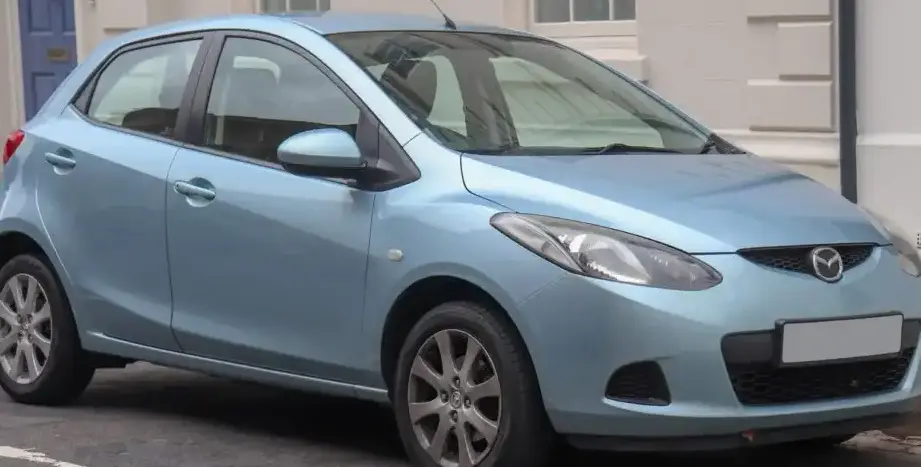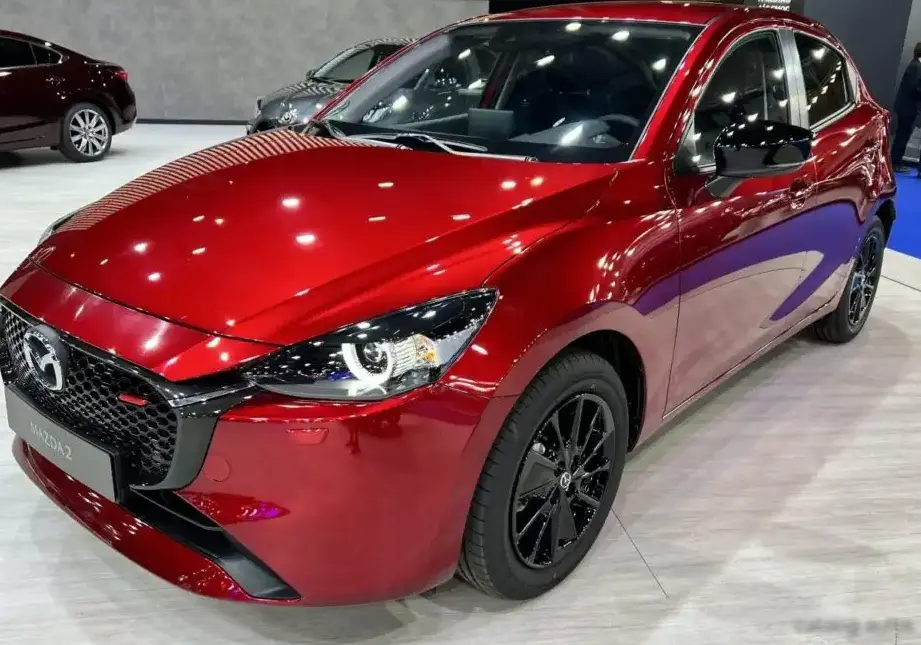
The Mazda 2 III (DJ), specifically the facelifted model introduced in 2019, represents the third generation of Mazda’s subcompact hatchback. Production of the 1.5 e-Skyactiv-G (115 Hp) M Hybrid variant ran from October 2021 to March 2022. This model occupied a key position in Mazda’s European and Asian lineups, offering a balance between fuel efficiency, affordability, and Mazda’s signature driving dynamics. The “M Hybrid” designation indicates a mild hybrid system designed to enhance fuel economy and reduce emissions. It was positioned as a mainstream offering within the range, slotting below more powerful engine options and higher trim levels.
Technical Specifications
| Brand | Mazda |
| Model | 2 |
| Generation | 2 III (DJ, facelift 2019) |
| Type (Engine) | 1.5 e-Skyactiv-G (115 Hp) M Hybrid |
| Start of production | October, 2021 |
| End of production | March, 2022 |
| Powertrain Architecture | MHEV (Mild Hybrid Electric Vehicle) |
| Body type | Hatchback |
| Seats | 5 |
| Doors | 5 |
| Fuel consumption at Low speed (WLTP) | 6 l/100 km (39.2 US mpg, 47.1 UK mpg, 16.7 km/l) |
| Fuel consumption at Medium speed (WLTP) | 4.8 l/100 km (49 US mpg, 58.9 UK mpg, 20.8 km/l) |
| Fuel consumption at high speed (WLTP) | 4.3 l/100 km (54.7 US mpg, 65.7 UK mpg, 23.3 km/l) |
| Fuel consumption at very high speed (WLTP) | 5.3 l/100 km (44.4 US mpg, 53.3 UK mpg, 18.9 km/l) |
| Combined fuel consumption (WLTP) | 5 l/100 km (47 US mpg, 56.5 UK mpg, 20 km/l) |
| CO2 emissions (WLTP) | 113 g/km |
| Fuel consumption (economy) – urban (NEDC) | 5.1 l/100 km (46.1 US mpg, 55.4 UK mpg, 19.6 km/l) |
| Fuel consumption (economy) – extra urban (NEDC) | 4 l/100 km (58.8 US mpg, 70.6 UK mpg, 25 km/l) |
| Fuel consumption (economy) – combined (NEDC) | 4.4 l/100 km (53.5 US mpg, 64.2 UK mpg, 22.7 km/l) |
| CO2 emissions (NEDC) | 105 g/km |
| Fuel Type | Petrol (Gasoline) |
| Acceleration 0 – 100 km/h | 9.1 sec |
| Acceleration 0 – 62 mph | 9.1 sec |
| Acceleration 0 – 60 mph | 8.6 sec |
| Maximum speed | 200 km/h (124.27 mph) |
| Emission standard | Euro 6d |
| Weight-to-power ratio | 9.4 kg/Hp, 106.6 Hp/tonne |
| Weight-to-torque ratio | 7.1 kg/Nm, 139.9 Nm/tonne |
| Power | 115 Hp @ 6000 rpm |
| Torque | 151 Nm @ 3500 rpm (111.37 lb.-ft. @ 3500 rpm) |
| Engine layout | Front, Transverse |
| Engine Model/Code | P5 |
| Engine displacement | 1496 cm3 (91.29 cu. in.) |
| Number of cylinders | 4 |
| Engine configuration | Inline |
| Cylinder Bore | 74.5 mm (2.93 in.) |
| Piston Stroke | 85.8 mm (3.38 in.) |
| Compression ratio | 15:1 |
| Number of valves per cylinder | 4 |
| Fuel injection system | Direct injection |
| Engine aspiration | Naturally aspirated engine |
| Engine oil capacity | 4.2 l (4.44 US qt | 3.7 UK qt) |
| Kerb Weight | 1079 kg (2378.79 lbs.) |
| Max. weight | 1540 kg (3395.12 lbs.) |
| Max load | 461 kg (1016.33 lbs.) |
| Trunk (boot) space – minimum | 280 l (9.89 cu. ft.) |
| Trunk (boot) space – maximum | 950 l (33.55 cu. ft.) |
| Fuel tank capacity | 44 l (11.62 US gal | 9.68 UK gal) |
| Max. roof load | 50 kg (110.23 lbs.) |
| Permitted trailer load with brakes (8%) | 1100 kg (2425.08 lbs.) |
| Permitted trailer load with brakes (12%) | 900 kg (1984.16 lbs.) |
| Permitted towbar download | 50 kg (110.23 lbs.) |
| Length | 4070 mm (160.24 in.) |
| Width | 1695 mm (66.73 in.) |
| Height | 1524 mm (60 in.) |
| Wheelbase | 2570 mm (101.18 in.) |
| Front track | 1495 mm (58.86 in.) |
| Rear (Back) track | 1485 mm (58.46 in.) |
| Ride height (ground clearance) | 143 mm (5.63 in.) |
| Minimum turning circle (turning diameter) | 10.4 m (34.12 ft.) |
| Drivetrain Architecture | ICE and electric motor drive the front wheels in mixed mode. |
| Drive wheel | Front wheel drive |
| Number of gears and type of gearbox | 6 gears, manual transmission |
| Front suspension | Independent type McPherson |
| Rear suspension | Torsion |
| Front brakes | Ventilated discs |
| Rear brakes | Drum |
| Assisting systems | ABS (Anti-lock braking system) |
| Steering type | Steering rack and pinion |
| Power steering | Electric Steering |
| Tires size | 185/60 R16 |
| Wheel rims size | 16 |
Powertrain & Engine Architecture
The heart of this Mazda 2 variant is the 1.5-liter P5 engine, a member of Mazda’s Skyactiv-G family. This engine is characterized by its high compression ratio of 15:1, achieved through careful engineering and precise fuel injection. The engine utilizes direct injection, optimizing fuel delivery for improved efficiency and power. The four-cylinder, inline configuration provides a smooth and relatively refined driving experience. The mild hybrid system consists of an integrated starter generator (ISG) and a small battery. The ISG assists the engine during acceleration, providing a small power boost and reducing load, and also enables a more seamless start-stop function. The 6-speed manual transmission was standard, offering precise shifts and a direct connection to the engine.
Driving Characteristics
The 115 horsepower and 151 Nm (111 lb-ft) of torque delivered by the 1.5-liter engine and manual transmission provide adequate performance for everyday driving. Acceleration from 0-60 mph takes approximately 8.6 seconds, and top speed is rated at 124 mph. While not a particularly sporty setup, the engine is responsive and provides sufficient power for merging onto highways and overtaking. The manual transmission’s gear ratios are well-matched to the engine’s powerband, allowing for efficient cruising and spirited driving. Compared to higher-output engine options in the Mazda 2 range, this variant prioritizes fuel economy over outright performance. It offers a more relaxed and economical driving experience, making it ideal for urban commutes and longer journeys where efficiency is key.
Equipment & Trim Levels
The 1.5 e-Skyactiv-G M Hybrid typically came equipped with a respectable level of standard features. These included air conditioning, power windows, power mirrors, a basic audio system with Bluetooth connectivity, and safety features like ABS, stability control, and multiple airbags. Higher trim levels offered additional features such as alloy wheels, a touchscreen infotainment system, navigation, and advanced safety technologies like lane departure warning and automatic emergency braking. Interior upholstery was typically cloth, with options for upgraded materials on higher trims. The dashboard layout was functional and driver-focused, with a clear instrument cluster and intuitive controls.
Chassis & Braking
The Mazda 2’s chassis is designed to provide a comfortable and engaging driving experience. The front suspension utilizes an independent McPherson strut setup, while the rear employs a torsion beam. This configuration strikes a good balance between ride comfort and handling precision. The braking system features ventilated discs on the front wheels and drum brakes on the rear, providing adequate stopping power for the vehicle’s weight and performance. The electric power steering offers light and precise steering feel, making it easy to maneuver in urban environments.
Market Reception & Comparison
The 1.5 e-Skyactiv-G M Hybrid variant of the Mazda 2 was generally well-received by critics for its fuel efficiency and affordability. It offered a compelling alternative to other subcompact hatchbacks in the market, particularly those prioritizing economy. Compared to the more powerful 1.5-liter non-hybrid version, the M Hybrid offered improved fuel economy, albeit with a slight increase in complexity due to the mild hybrid system. Against diesel-powered rivals, it provided a cleaner and quieter driving experience, although diesel models often offered superior fuel economy on longer journeys.
Legacy
The 1.5 e-Skyactiv-G M Hybrid powertrain has proven to be relatively reliable in the long term. The Skyactiv-G engine is known for its durability and efficiency, and the mild hybrid system adds minimal complexity. On the used car market, these models are often sought after for their fuel economy and Mazda’s reputation for build quality. Regular maintenance, including oil changes and adherence to the manufacturer’s service schedule, is crucial for ensuring the longevity of this powertrain. As with any used vehicle, a thorough inspection before purchase is recommended.