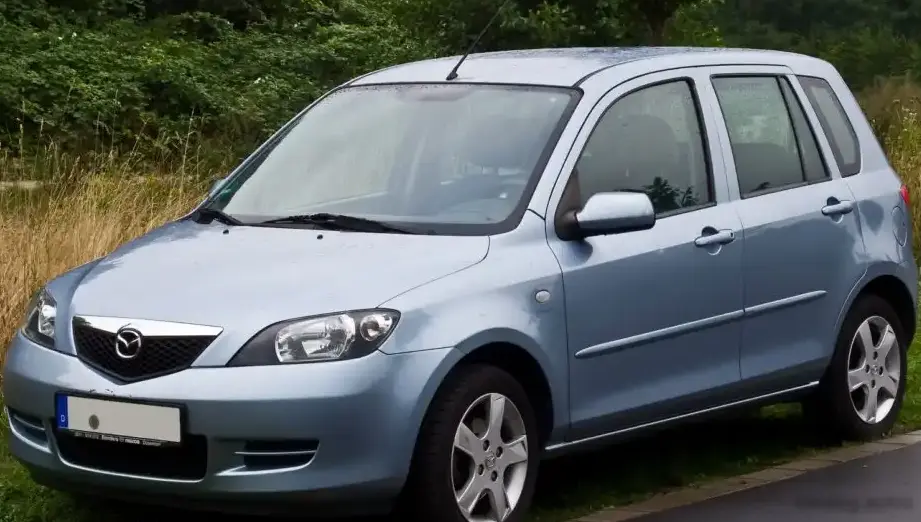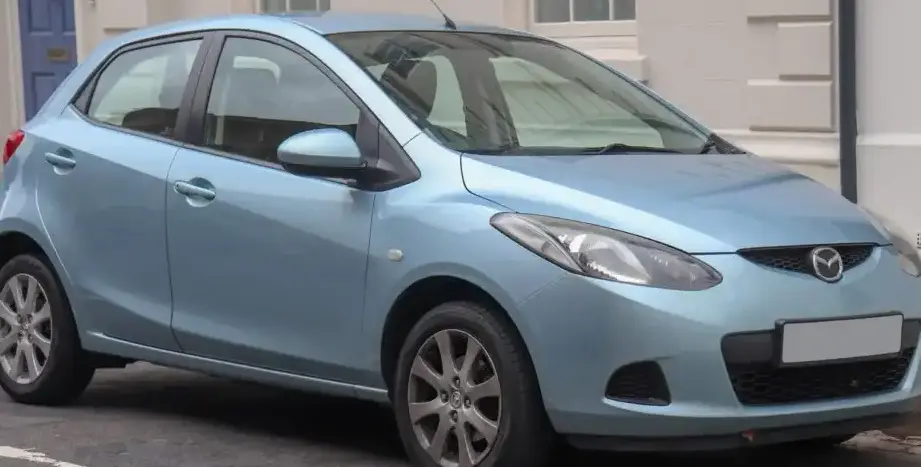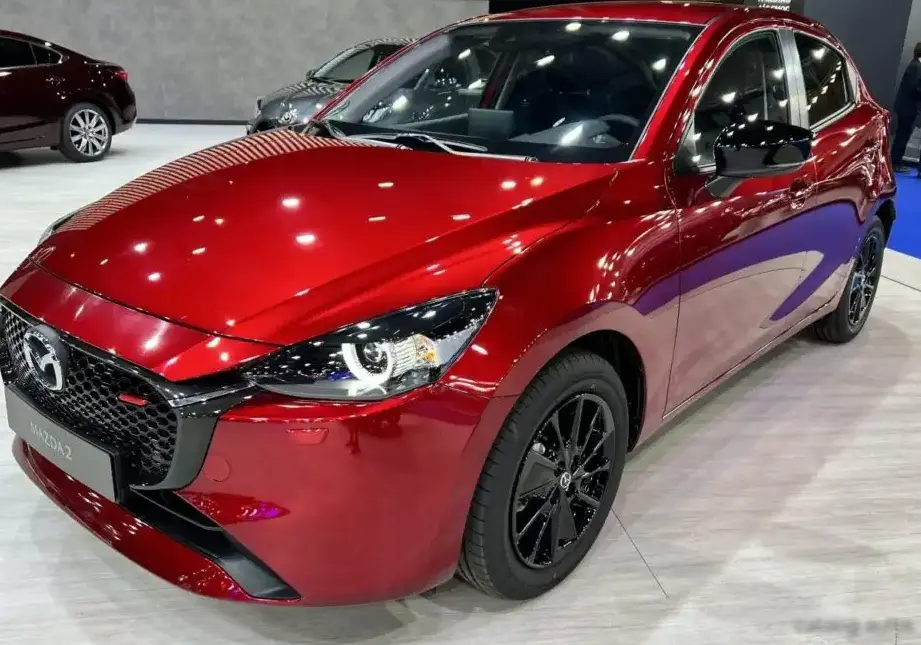
The Mazda 2 III (DJ), particularly the facelifted version introduced in 2019, represented a significant evolution of Mazda’s subcompact offering. Within the DJ generation (2014-2022), the 1.5 Skyactiv-D 105 Hp Activematic variant occupied a key position, balancing fuel efficiency with reasonable performance. Production of this specific configuration ran from 2019 until March 2022, primarily aimed at European and Asian markets where diesel engines remained popular. This model aimed to provide a refined and economical driving experience for urban commuters and those seeking a practical, yet stylish, hatchback.
Technical Specifications
| Brand | Mazda |
| Model | 2 |
| Generation | III (DJ, facelift 2019) |
| Type (Engine) | 1.5 Skyactiv-D (105 Hp) Activematic |
| Start of production | 2019 |
| End of production | March, 2022 |
| Powertrain Architecture | Internal Combustion engine |
| Body type | Hatchback |
| Seats | 5 |
| Doors | 5 |
| Fuel Type | Diesel |
| Weight-to-power ratio | 11 kg/Hp, 90.5 Hp/tonne |
| Weight-to-torque ratio | 4.6 kg/Nm, 215.5 Nm/tonne |
| Power | 105 Hp @ 4000 rpm |
| Power per litre | 70 Hp/l |
| Torque | 250 Nm @ 1500-2500 rpm (184.39 lb.-ft. @ 1500-2500 rpm) |
| Engine layout | Front, Transverse |
| Engine displacement | 1499 cm3 (91.47 cu. in.) |
| Number of cylinders | 4 |
| Engine configuration | Inline |
| Cylinder Bore | 76 mm (2.99 in.) |
| Piston Stroke | 82.6 mm (3.25 in.) |
| Compression ratio | 14.8:1 |
| Number of valves per cylinder | 4 |
| Fuel injection system | Diesel Commonrail |
| Engine aspiration | Turbocharger, Intercooler |
| Engine oil capacity | 5.1 l (5.39 US qt | 4.49 UK qt) |
| Coolant | 6.6 l (6.97 US qt | 5.81 UK qt) |
| Kerb Weight | 1160 kg (2557.36 lbs.) |
| Fuel tank capacity | 44 l (11.62 US gal | 9.68 UK gal) |
| Length | 4065 mm (160.04 in.) |
| Width | 1695 mm (66.73 in.) |
| Height | 1495 mm (58.86 in.) |
| Wheelbase | 2570 mm (101.18 in.) |
| Front track | 1495 mm (58.86 in.) |
| Rear track | 1485 mm (58.46 in.) |
| Ride height (ground clearance) | 143 mm (5.63 in.) |
| Minimum turning circle | 9.8 m (32.15 ft.) |
| Drivetrain Architecture | Front wheel drive |
| Number of gears and type of gearbox | 6 gears, automatic transmission Activematic |
| Front suspension | Independent type McPherson |
| Rear suspension | Torsion |
| Front brakes | Ventilated discs |
| Rear brakes | Disc |
| Assisting systems | ABS (Anti-lock braking system) |
| Steering type | Steering rack and pinion |
| Power steering | Electric Steering |
| Tires size | 185/60 R16 |
| Wheel rims size | 5.5J x 16 |
Powertrain & Engine Architecture
The heart of this Mazda 2 variant is the 1.5-liter Skyactiv-D diesel engine. This engine, designated with various codes depending on the specific market, is a four-cylinder, inline configuration. A key feature is its high compression ratio of 14.8:1, contributing to its thermal efficiency. The engine utilizes a common-rail direct injection system, delivering fuel at extremely high pressure for optimized combustion. A turbocharger with an intercooler is employed to boost power output and improve torque across a wider rev range. The Activematic transmission is a six-speed automatic, utilizing a torque converter. While not a dual-clutch system, it was tuned for smooth shifts and fuel efficiency, prioritizing comfort over outright performance.
Driving Characteristics
The 105 hp and 250 Nm (184 lb-ft) of torque provided by this powertrain configuration resulted in a comfortable, if not exhilarating, driving experience. The Activematic transmission, while smooth, did impact acceleration compared to the six-speed manual version. The torque curve, peaking between 1500-2500 rpm, meant that the engine felt responsive in everyday driving situations, particularly for overtaking and merging onto highways. However, pushing the engine towards its 4000 rpm power peak revealed a noticeable drop in responsiveness. Gear ratios were optimized for fuel economy, meaning the transmission would often downshift to maintain momentum on inclines. Compared to the higher-output petrol versions, this diesel automatic offered significantly better fuel economy but lacked the same level of spirited performance.
Equipment & Trim Levels
The 1.5 Skyactiv-D 105 Hp Activematic typically fell into the mid-range of the Mazda 2 trim levels. Standard equipment often included air conditioning, power windows, power mirrors, a basic audio system with USB connectivity, and safety features like ABS, stability control, and multiple airbags. Higher trim levels added features such as alloy wheels, a touchscreen infotainment system with smartphone integration (Apple CarPlay/Android Auto), automatic climate control, and advanced safety technologies like lane departure warning and smart city brake support. Interior upholstery was generally cloth, with options for partial leather in higher trims. Dashboard configurations were consistent across the range, featuring a minimalist design with a focus on ergonomics.
Chassis & Braking
The Mazda 2 DJ utilized a front-wheel-drive platform with independent McPherson strut suspension at the front and a torsion beam setup at the rear. This configuration provided a good balance between ride comfort and handling. The 1.5 Skyactiv-D variant, due to its slightly heavier engine, often featured a slightly stiffer rear suspension setup compared to the petrol-powered models. Braking consisted of ventilated discs at the front and solid discs at the rear. ABS (Anti-lock Braking System) was standard, providing enhanced stopping power and control. Steering was via a rack and pinion system with electric power assistance, offering light and precise steering feel.
Market Reception & Comparison
Critics generally praised the Mazda 2 III 1.5 Skyactiv-D Activematic for its fuel efficiency and refined driving experience. The diesel engine offered significantly better economy than the petrol alternatives, making it an attractive option for high-mileage drivers. However, some reviewers noted the Activematic transmission could feel sluggish at times, and the overall performance was not as engaging as the manual transmission or higher-powered variants. Compared to competitors like the Volkswagen Polo or Renault Clio, the Mazda 2 was often lauded for its superior interior quality and driving dynamics. Reliability reports generally indicated good long-term dependability for the Skyactiv-D engine, although diesel particulate filter (DPF) maintenance was a consideration.
Legacy
The 1.5 Skyactiv-D engine proved to be a robust and reliable unit, even with the complexities of modern diesel technology. In the used car market, this variant of the Mazda 2 remains a popular choice for those seeking an economical and well-built subcompact hatchback. While diesel engines have become less prevalent in Europe due to emissions regulations, the Skyactiv-D engine’s efficiency and durability continue to appeal to buyers. Regular maintenance, particularly concerning the DPF system, is crucial for ensuring the long-term health of this powertrain. The Mazda 2 DJ, and specifically this 1.5L diesel automatic, cemented Mazda’s reputation for producing small cars that are fun to drive and offer a premium feel.