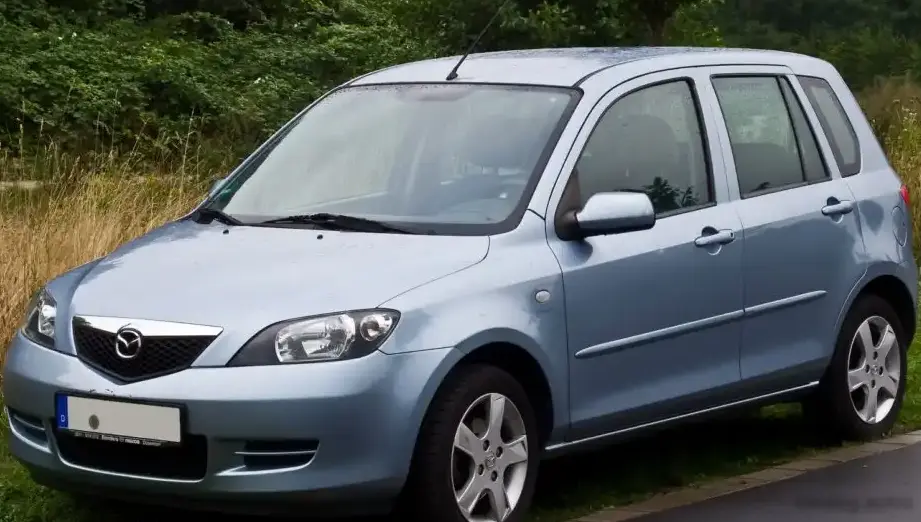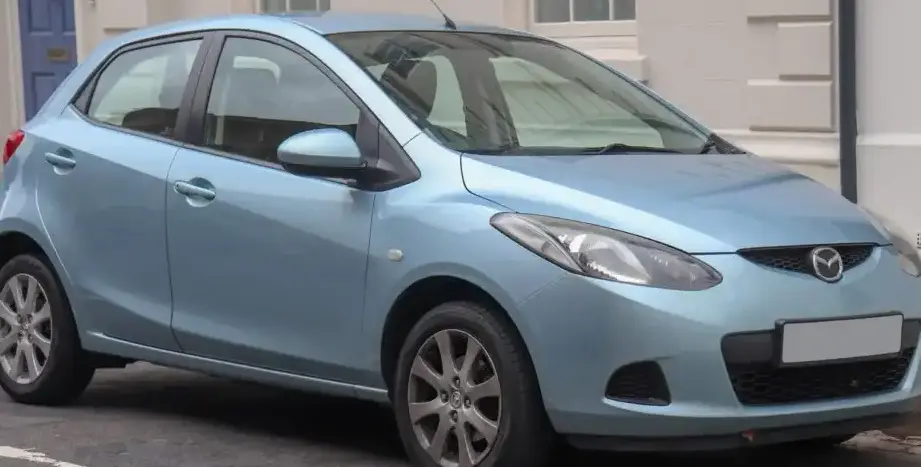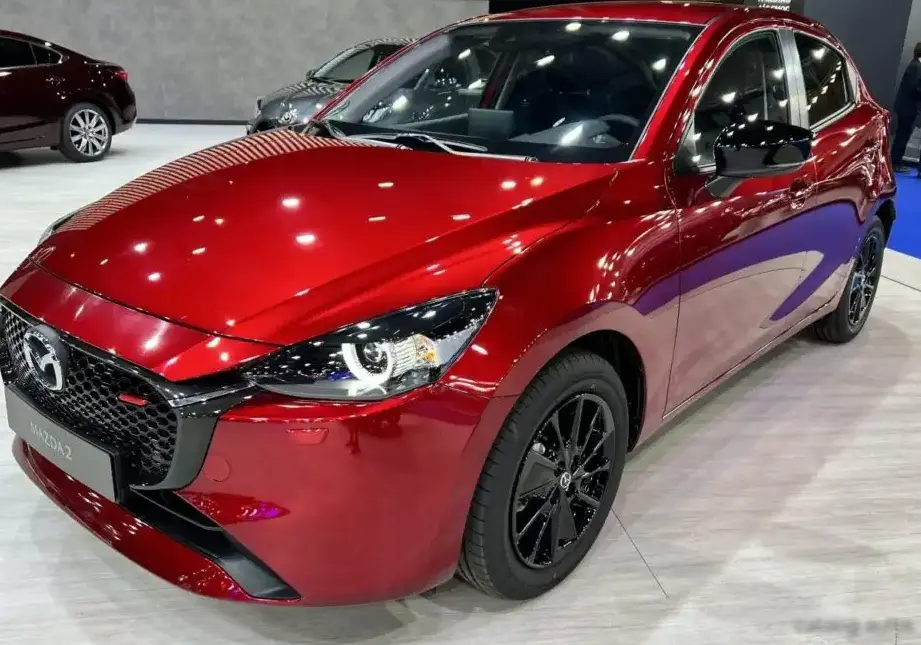
The Mazda 2 III (DJ), specifically the facelifted model produced from 2019 to March 2022, offered a range of engine and transmission options. This article focuses on the 1.5 Skyactiv-G variant producing 109 horsepower, paired with a six-speed automatic transmission. This configuration represented a key part of the Mazda 2 lineup, aimed at buyers prioritizing ease of use and fuel efficiency over outright performance. It sat in the mid-range of the available trims, offering a balance between features and affordability within the broader Mazda 2 range.
Technical Specifications
| Brand | Mazda |
| Model | 2 |
| Generation | III (DJ, facelift 2019) |
| Type (Engine) | 1.5 Skyactiv-G (109 Hp) Automatic |
| Start of production | 2019 |
| End of production | March, 2022 |
| Powertrain Architecture | Internal Combustion engine |
| Body type | Hatchback |
| Seats | 5 |
| Doors | 5 |
| Fuel consumption (combined) | 4.9 l/100 km (48 US mpg, 57.6 UK mpg, 20.4 km/l) |
| CO2 emissions | 116.4-116.5 g/km |
| Fuel Type | Petrol (Gasoline) |
| Weight-to-power ratio | 10.1 kg/Hp, 99 Hp/tonne |
| Weight-to-torque ratio | 7.8 kg/Nm, 128.1 Nm/tonne |
| Power | 109 Hp @ 6000 rpm |
| Power per litre | 72.9 Hp/l |
| Torque | 141 Nm @ 4000 rpm (104 lb.-ft. @ 4000 rpm) |
| Engine layout | Front, Transverse |
| Engine displacement | 1496 cm3 (91.29 cu. in.) |
| Number of cylinders | 4 |
| Engine configuration | Inline |
| Number of valves per cylinder | 4 |
| Fuel injection system | Direct injection |
| Engine oil capacity | 4.2 l (4.44 US qt | 3.7 UK qt) |
| Coolant capacity | 5.6 l (5.92 US qt | 4.93 UK qt) |
| Kerb Weight | 1101 kg (2427.29 lbs.) |
| Max. weight | 1525 kg (3362.05 lbs.) |
| Max load | 424 kg (934.76 lbs.) |
| Trunk (boot) space – minimum | 220 l (7.77 cu. ft.) |
| Fuel tank capacity | 44 l (11.62 US gal | 9.68 UK gal) |
| Length | 4065 mm (160.04 in.) |
| Width including mirrors | 1983 mm (78.07 in.) |
| Height | 1515 mm (59.65 in.) |
| Drivetrain Architecture | Front wheel drive, Internal Combustion engine (ICE) |
| Number of gears and type of gearbox | 6 gears, automatic transmission |
| Front suspension | Independent, type McPherson with coil spring and anti-roll bar |
| Rear suspension | Torsion |
| Front brakes | Ventilated discs |
| Rear brakes | Drum |
| Assisting systems | ABS (Anti-lock braking system), Electric Power Steering |
| Tires size | 185/65 R15; 185/60 R16 |
| Wheel rims size | 15; 16 |
Introduction
The Mazda 2 III (DJ) underwent a significant facelift in 2019, bringing with it updated styling, improved safety features, and refinements to the existing powertrain options. The 1.5 Skyactiv-G 109 hp automatic variant was a crucial offering for Mazda in the European and Asian markets, where compact, fuel-efficient hatchbacks are highly sought after. Built on the 1HX0/A3 platform, this version of the Mazda 2 aimed to provide a comfortable and practical driving experience for urban commuters and small families.
Powertrain & Engine Architecture
At the heart of this Mazda 2 variant lies the 1.5-liter Skyactiv-G inline-four cylinder engine. This engine, designated as a PE-VPH, is a naturally aspirated powerplant known for its high compression ratio (typically around 14:1) and efficient combustion. This high compression is achieved through Mazda’s Skyactiv technology, which optimizes the engine’s design for improved thermal efficiency. The engine utilizes direct fuel injection, contributing to precise fuel delivery and reduced emissions. The valvetrain features dual overhead camshafts (DOHC) and four valves per cylinder, enhancing breathing and overall performance.
The engine is mated to a six-speed automatic transmission. This transmission isn’t a traditional torque-converter automatic; it employs a quick-shifting design with a lock-up torque converter to minimize slippage and improve fuel economy. The gear ratios are tuned for everyday drivability, prioritizing smooth acceleration and comfortable cruising rather than outright sportiness.
Driving Characteristics
The 109 hp and 141 Nm (104 lb-ft) of torque delivered by this powertrain configuration results in a 0-60 mph time of around 10-11 seconds. While not particularly quick, the engine provides adequate power for typical urban and highway driving. The automatic transmission contributes to a relaxed driving experience, particularly in stop-and-go traffic. Compared to the manual transmission version of the same engine, the automatic offers less driver engagement but greater convenience. The higher-output 1.5L (115hp) and the diesel variants offered significantly more performance, but at the cost of increased fuel consumption and potentially higher maintenance costs. The automatic transmission’s gear ratios are optimized for fuel efficiency, meaning that aggressive acceleration requires a more deliberate push on the accelerator.
Equipment & Trim Levels
The 1.5 Skyactiv-G 109 hp automatic trim typically included standard features such as air conditioning, power windows, power mirrors, a basic audio system with Bluetooth connectivity, and a suite of safety features including ABS, stability control, and multiple airbags. Higher trim levels added features like alloy wheels, a touchscreen infotainment system, navigation, and advanced driver-assistance systems (ADAS) such as lane departure warning and automatic emergency braking. Interior upholstery was generally cloth, with options for upgraded materials on higher trims. Dashboard configuration was consistent across the range, featuring a straightforward layout with easy-to-use controls.
Chassis & Braking
The Mazda 2 III utilizes a front-wheel-drive layout with an independent McPherson strut suspension in the front and a torsion beam suspension in the rear. This setup provides a good balance between ride comfort and handling. The front brakes are ventilated discs, offering adequate stopping power, while the rear brakes are drums, a cost-saving measure common in this class of vehicle. The steering is electric power-assisted, providing light and precise control. Stabilizer bars are fitted to both the front and rear axles to reduce body roll during cornering.
Market Reception & Comparison
Critics generally praised the Mazda 2 III for its stylish design, refined interior, and engaging driving dynamics. The 1.5 Skyactiv-G automatic variant was viewed as a sensible choice for buyers prioritizing fuel economy and ease of use. However, some reviewers noted that the engine could feel underpowered when fully loaded or tackling steep hills. Compared to competitors like the Volkswagen Polo, Ford Fiesta, and Toyota Yaris, the Mazda 2 offered a more premium feel and a more engaging driving experience, but often at a slightly higher price point. Fuel economy figures of around 4.9 l/100 km (48 US mpg) were competitive within its segment.
Legacy
The 1.5 Skyactiv-G engine, in general, has proven to be a reliable and durable powerplant. The automatic transmission, while not as sporty as some dual-clutch transmissions, has also demonstrated good long-term reliability. In the used car market, the 1.5 Skyactiv-G automatic Mazda 2 variants are generally well-regarded for their fuel efficiency, practicality, and relatively low maintenance costs. They represent a good value proposition for buyers seeking a dependable and economical compact hatchback. Regular maintenance, including oil changes and fluid checks, is crucial to ensure the continued reliability of this powertrain.