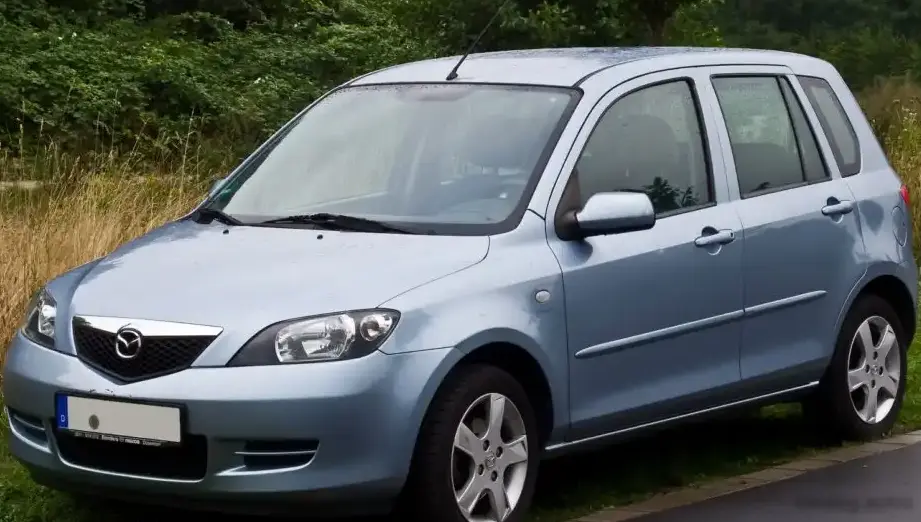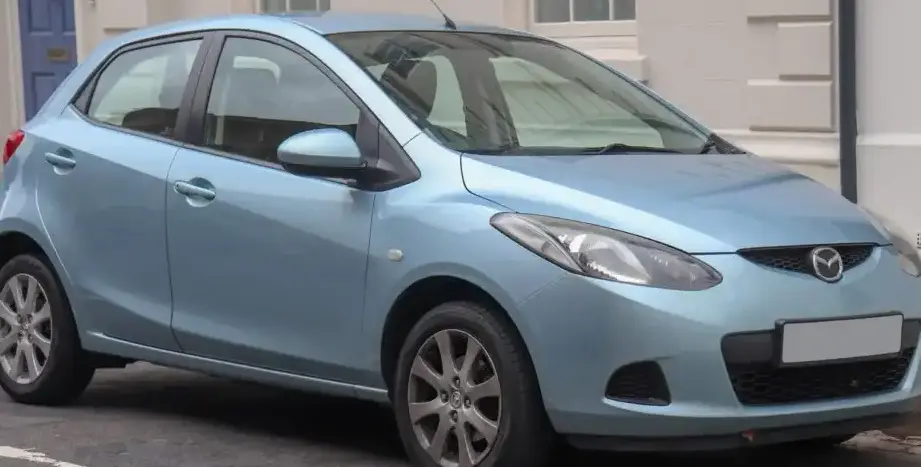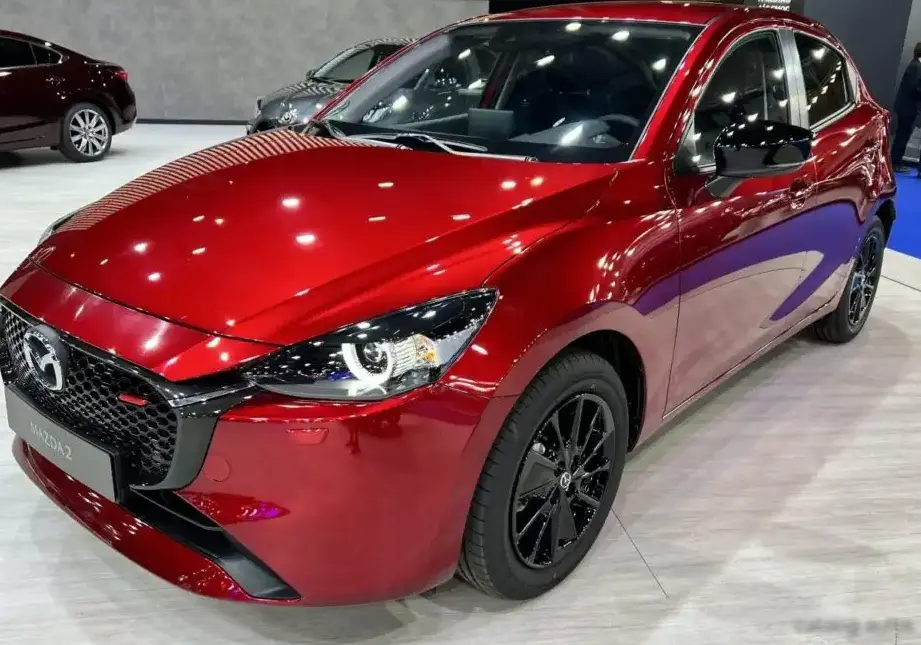
The Mazda 2 III (DJ), particularly the facelifted version introduced in July 2019 and continuing through March 2022, represented Mazda’s entry into the subcompact hatchback segment. This generation, built on the DF platform, aimed to balance fuel efficiency, nimble handling, and a surprisingly refined interior for its class. The 1.5 Skyactiv-G variant, producing 75 horsepower, served as the base engine option in many markets, including Europe and Asia, and was positioned as the most economical choice within the broader Mazda 2 lineup. While not offered in the United States, the Mazda 2 played a significant role in Mazda’s global strategy, offering a competitive alternative to rivals like the Volkswagen Polo, Toyota Yaris, and Honda Jazz.
Technical Specifications
| Brand | Mazda |
| Model | 2 |
| Generation | 2 III (DJ, facelift 2019) |
| Type (Engine) | 1.5 Skyactiv-G (75 Hp) |
| Start of production | July, 2019 |
| End of production | March, 2022 |
| Powertrain Architecture | Internal Combustion engine |
| Body type | Hatchback |
| Seats | 5 |
| Doors | 5 |
| Fuel consumption (combined) | 5.3 l/100 km (44.4 US mpg, 53.3 UK mpg, 18.9 km/l) |
| CO2 emissions | 95 g/km |
| Fuel Type | Petrol (Gasoline) |
| Acceleration 0 – 100 km/h | 11.7 sec |
| Acceleration 0 – 62 mph | 11.7 sec |
| Acceleration 0 – 60 mph | 11.1 sec |
| Maximum speed | 170 km/h (105.63 mph) |
| Emission standard | Euro 6d |
| Weight-to-power ratio | 14.1 kg/Hp, 70.8 Hp/tonne |
| Weight-to-torque ratio | 7.8 kg/Nm, 127.5 Nm/tonne |
| Power | 75 Hp @ 6000 rpm |
| Power per litre | 50.1 Hp/l |
| Torque | 135 Nm @ 3800 rpm (99.57 lb.-ft. @ 3800 rpm) |
| Engine layout | Front, Transverse |
| Engine displacement | 1496 cm3 (91.29 cu. in.) |
| Number of cylinders | 4 |
| Engine configuration | Inline |
| Cylinder Bore | 74.5 mm (2.93 in.) |
| Piston Stroke | 85.8 mm (3.38 in.) |
| Compression ratio | 13:1 |
| Number of valves per cylinder | 4 |
| Fuel injection system | Direct injection |
| Engine aspiration | Naturally aspirated engine |
| Engine oil capacity | 4.2 l (4.44 US qt | 3.7 UK qt) |
| Coolant | 5.4 l (5.71 US qt | 4.75 UK qt) |
| Kerb Weight | 1059 kg (2334.7 lbs.) |
| Max. weight | 1536 kg (3386.3 lbs.) |
| Max load | 477 kg (1051.6 lbs.) |
| Trunk (boot) space – minimum | 280 l (9.89 cu. ft.) |
| Trunk (boot) space – maximum | 950 l (33.55 cu. ft.) |
| Fuel tank capacity | 44 l (11.62 US gal | 9.68 UK gal) |
| Max. roof load | 50 kg (110.23 lbs.) |
| Permitted trailer load with brakes (12%) | 900 kg (1984.16 lbs.) |
| Length | 4070 mm (160.24 in.) |
| Width | 1695 mm (66.73 in.) |
| Height | 1515 mm (59.65 in.) |
| Wheelbase | 2570 mm (101.18 in.) |
| Front track | 1495 mm (58.86 in.) |
| Rear (Back) track | 1485 mm (58.46 in.) |
| Ride height (ground clearance) | 143 mm (5.63 in.) |
| Drivetrain Architecture | The Internal combustion engine (ICE) drives the front wheels of the vehicle. |
| Drive wheel | Front wheel drive |
| Number of gears and type of gearbox | 6 gears, manual transmission |
| Front suspension | Independent type McPherson |
| Rear suspension | Torsion |
| Assisting systems | ABS (Anti-lock braking system) |
| Steering type | Steering rack and pinion |
| Power steering | Electric Steering |
| Tires size | 185/65 R15 |
| Wheel rims size | 15 |
Powertrain & Engine Architecture
The heart of this Mazda 2 variant is the 1.5-liter Skyactiv-G inline-four cylinder engine. This engine, designated as a PE-VPS, is a key component of Mazda’s Skyactiv technology, focusing on efficiency and responsiveness. It features direct injection, a high compression ratio of 13:1, and optimized combustion chamber design. The engine utilizes a variable valve timing system to enhance performance across the rev range. The 75 horsepower output is achieved at 6000 rpm, with a torque peak of 135 Nm (99.57 lb-ft) delivered at 3800 rpm. This engine is paired with a six-speed manual transmission, offering precise gear changes and contributing to the car’s engaging driving experience. The Skyactiv-G engine is known for its relatively smooth operation and willingness to rev, despite its modest power output.
Driving Characteristics
The 1.5-liter 75 hp Mazda 2, with its manual transmission, provides a practical and economical driving experience. Acceleration is not its strong suit, taking approximately 11.7 seconds to reach 62 mph (100 km/h). However, the car feels nimble and responsive in urban environments. The six-speed gearbox allows for efficient cruising on highways, while the engine’s torque delivery provides adequate power for everyday driving situations. Compared to higher-output versions of the Mazda 2, such as those with the 1.5-liter engine producing 90 or 115 hp, this variant feels noticeably less powerful, particularly when fully loaded or tackling steep inclines. The manual transmission encourages driver involvement and allows for better control over the engine’s power band. The gear ratios are well-matched to the engine’s characteristics, providing a balance between acceleration and fuel economy.
Equipment & Trim Levels
The base-level 1.5 Skyactiv-G trim typically included essential features such as air conditioning, power windows, power door locks, and a basic audio system with USB connectivity. Safety features included ABS, stability control, and multiple airbags. Higher trim levels, available as options, added features like alloy wheels, a touchscreen infotainment system, Bluetooth connectivity, and a rearview camera. Interior upholstery was typically cloth, with a straightforward and functional dashboard layout. Optional extras included a navigation system, automatic climate control, and parking sensors.
Chassis & Braking
The Mazda 2 III utilizes a McPherson strut front suspension and a torsion beam rear suspension. This setup provides a good balance between ride comfort and handling precision. The front suspension is designed to minimize body roll during cornering, while the torsion beam rear suspension offers a compact and lightweight solution. Braking duties are handled by disc brakes on the front wheels and drum brakes on the rear wheels. The ABS system ensures effective braking performance in various conditions. The steering is electrically assisted, providing a light and responsive feel.
Market Reception & Comparison
The 1.5-liter Mazda 2 was generally well-received by critics for its fuel efficiency, nimble handling, and surprisingly refined interior. However, some reviewers noted that the engine’s power output was modest, particularly when compared to competitors offering larger displacement engines. Fuel economy was a key selling point, with the car achieving around 5.3 l/100 km (44.4 US mpg) in combined driving conditions. Compared to the higher-output 1.5-liter variant, the 75 hp version offered a lower purchase price and slightly better fuel economy, but at the expense of performance. The 1.5 Skyactiv-G was aimed at buyers prioritizing economy and practicality over outright speed.
Legacy
The 1.5 Skyactiv-G engine, in its various iterations, has proven to be a reliable and durable powertrain. The Mazda 2 III, including the 75 hp variant, has maintained a good reputation for reliability in the used car market. While not known for blistering performance, this engine is appreciated for its fuel efficiency and relatively low maintenance costs. The Skyactiv technology introduced with this generation of Mazda 2 laid the foundation for Mazda’s continued focus on efficiency and driving dynamics in subsequent models. Today, well-maintained examples of the 2019-2022 Mazda 2 1.5 Skyactiv-G represent a sensible and economical choice for buyers seeking a reliable and fuel-efficient subcompact hatchback.