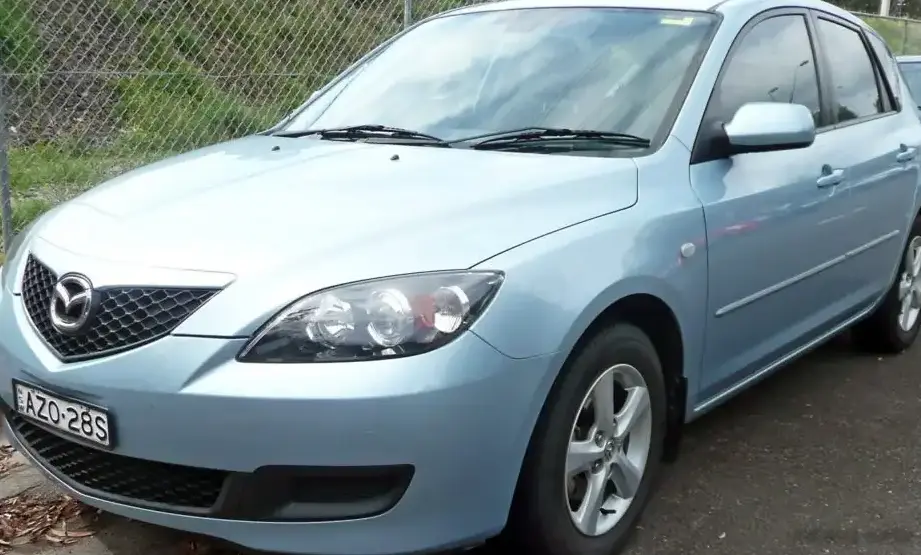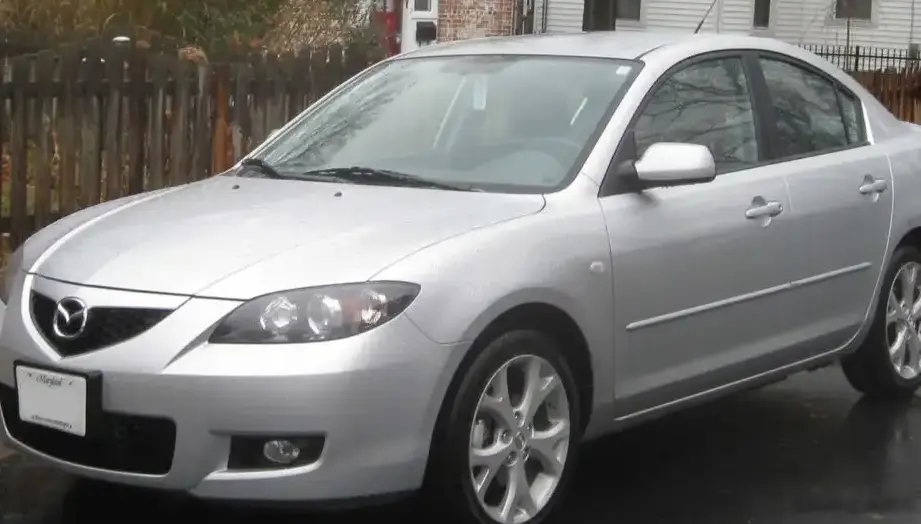
The Mazda 3 first generation (BK) facelift sedan, specifically the 1.6i variant producing 105 horsepower, was a key model in Mazda’s lineup from 2006 to 2009. Positioned as the entry-level engine option in many European and Asian markets, this sedan offered a balance of affordability, fuel efficiency, and Mazda’s signature sporty handling. The facelift, introduced in 2006, brought revised styling cues and minor mechanical updates to the original BK platform, which was based on Mazda’s C-segment platform shared with the Ford Focus. This variant aimed to attract buyers seeking a practical and reliable compact sedan without the higher price tag of the more powerful 2.0-liter or 2.3-liter engine options.
Technical Specifications
| Brand | Mazda |
| Model | 3 |
| Generation | I Sedan (BK, facelift 2006) |
| Type (Engine) | 1.6i (105 Hp) |
| Start of production | 2006 |
| End of production | 2009 |
| Powertrain Architecture | Internal Combustion engine |
| Body type | Sedan |
| Seats | 5 |
| Doors | 4 |
| Fuel consumption (urban) | 8.9 l/100 km (26.4 US mpg) |
| Fuel consumption (extra urban) | 5.7 l/100 km (41.3 US mpg) |
| Fuel consumption (combined) | 5.9 l/100 km (39.9 US mpg) |
| CO2 emissions | 162 g/km |
| Fuel Type | Petrol (Gasoline) |
| Acceleration 0 – 100 km/h | 11.2 sec |
| Acceleration 0 – 62 mph | 11.2 sec |
| Acceleration 0 – 60 mph | 10.6 sec |
| Maximum speed | 185 km/h (114.95 mph) |
| Emission standard | Euro 4 |
| Weight-to-power ratio | 11.2 kg/Hp |
| Weight-to-torque ratio | 8.1 kg/Nm |
| Power | 105 Hp @ 6000 rpm |
| Torque | 145 Nm @ 4000 rpm (106.95 lb.-ft. @ 4000 rpm) |
| Engine layout | Front, Transverse |
| Engine Model/Code | Z601, Z627 |
| Engine displacement | 1598 cm3 (97.52 cu. in.) |
| Number of cylinders | 4 |
| Engine configuration | Inline |
| Cylinder Bore | 78 mm (3.07 in.) |
| Piston Stroke | 83.6 mm (3.29 in.) |
| Compression ratio | 10:1 |
| Number of valves per cylinder | 4 |
| Fuel injection system | Multi-port manifold injection |
| Engine aspiration | Naturally aspirated engine |
| Valvetrain | DOHC |
| Engine oil capacity | 3.9 l (4.12 US qt | 3.43 UK qt) |
| Coolant capacity | 6 l (6.34 US qt | 5.28 UK qt) |
| Kerb Weight | 1175 kg (2590.43 lbs.) |
| Max. weight | 1710 kg (3769.9 lbs.) |
| Max load | 535 kg (1179.47 lbs.) |
| Trunk (boot) space – minimum | 413 l (14.58 cu. ft.) |
| Trunk (boot) space – maximum | 1285 l (45.38 cu. ft.) |
| Fuel tank capacity | 55 l (14.53 US gal | 12.1 UK gal) |
| Permitted trailer load with brakes (12%) | 1200 kg (2645.55 lbs.) |
| Permitted trailer load without brakes | 550 kg (1212.54 lbs.) |
| Length | 4490 mm (176.77 in.) |
| Width | 1755 mm (69.09 in.) |
| Width including mirrors | 1935 mm (76.18 in.) |
| Height | 1465 mm (57.68 in.) |
| Wheelbase | 2640 mm (103.94 in.) |
| Front track | 1530 mm (60.24 in.) |
| Rear (Back) track | 1515 mm (59.65 in.) |
| Ride height (ground clearance) | 160 mm (6.3 in.) |
| Drag coefficient (Cd) | 0.33 |
| Minimum turning circle (turning diameter) | 10.4 m (34.12 ft.) |
| Drivetrain Architecture | Front wheel drive |
| Drive wheel | Front wheel drive |
| Number of gears and type of gearbox | 5 gears, manual transmission |
| Front suspension | Coil spring |
| Rear suspension | Coil spring |
| Front brakes | Ventilated discs |
| Rear brakes | Disc |
| Assisting systems | ABS (Anti-lock braking system) |
| Steering type | Steering rack and pinion |
| Power steering | Electric Steering |
| Tires size | 205/55 R16 |
| Wheel rims size | 16 |
INTRODUCTION
The Mazda 3 BK facelift 1.6i sedan represented Mazda’s attempt to offer an affordable and efficient entry point into the popular C-segment. Introduced as part of the broader BK generation facelift in 2006, this variant was primarily targeted at markets where smaller displacement engines were favored due to tax regulations or consumer preferences. It served as a more economical alternative to the higher-performance 2.0-liter and 2.3-liter models, offering a practical and reliable option for daily commuting and family use. The BK generation Mazda 3 was a significant departure from its predecessor, the Mazda Protegé, boasting a more modern design and improved driving dynamics.
Powertrain & Engine Architecture
At the heart of the 1.6i variant lies the Mazda Z6 engine family, specifically the Z601 or Z627 code depending on the specific market. This 1.6-liter inline-four engine utilizes a naturally aspirated configuration with multi-port fuel injection. The engine features a double overhead camshaft (DOHC) valvetrain with four valves per cylinder, contributing to its relatively efficient operation. The compression ratio of 10:1 was a standard figure for this engine. While not a powerhouse, the Z6 engine was known for its durability and relatively smooth operation. The engine was typically paired with a five-speed manual transmission, although a four-speed automatic transmission was also available, albeit less common. The automatic transmission, while providing convenience, did impact acceleration and fuel economy compared to the manual version.
Driving Characteristics
The 1.6i automatic version of the Mazda 3 sedan offered a comfortable, if not particularly exhilarating, driving experience. With 105 horsepower and 145 Nm of torque, acceleration was adequate for everyday driving, but overtaking maneuvers required careful planning. The four-speed automatic transmission, while smooth, lacked the responsiveness of a more modern gearbox. Gear ratios were optimized for fuel efficiency rather than performance. The car felt most comfortable cruising at highway speeds, where the engine operated within its optimal range. Compared to the manual transmission version, the automatic suffered a slight performance penalty, with a marginally slower 0-60 mph time. The 1.6i was noticeably less powerful than the 2.0-liter models, which offered a more engaging driving experience.
Equipment & Trim Levels
The 1.6i variant typically came with a base level of equipment, focusing on essential features. Standard amenities generally included air conditioning, power windows, power door locks, and a basic audio system. Interior upholstery was typically cloth, with a relatively simple dashboard layout. Optional extras, depending on the market, could include alloy wheels, a sunroof, and upgraded audio systems. Higher trim levels, such as the ‘Touring’ or ‘Sport’ variants, added features like cruise control, fog lights, and more premium interior materials. The overall interior design was functional and well-built, reflecting Mazda’s commitment to quality.
Chassis & Braking
The Mazda 3 BK facelift utilized a MacPherson strut front suspension and a multi-link rear suspension, providing a good balance of ride comfort and handling. The chassis was relatively lightweight, contributing to the car’s nimble feel. The 1.6i variant typically featured ventilated disc brakes at the front and solid disc brakes at the rear. Anti-lock Braking System (ABS) was standard, enhancing safety. The suspension tuning was geared towards providing a comfortable ride, but the car still offered decent handling characteristics, especially for a vehicle in this class. Stabilizer bars were included both front and rear, helping to reduce body roll during cornering.
Market Reception & Comparison
The Mazda 3 1.6i automatic received generally positive reviews for its fuel efficiency, reliability, and comfortable ride. Critics noted that it wasn’t the most exciting car to drive, but it offered a practical and affordable option for buyers seeking a compact sedan. Compared to other vehicles in its class, such as the Ford Focus and Volkswagen Golf, the Mazda 3 was often praised for its sporty handling and stylish design. The 1.6i variant offered better fuel economy than the higher-powered engine options, but at the expense of performance. Reliability was generally good, with few reported issues with the engine or transmission.
Legacy
The Mazda 3 BK facelift 1.6i automatic has proven to be a relatively reliable and durable vehicle. In the used car market, these models are often sought after for their affordability and fuel efficiency. The Z6 engine is known for its longevity, and the four-speed automatic transmission, while not the most advanced, is generally dependable. While not a collector’s item, the 1.6i variant remains a popular choice for budget-conscious buyers seeking a practical and reliable compact sedan. Parts availability is generally good, and maintenance costs are relatively low, making it an attractive option for those looking for a dependable used car.