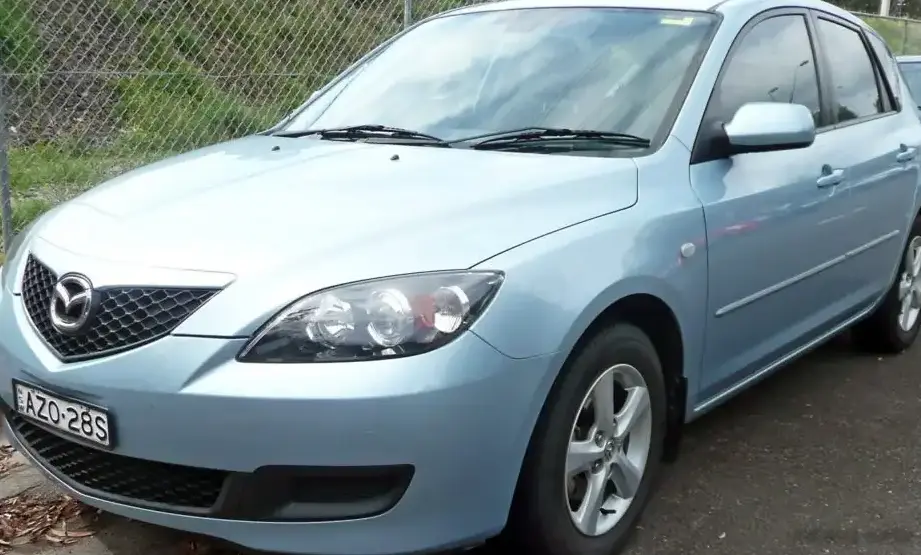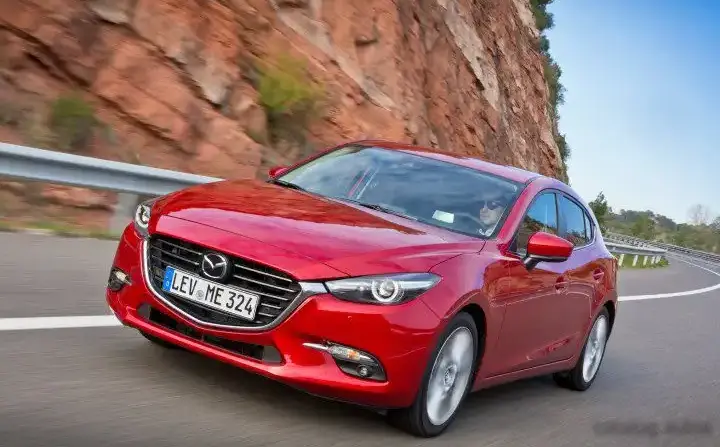
The Mazda 3 III Hatchback, specifically the facelifted model released in 2017, represented a significant evolution of Mazda’s compact offering. The 2.5 SkyActiv-G variant, producing 184 horsepower and paired with Mazda’s SkyActiv-Drive six-speed automatic transmission, was introduced in 2018 and continued through that year. This configuration occupied a mid-to-upper position within the third-generation Mazda 3 lineup, offering a balance of performance and efficiency aimed at buyers seeking a more engaging driving experience than the base engine provided, but without the added cost of potential performance-oriented trims. It was primarily sold in North American and select international markets.
Technical Specifications
| Brand | Mazda |
| Model | 3 |
| Generation | 3 III Hatchback (BM, facelift 2017) |
| Type (Engine) | 2.5 SkyActiv-G (184 Hp) Skyactiv-Drive |
| Start of production | 2018 |
| End of production | 2018 |
| Powertrain Architecture | Internal Combustion engine |
| Body type | Hatchback |
| Seats | 5 |
| Doors | 5 |
| Fuel consumption (urban) | 9 l/100 km (26.1 US mpg) |
| Fuel consumption (extra urban) | 6.7 l/100 km (35.1 US mpg) |
| Fuel consumption (combined) | 7.8 l/100 km (30.2 US mpg) |
| Fuel Type | Petrol (Gasoline) |
| Weight-to-power ratio | 7.6 kg/Hp |
| Weight-to-torque ratio | 5.6 kg/Nm |
| Power | 184 Hp @ 5700 rpm |
| Power per litre | 74 Hp/l |
| Torque | 251 Nm @ 3250 rpm (185.13 lb.-ft. @ 3250 rpm) |
| Maximum engine speed | 6500 rpm |
| Engine layout | Front, Transverse |
| Engine Model/Code | PY-VPS |
| Engine displacement | 2488 cm3 (151.83 cu. in.) |
| Number of cylinders | 4 |
| Engine configuration | Inline |
| Cylinder Bore | 89 mm (3.5 in.) |
| Piston Stroke | 100 mm (3.94 in.) |
| Compression ratio | 13:1 |
| Number of valves per cylinder | 4 |
| Fuel injection system | Direct injection |
| Engine aspiration | Naturally aspirated engine |
| Valvetrain | DOHC-VVT |
| Engine oil capacity | 4.5 l (4.76 US qt | 3.96 UK qt) |
| Coolant capacity | 6.5 l (6.87 US qt | 5.72 UK qt) |
| Kerb Weight | 1405 kg (3097.49 lbs.) |
| Trunk (boot) space – minimum | 572 l (20.2 cu. ft.) |
| Trunk (boot) space – maximum | 1334 l (47.11 cu. ft.) |
| Fuel tank capacity | 50 l (13.21 US gal | 11 UK gal) |
| Length | 4460 mm (175.59 in.) |
| Width | 1796 mm (70.71 in.) |
| Height | 1455 mm (57.28 in.) |
| Wheelbase | 2700 mm (106.3 in.) |
| Front track | 1554 mm (61.18 in.) |
| Rear track | 1560 mm (61.42 in.) |
| Ride height (ground clearance) | 155 mm (6.1 in.) |
| Minimum turning circle | 10.6 m (34.78 ft.) |
| Drivetrain Architecture | Front wheel drive |
| Number of gears | 6 |
| Gearbox type | Automatic transmission |
| Front suspension | Independent, McPherson with coil spring and anti-roll bar |
| Rear suspension | Independent multi-link with stabilizer |
| Front brakes | Ventilated discs |
| Rear brakes | Disc |
| Steering type | Steering rack and pinion |
| Power steering | Electric |
| Tires size | 215/45 R18 |
| Wheel rims size | 7.0J x 18 |
INTRODUCTION
The Mazda 3 III, launched in 2014 and receiving a significant facelift in 2017, represented a shift towards a more premium feel for the compact car. The 2018 model year 2.5-liter SkyActiv-G engine paired with the SkyActiv-Drive automatic transmission was a key component of this strategy. Built on the 1HX0/A3 platform, this variant aimed to deliver a more refined and powerful driving experience compared to the base 2.0-liter engine, while maintaining Mazda’s reputation for fuel efficiency and handling. This combination was primarily targeted at buyers in North America, where larger displacement engines were more commonly preferred.
Powertrain & Engine Architecture
The heart of this Mazda 3 is the PY-VPS 2.5-liter inline-four cylinder engine, a cornerstone of Mazda’s SkyActiv technology. This engine features direct injection, a high compression ratio of 13:1, and a double overhead camshaft (DOHC) valvetrain with variable valve timing (VVT) on both intake and exhaust cams. These features contribute to both increased power output and improved fuel economy. The SkyActiv-Drive six-speed automatic transmission is designed to provide smooth and responsive shifts, utilizing a torque converter with a wider range of lock-up than traditional automatics. This helps to minimize power loss and improve efficiency. The engine’s architecture prioritizes thermal efficiency, with features like optimized combustion chamber design and reduced internal friction.
Driving Characteristics
The 184 horsepower and 185 lb-ft of torque offered by the 2.5-liter engine and SkyActiv-Drive transmission provided a noticeable improvement in acceleration and overall responsiveness compared to the 2.0-liter base engine. While not a performance-focused variant, the 2.5L automatic offered ample power for everyday driving and highway merging. The SkyActiv-Drive transmission is programmed for efficiency, meaning it prioritizes higher gears at lower speeds. This can sometimes result in a slight hesitation during quick acceleration, but the transmission readily downshifts when more power is needed. Compared to the six-speed manual transmission available with the 2.5-liter engine, the automatic offers greater convenience, but sacrifices some driver engagement and control. The gear ratios are tuned for a balance between fuel economy and usable power across the rev range.
Equipment & Trim Levels
The 2.5 SkyActiv-G automatic typically came equipped as part of the Grand Touring or higher trim levels. Standard features included leather upholstery, a premium audio system (often Bose), automatic climate control, and Mazda’s suite of safety technologies, including blind spot monitoring, rear cross-traffic alert, and lane departure warning. Optional extras often included a power sunroof, navigation system, and adaptive front lighting. Interior appointments were generally upscale for the compact class, with soft-touch materials and a well-designed dashboard layout. The exterior styling of the facelifted model included a redesigned front grille, headlights, and taillights, giving it a more sophisticated appearance.
Chassis & Braking
The Mazda 3 III utilized a front-wheel-drive platform with an independent suspension setup. The front suspension employed a McPherson strut design with coil springs and an anti-roll bar, while the rear suspension featured a multi-link setup, also with a stabilizer bar. This configuration provided a good balance of ride comfort and handling precision. Braking duties were handled by ventilated discs at the front and solid discs at the rear. Anti-lock braking system (ABS) was standard, along with electronic brake-force distribution (EBD) and brake assist. The chassis was tuned to provide a responsive and engaging driving experience, characteristic of Mazda vehicles.
Market Reception & Comparison
Critics generally praised the 2.5-liter SkyActiv-G engine for its smooth power delivery and fuel efficiency. The SkyActiv-Drive automatic transmission received mixed reviews, with some praising its smoothness and others noting its tendency to prioritize fuel economy over outright performance. Compared to the 2.0-liter base engine, the 2.5-liter offered a significant improvement in acceleration and overall driving enjoyment. Compared to the manual transmission version of the 2.5-liter, the automatic provided greater convenience but slightly less driver engagement. Fuel economy figures were competitive within the compact car segment, averaging around 30 mpg combined. Reliability was generally good, with few widespread issues reported.
Legacy
The 2.5-liter SkyActiv-G engine and SkyActiv-Drive transmission proved to be a reliable and durable powertrain combination. In the used car market, these models tend to hold their value relatively well, due to their reputation for quality and fuel efficiency. While not a particularly rare variant, well-maintained examples are sought after by buyers looking for a comfortable and engaging compact car. The SkyActiv technology introduced in this generation of Mazda 3 laid the groundwork for future Mazda models and solidified the brand’s commitment to innovation and driving pleasure. The engine’s longevity and relatively simple design contribute to its continued appeal in the used car market.