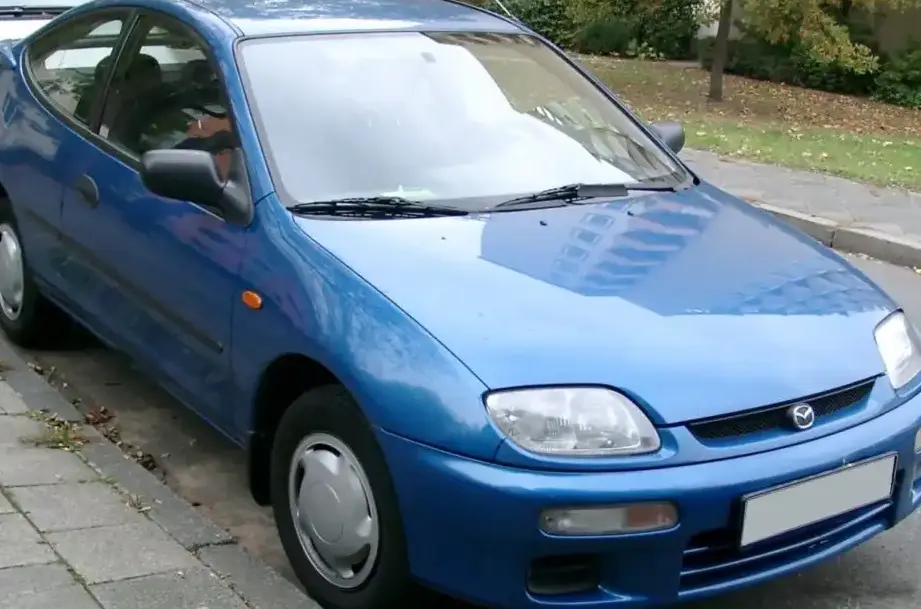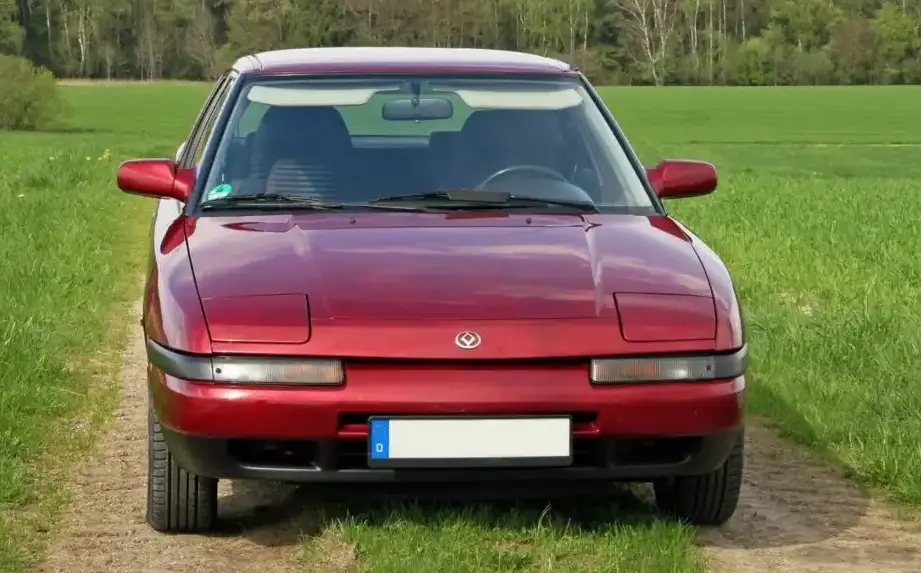
The Mazda 323 F IV (BG) 1.8 4WD, produced between 1991 and 1994, represented a significant offering in Mazda’s compact car lineup. Positioned as a more capable variant within the BG generation (1989-1994), this model combined the practicality of a five-door hatchback with the added security and performance benefits of a full-time four-wheel drive system. It catered to buyers in markets where inclement weather or varied road conditions were common, offering a blend of everyday usability and all-weather confidence. The 323 F, known as the Familia in Japan, was a crucial model for Mazda, competing directly with rivals like the Honda Civic, Toyota Corolla, and Ford Escort.
Technical Specifications
| Brand | Mazda |
| Model | 323 |
| Generation | 323 F IV (BG) |
| Type (Engine) | 1.8 4WD (103 Hp) |
| Start of production | 1991 |
| End of production | 1994 |
| Powertrain Architecture | Internal Combustion engine |
| Body type | Hatchback |
| Seats | 5 |
| Doors | 5 |
| Fuel consumption (urban) | 9.8 l/100 km (24 US mpg, 28.8 UK mpg, 10.2 km/l) |
| Fuel consumption (extra urban) | 5.9 l/100 km (39.9 US mpg, 47.9 UK mpg, 16.9 km/l) |
| Fuel consumption (combined) | 7.5 l/100 km (31.4 US mpg, 37.7 UK mpg, 13.3 km/l) |
| Fuel Type | Petrol (Gasoline) |
| Acceleration 0 – 100 km/h | 11 sec |
| Acceleration 0 – 62 mph | 11 sec |
| Acceleration 0 – 60 mph | 10.5 sec |
| Maximum speed | 190 km/h (118.06 mph) |
| Weight-to-power ratio | 10.9 kg/Hp, 92 Hp/tonne |
| Weight-to-torque ratio | 7.2 kg/Nm, 138.4 Nm/tonne |
| Power | 103 Hp @ 5500 rpm |
| Power per litre | 56 Hp/l |
| Torque | 155 Nm @ 4300 rpm (114.32 lb.-ft. @ 4300 rpm) |
| Engine layout | Front, Transverse |
| Engine displacement | 1840 cm3 (112.28 cu. in.) |
| Number of cylinders | 4 |
| Engine configuration | Inline |
| Cylinder Bore | 83 mm (3.27 in.) |
| Piston Stroke | 85 mm (3.35 in.) |
| Compression ratio | 9:1 |
| Number of valves per cylinder | 4 |
| Fuel injection system | Multi-port manifold injection |
| Engine aspiration | Naturally aspirated engine |
| Valvetrain | SOHC |
| Kerb Weight | 1120 kg (2469.18 lbs.) |
| Max. weight | 1560 kg (3439.21 lbs.) |
| Max load | 440 kg (970.03 lbs.) |
| Fuel tank capacity | 55 l (14.53 US gal, 12.1 UK gal) |
| Length | 4260 mm (167.72 in.) |
| Width | 1680 mm (66.14 in.) |
| Height | 1340 mm (52.76 in.) |
| Wheelbase | 2500 mm (98.43 in.) |
| Front track | 1430 mm (56.3 in.) |
| Rear track | 1435 mm (56.5 in.) |
| Minimum turning circle | 9.8 m (32.15 ft.) |
| Drive wheel | All wheel drive (4×4) |
| Front brakes | Disc |
| Rear brakes | Disc |
| Tires size | 185/60 R14 |
| Wheel rims size | 14 |
Powertrain & Engine Architecture
The heart of the 323 F IV 1.8 4WD was the Mazda F8 engine, an inline-four cylinder, naturally aspirated gasoline engine displacing 1840cc (1.8 liters). This engine, often identified by its internal code, utilized a single overhead camshaft (SOHC) valvetrain operating four valves per cylinder. Fuel delivery was managed by a multi-port fuel injection system, contributing to improved efficiency and throttle response compared to earlier carbureted designs. The engine produced 103 horsepower at 5500 rpm and 155 Nm (114 lb-ft) of torque at 4300 rpm. The four-wheel drive system was typically a viscous coupling type, providing full-time all-wheel drive without driver intervention. The transmission was a four-speed automatic, chosen for its ease of use and suitability for a broader range of drivers. While not a particularly advanced transmission, it was known for its reliability.
Driving Characteristics
The 1.8L engine and four-speed automatic combination in the 323 F IV 4WD delivered adequate, but not exhilarating, performance. Acceleration from 0-60 mph took around 10.5 to 11 seconds, and top speed was approximately 118 mph. The automatic transmission, while smooth, did result in some power loss compared to the available five-speed manual transmission. Gear ratios were tuned for fuel economy and everyday drivability rather than outright speed. The all-wheel drive system provided enhanced traction, particularly on slippery surfaces, making the car feel more stable and secure in adverse conditions. However, the added weight of the 4WD components did slightly impact handling agility compared to front-wheel drive versions.
Equipment & Trim Levels
The 323 F IV 1.8 4WD typically came with a reasonable level of standard equipment. This included power steering, central locking, electric windows, and a basic audio system. Interior upholstery was usually cloth, with a relatively simple dashboard layout. Optional extras could include alloy wheels, a sunroof, and upgraded audio systems. The trim level often dictated the quality of the interior materials and the availability of additional features. This 4WD variant was generally positioned as a mid-range offering, bridging the gap between the more basic front-wheel drive models and the higher-specification trims.
Chassis & Braking
The 323 F IV utilized a MacPherson strut front suspension and a torsion beam rear suspension. The 4WD models often featured slightly stiffer springs and dampers to compensate for the added weight. Braking was handled by disc brakes on all four wheels, providing adequate stopping power for the vehicle’s weight and performance. The 1.8 4WD models typically rode on 14-inch wheels with 185/60 R14 tires. Stabilizer bars were fitted to both the front and rear axles to reduce body roll during cornering.
Market Reception & Comparison
The Mazda 323 F IV 1.8 4WD was generally well-received by automotive critics as a practical and capable compact car. Its all-wheel drive system was praised for providing enhanced traction and stability, particularly in challenging weather conditions. However, the engine’s performance was sometimes criticized as being somewhat underwhelming, and the automatic transmission was not as engaging as the manual option. Fuel economy was respectable for the time, averaging around 31.4 US mpg in combined driving. Compared to the 1.6L front-wheel drive models, the 1.8 4WD offered more power and better traction, but at the cost of slightly increased fuel consumption and a higher purchase price. The 4WD variant also offered a more robust alternative to the more performance-oriented, but less practical, higher-spec trims.
Legacy
The Mazda 323 F IV 1.8 4WD has proven to be a relatively reliable vehicle over the long term. The F8 engine is known for its durability, and the four-speed automatic transmission is generally robust. However, as with any older vehicle, regular maintenance is crucial to prevent issues. Rust can be a concern, particularly in regions with harsh winters. Today, these cars are becoming increasingly rare and are sought after by enthusiasts who appreciate their practicality, all-wheel drive capability, and classic Mazda styling. Parts availability is generally good, although some specific components may be difficult to find. The 323 F IV 1.8 4WD remains a testament to Mazda’s commitment to building well-rounded and dependable compact cars.