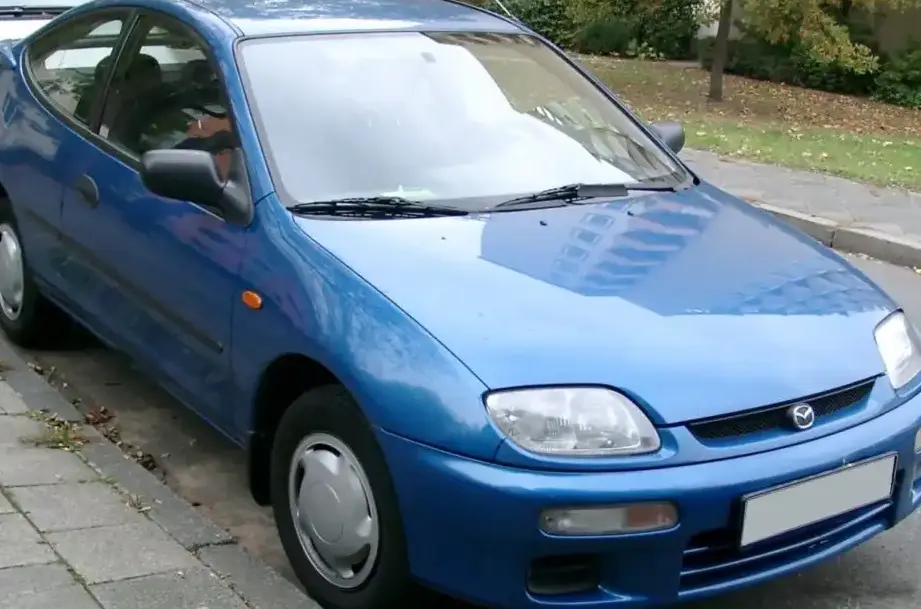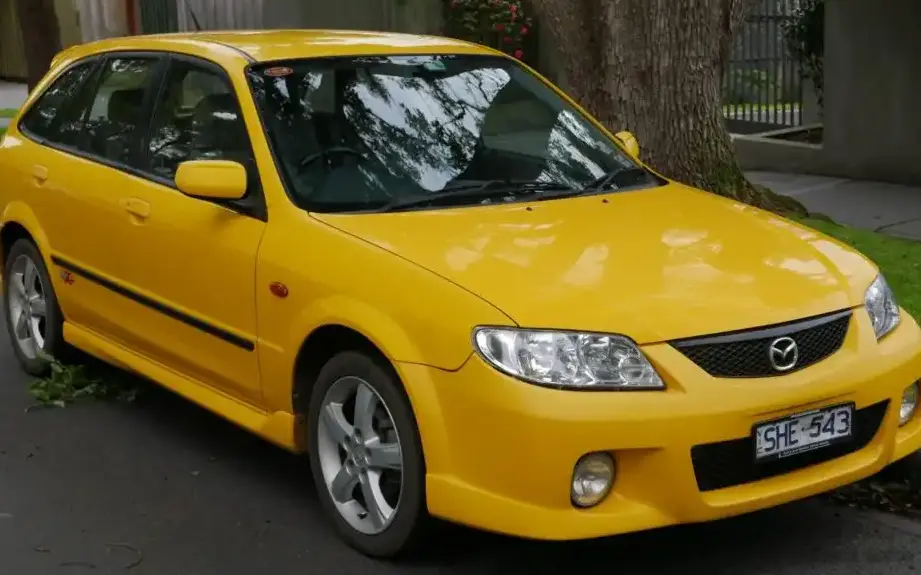
The Mazda 323 F VI (BJ) 2.0 D, produced between 1998 and 2003, represented Mazda’s entry into the compact diesel market in Europe and other regions. Positioned as a fuel-efficient and practical option within the broader 323 F VI (BJ) range – which also included gasoline variants – the 2.0 D offered a more economical alternative for drivers prioritizing low running costs. This generation of the 323, built on the BJ platform, aimed to provide a balance of affordability, reliability, and everyday usability. The 2.0 D trim typically served as a base or mid-range offering, appealing to buyers seeking a no-frills, dependable hatchback.
Technical Specifications
| Brand | Mazda |
| Model | 323 |
| Generation | 323 F VI (BJ) |
| Type (Engine) | 2.0 D (71 Hp) |
| Start of production | 1998 |
| End of production | 2003 |
| Powertrain Architecture | Internal Combustion engine |
| Body type | Hatchback |
| Seats | 5 |
| Doors | 5 |
| Fuel consumption (urban) | 8.3 l/100 km (28.3 US mpg, 34 UK mpg, 12 km/l) |
| Fuel consumption (extra urban) | 5.4 l/100 km (43.6 US mpg, 52.3 UK mpg, 18.5 km/l) |
| Fuel Type | Diesel |
| Acceleration 0 – 100 km/h | 16.9 sec |
| Acceleration 0 – 62 mph | 16.9 sec |
| Acceleration 0 – 60 mph | 16.1 sec |
| Maximum speed | 168 km/h (104.39 mph) |
| Weight-to-power ratio | 16.2 kg/Hp, 61.7 Hp/tonne |
| Weight-to-torque ratio | 9 kg/Nm, 111.3 Nm/tonne |
| Power | 71 Hp @ 4500 rpm |
| Power per litre | 35.5 Hp/l |
| Torque | 128 Nm @ 3000 rpm (94.41 lb.-ft. @ 3000 rpm) |
| Engine layout | Front, Transverse |
| Engine Model/Code | RF1S |
| Engine displacement | 1998 cm3 (121.93 cu. in.) |
| Number of cylinders | 4 |
| Engine configuration | Inline |
| Cylinder Bore | 86 mm (3.39 in.) |
| Piston Stroke | 86 mm (3.39 in.) |
| Compression ratio | 21.7:1 |
| Number of valves per cylinder | 2 |
| Fuel injection system | Diesel Commonrail |
| Engine aspiration | Naturally aspirated engine |
| Valvetrain | OHC |
| Engine oil capacity | 5.8 l (6.13 US qt | 5.1 UK qt) |
| Coolant capacity | 9 l (9.51 US qt | 7.92 UK qt) |
| Kerb Weight | 1150 kg (2535.32 lbs.) |
| Max. weight | 1695 kg (3736.84 lbs.) |
| Max load | 545 kg (1201.52 lbs.) |
| Trunk (boot) space – minimum | 355 l (12.54 cu. ft.) |
| Trunk (boot) space – maximum | 1000 l (35.31 cu. ft.) |
| Fuel tank capacity | 55 l (14.53 US gal | 12.1 UK gal) |
| Length | 4200 mm (165.35 in.) |
| Width | 1705 mm (67.13 in.) |
| Height | 1410 mm (55.51 in.) |
| Wheelbase | 2610 mm (102.76 in.) |
| Front track | 1470 mm (57.87 in.) |
| Rear track | 1470 mm (57.87 in.) |
| Drivetrain Architecture | The Internal combustion engine (ICE) drives the front wheels of the vehicle. |
| Drive wheel | Front wheel drive |
| Number of gears | 5 gears, manual transmission |
| Front suspension | Coil spring |
| Rear suspension | Coil spring |
| Front brakes | Ventilated discs |
| Rear brakes | Disc |
| Assisting systems | ABS (Anti-lock braking system) |
| Steering type | Steering rack and pinion |
| Power steering | Hydraulic Steering |
| Tires size | 185/65 R14 |
| Wheel rims size | 14 |
Powertrain & Engine Architecture
The heart of the 323 F VI 2.0 D was the RF1S engine, a 1.998-liter inline-four cylinder diesel. This engine utilized a direct injection system, employing a common rail setup to deliver fuel at high pressure for improved combustion efficiency and reduced emissions. The engine featured an overhead camshaft (OHC) valvetrain with two valves per cylinder. While relatively simple in design, the RF1S was known for its durability and ability to withstand high mileage. The engine produced 71 horsepower at 4500 rpm and 128 Nm (94.41 lb-ft) of torque at 3000 rpm. The engine was transversely mounted in the front of the vehicle, driving the front wheels. The 5-speed manual transmission was the standard offering, providing a relatively long-geared setup optimized for fuel economy rather than outright performance.
Driving Characteristics
The 2.0 D variant of the Mazda 323 F VI was not designed for sporty driving. Acceleration was modest, taking approximately 16.9 seconds to reach 100 km/h (62 mph). The focus was on providing adequate power for everyday driving situations, such as commuting and highway cruising. The long gearing of the 5-speed manual transmission meant that the engine rarely revved beyond 3500 rpm during normal driving, contributing to its fuel efficiency. Compared to the gasoline-powered 323 models, the 2.0 D offered significantly more torque at lower engine speeds, making it easier to drive in urban environments and when carrying a load. However, it lacked the responsiveness and higher top speed of its petrol counterparts.
Equipment & Trim Levels
The 2.0 D trim level typically included basic features such as power steering, central locking, and electric front windows. Interior upholstery was usually cloth, and the dashboard featured a functional, if somewhat spartan, design. Optional extras included air conditioning, alloy wheels, and a radio/cassette player. Higher trim levels within the 323 F VI range offered more luxurious features, such as leather upholstery, automatic climate control, and upgraded audio systems, but these were generally not available on the base 2.0 D model. Safety features were relatively basic for the time, typically including ABS brakes and driver and passenger airbags.
Chassis & Braking
The 323 F VI utilized a relatively simple chassis design, featuring coil springs and a torsion beam rear suspension. The front suspension employed MacPherson struts. Braking was provided by ventilated discs on the front wheels and solid discs on the rear. The ABS system helped to prevent wheel lockup during hard braking, improving stability and control. The suspension setup was tuned for comfort rather than sporty handling, providing a reasonably smooth ride over uneven road surfaces. The 185/65 R14 tires offered adequate grip for everyday driving conditions.
Market Reception & Comparison
The Mazda 323 F VI 2.0 D was generally well-received by critics as a practical and economical choice in the compact hatchback segment. It was praised for its fuel efficiency, reliability, and low running costs. However, it was also criticized for its lack of performance and somewhat basic interior. Compared to other diesel-powered hatchbacks of the time, such as the Volkswagen Golf TDI and the Ford Focus TDCi, the 323 2.0 D offered a competitive level of fuel economy and reliability, but lacked the refinement and driving dynamics of some of its rivals. The gasoline-powered 323 models offered more performance but at the expense of fuel economy.
Legacy
The RF1S engine, while not known for being particularly high-tech, proved to be a durable and reliable unit. Many examples of the 323 F VI 2.0 D are still on the road today, testament to its robust construction. In the used car market, these vehicles are often sought after by buyers looking for an affordable and dependable runabout. Maintenance costs are generally low, and spare parts are readily available. However, potential buyers should be aware of the typical wear and tear associated with older diesel engines, such as injector issues and turbocharger problems (though this model is naturally aspirated). The Mazda 323 F VI 2.0 D remains a practical and economical choice for those seeking a no-frills, dependable hatchback.