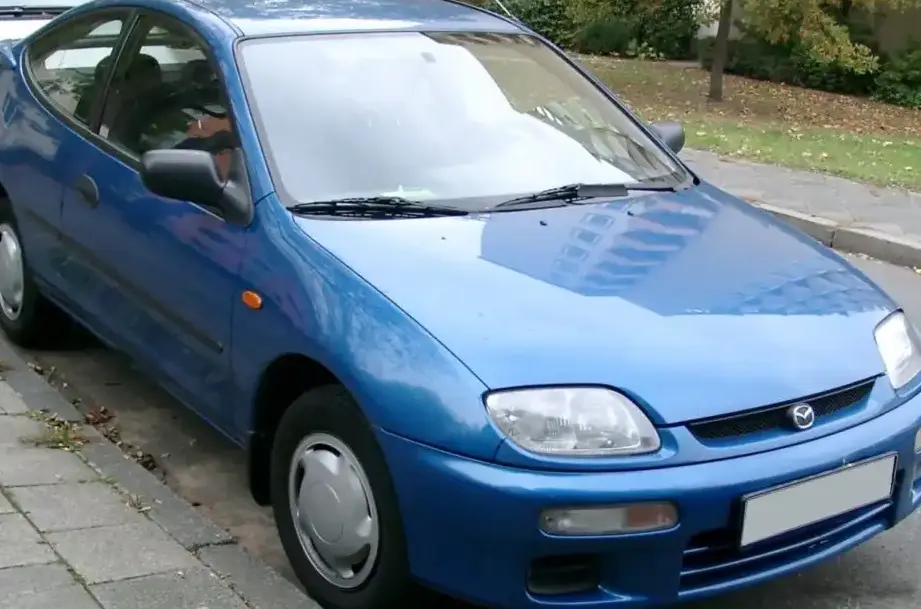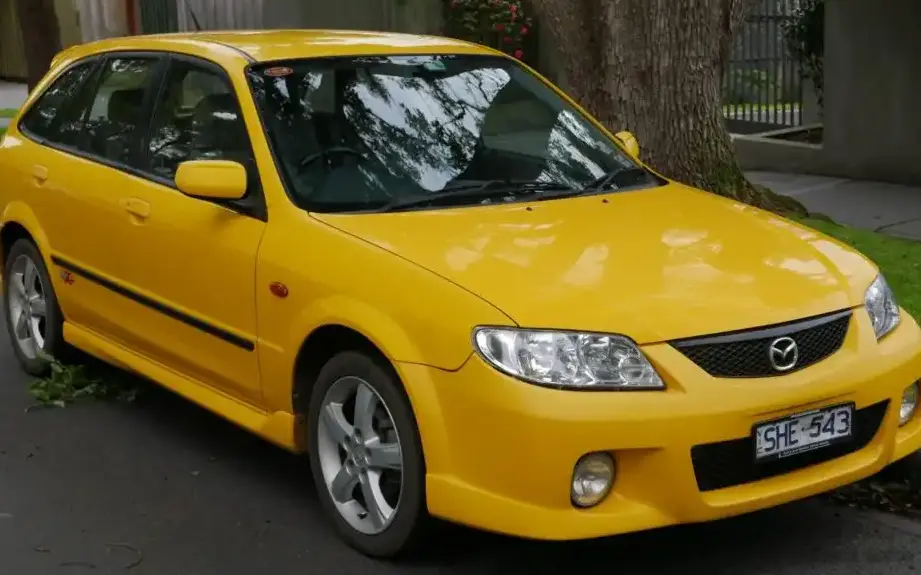
The Mazda 323 F VI (BJ) Sport 2.0i 16V Automatic, produced between 2000 and 2003, represented a mid-cycle offering within the sixth generation (BJ platform) of Mazda’s popular compact hatchback. Positioned as a step up from the base 1.6L models, the 2.0i Sport aimed to provide a balance of performance and convenience, appealing to buyers seeking a more refined driving experience without the added cost of the range-topping trims. This variant was primarily sold in the European market, where the 323 competed with rivals like the Volkswagen Golf, Ford Focus, and Opel Astra.
Technical Specifications
| Brand | Mazda |
| Model | 323 |
| Generation | 323 F VI (BJ) |
| Type (Engine) | Sport 2.0i 16V (130 Hp) Automatic |
| Start of production | 2000 |
| End of production | 2003 |
| Powertrain Architecture | Internal Combustion engine |
| Body type | Hatchback |
| Seats | 5 |
| Doors | 5 |
| Fuel consumption (urban) | 12.5 l/100 km (18.8 US mpg, 22.6 UK mpg, 8 km/l) |
| Fuel consumption (extra urban) | 7.2 l/100 km (32.7 US mpg, 39.2 UK mpg, 13.9 km/l) |
| Fuel consumption (combined) | 9.2 l/100 km (25.6 US mpg, 30.7 UK mpg, 10.9 km/l) |
| Fuel Type | Petrol (Gasoline) |
| Acceleration 0 – 100 km/h | 11.7 sec |
| Acceleration 0 – 62 mph | 11.7 sec |
| Acceleration 0 – 60 mph | 11.1 sec |
| Maximum speed | 183 km/h (113.71 mph) |
| Weight-to-power ratio | 9.1 kg/Hp |
| Weight-to-torque ratio | 6.9 kg/Nm |
| Power | 130 Hp @ 6000 rpm |
| Torque | 171 Nm @ 4400 rpm (126.12 lb.-ft. @ 4400 rpm) |
| Engine layout | Front, Transverse |
| Engine Model/Code | FS7E, FS7G |
| Engine displacement | 1991 cm3 (121.5 cu. in.) |
| Number of cylinders | 4 |
| Engine configuration | Inline |
| Cylinder Bore | 83 mm (3.27 in.) |
| Piston Stroke | 92 mm (3.62 in.) |
| Compression ratio | 9.7:1 |
| Number of valves per cylinder | 4 |
| Fuel injection system | Multi-port manifold injection |
| Engine aspiration | Naturally aspirated engine |
| Valvetrain | DOHC |
| Engine oil capacity | 3.5 l (3.7 US qt | 3.08 UK qt) |
| Coolant capacity | 7.5 l (7.93 US qt | 6.6 UK qt) |
| Kerb Weight | 1185 kg (2612.48 lbs.) |
| Max. weight | 1650 kg (3637.63 lbs.) |
| Max load | 465 kg (1025.15 lbs.) |
| Trunk (boot) space – minimum | 355 l (12.54 cu. ft.) |
| Trunk (boot) space – maximum | 1000 l (35.31 cu. ft.) |
| Fuel tank capacity | 55 l (14.53 US gal | 12.1 UK gal) |
| Length | 4290 mm (168.9 in.) |
| Width | 1705 mm (67.13 in.) |
| Height | 1420 mm (55.91 in.) |
| Wheelbase | 2610 mm (102.76 in.) |
| Front track | 1470 mm (57.87 in.) |
| Rear track | 1470 mm (57.87 in.) |
| Drivetrain Architecture | Front wheel drive |
| Number of gears | 4 |
| Gearbox type | Automatic transmission |
| Front suspension | Coil spring |
| Rear suspension | Coil spring |
| Front brakes | Ventilated discs |
| Rear brakes | Disc |
| Assisting systems | ABS (Anti-lock braking system) |
| Steering type | Steering rack and pinion |
| Power steering | Hydraulic Steering |
| Tires size | 195/50 R15 |
| Wheel rims size | 15 |
Powertrain & Engine Architecture
The heart of the 323 F VI Sport 2.0i Automatic was the FS-DE series engine, specifically the FS7E or FS7G variant depending on the exact market and production year. This 1991cc inline-four engine featured a double overhead camshaft (DOHC) valvetrain with four valves per cylinder, contributing to its respectable power output. The engine utilized multi-port fuel injection, a common setup for the time, delivering fuel directly into the intake ports. The FS-DE engines were known for their relatively smooth operation and decent reliability. The automatic transmission was a conventional four-speed unit, designed to provide comfortable and convenient shifting. While not particularly advanced, it was well-suited to the engine’s torque curve and the intended use case of this trim level.
Driving Characteristics
The 2.0i Automatic offered a noticeable step up in performance compared to the lower-displacement 323 models. With 130 horsepower and 171 Nm (126 lb-ft) of torque, acceleration to 60 mph took around 11.1 seconds, and it could reach a top speed of 113.71 mph. However, the automatic transmission did impact performance somewhat. The four-speed unit, while smooth, lacked the responsiveness of a manual gearbox and resulted in slightly slower acceleration times. Gear ratios were tuned for comfort and fuel efficiency rather than outright performance. Compared to a manual transmission equipped 2.0i, the automatic felt less engaging and required more planning when overtaking. The automatic transmission also contributed to slightly higher fuel consumption.
Equipment & Trim Levels
The Sport trim level of the 323 F VI typically included features such as power windows, central locking, power steering, and an upgraded audio system. Interior upholstery was usually cloth, with a sporty design. Optional extras included air conditioning, alloy wheels, and a sunroof. The dashboard layout was functional and straightforward, prioritizing ease of use over aesthetic flair. The 2.0i Sport Automatic often came standard with features that were optional on the lower trims, making it a more well-equipped package.
Chassis & Braking
The 323 F VI utilized a relatively simple suspension setup, with coil springs and dampers at all four corners. The front suspension employed MacPherson struts, while the rear used a torsion beam setup. Braking duties were handled by ventilated discs at the front and solid discs at the rear. Anti-lock Braking System (ABS) was standard, enhancing safety. The chassis was tuned for a comfortable ride, prioritizing everyday usability over sporty handling. Stabilizer bars were fitted to both the front and rear axles to reduce body roll during cornering.
Market Reception & Comparison
The Mazda 323 F VI Sport 2.0i Automatic was generally well-received by automotive critics as a practical and reliable compact hatchback. However, the automatic transmission was often criticized for its lack of responsiveness compared to the manual gearbox. Fuel economy was considered average for its class. Compared to rivals like the Volkswagen Golf, the 323 offered a more affordable price point and a slightly more engaging driving experience, although the Golf generally had a reputation for higher build quality. Against the Ford Focus, the 323 offered a similar level of practicality and performance, but the Focus was often praised for its sharper handling.
Legacy
The Mazda 323 F VI, particularly the 2.0i Automatic variant, has proven to be a relatively durable and reliable vehicle. The FS-DE engine is known for its longevity, and the automatic transmission, while not the most sophisticated, is generally dependable. Today, these cars are relatively affordable on the used car market, making them a popular choice for budget-conscious buyers. However, finding well-maintained examples can be challenging, as many have accumulated high mileage or suffered from neglect. Parts availability is generally good, although some specific trim pieces may be difficult to source. The 323 F VI represents a solid and dependable compact car from a period when Mazda was establishing itself as a maker of enjoyable and reliable vehicles.