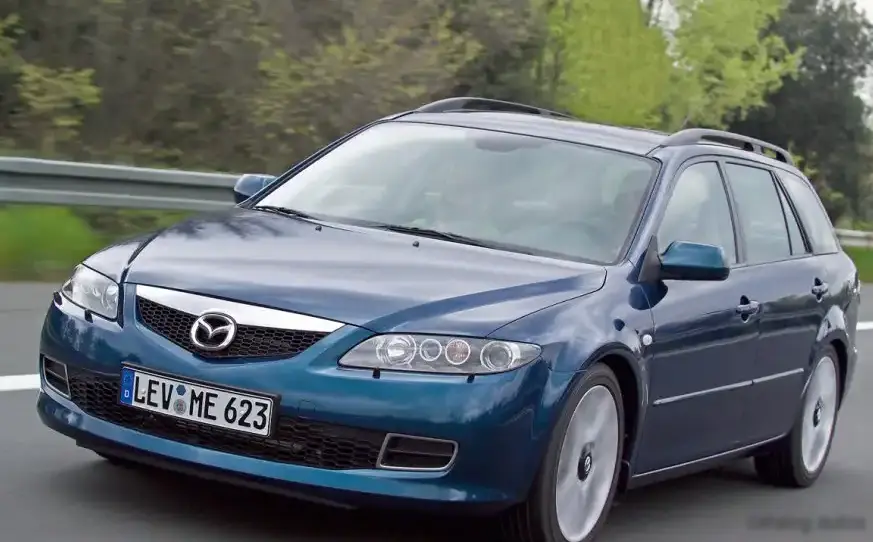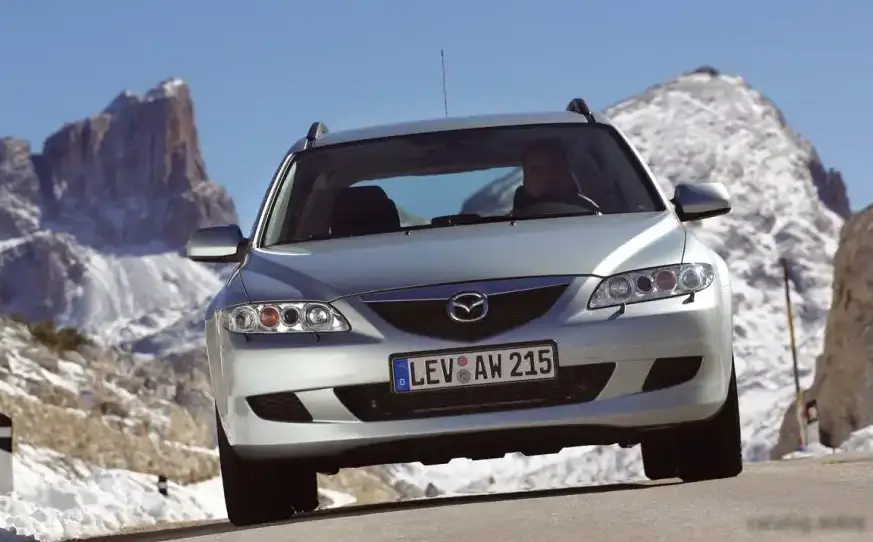
The Mazda 6 first generation Combi (estate) model, specifically the 3.0 V6 variant with a six-speed automatic transmission, was produced for a limited time between August 2004 and September 2005. Representing the top-of-the-line engine option for the GG/GY/GG1 chassis, this model aimed to provide a blend of performance and practicality within the mid-size wagon segment. It was primarily marketed in Europe and other regions where wagons held significant market share, offering a more refined and powerful alternative to the more common four-cylinder Mazda 6 models.
Technical Specifications
| Brand | Mazda |
| Model | 6 |
| Generation | 6 I Combi (Typ GG/GY/GG1) |
| Type (Engine) | 3.0 V6 (220 Hp) Automatic 6-speed |
| Start of production | August, 2004 |
| End of production | September, 2005 |
| Powertrain Architecture | Internal Combustion engine |
| Body type | Station wagon (estate) |
| Seats | 5 |
| Doors | 5 |
| Fuel consumption (urban) | 11.8 l/100 km (19.9 US mpg) |
| Fuel consumption (extra urban) | 8.7 l/100 km (27 US mpg) |
| Fuel Type | Petrol (Gasoline) |
| Weight-to-power ratio | 7.1 kg/Hp |
| Weight-to-torque ratio | 6 kg/Nm |
| Power | 220 Hp @ 6300 rpm |
| Power per litre | 74.1 Hp/l |
| Torque | 260 Nm @ 5000 rpm (191.77 lb.-ft. @ 5000 rpm) |
| Maximum engine speed | 6500 rpm |
| Engine layout | Front, Transverse |
| Engine Model/Code | AJ0N |
| Engine displacement | 2967 cm3 (181.06 cu. in.) |
| Number of cylinders | 6 |
| Engine configuration | V-engine |
| Cylinder Bore | 89 mm (3.5 in.) |
| Piston Stroke | 79.5 mm (3.13 in.) |
| Compression ratio | 10:1 |
| Number of valves per cylinder | 4 |
| Fuel injection system | Multi-port manifold injection |
| Engine aspiration | Naturally aspirated engine |
| Valvetrain | DOHC, VVT |
| Engine oil capacity | 5.2 l (5.49 US qt | 4.58 UK qt) |
| Coolant capacity | 10.2 l (10.78 US qt | 8.97 UK qt) |
| Kerb Weight | 1570 kg (3461.26 lbs.) |
| Max. weight | 2037 kg (4490.82 lbs.) |
| Max load | 467 kg (1029.56 lbs.) |
| Trunk (boot) space – minimum | 954 l (33.69 cu. ft.) |
| Trunk (boot) space – maximum | 1713 l (60.49 cu. ft.) |
| Fuel tank capacity | 68 l (17.96 US gal | 14.96 UK gal) |
| Length | 4770 mm (187.8 in.) |
| Width | 1780 mm (70.08 in.) |
| Height | 1455 mm (57.28 in.) |
| Wheelbase | 2675 mm (105.31 in.) |
| Front track | 1530 mm (60.24 in.) |
| Rear track | 1530 mm (60.24 in.) |
| Ride height (ground clearance) | 130 mm (5.12 in.) |
| Minimum turning circle | 11.8 m (38.71 ft.) |
| Drivetrain | Front wheel drive |
| Number of gears | 6 |
| Gearbox type | Automatic transmission |
| Front suspension | Double wishbone, Transverse stabilizer |
| Rear suspension | Independent multi-link spring suspension with stabilizer |
| Front brakes | Ventilated discs, 282×25 mm |
| Rear brakes | Disc, 280×10 mm |
| Assisting systems | ABS (Anti-lock braking system) |
| Steering type | Steering rack and pinion |
| Power steering | Hydraulic Steering |
| Tires size | 215/50 R17 |
| Wheel rims size | 7J x 17 |
Powertrain & Engine Architecture
The heart of this Mazda 6 variant is the AJ0N engine, a 2.967-liter (181.06 cubic inches) V6. This engine utilizes a naturally aspirated configuration, relying on displacement and variable valve timing (VVT) rather than forced induction for its power output. The AJ0N features a double overhead camshaft (DOHC) design with four valves per cylinder, contributing to its relatively high specific output of 74.1 horsepower per liter. Fuel delivery is managed by a multi-port fuel injection system. The engine’s 60-degree V-angle helps to balance the engine and reduce vibrations. Paired with this engine is a six-speed automatic transmission, designed to provide smooth shifts and efficient power delivery. This transmission was a significant upgrade over the four-speed automatics found in earlier Mazda models, offering closer gear ratios for improved acceleration and highway cruising.
Driving Characteristics
The 3.0 V6 automatic Mazda 6 Combi offered a noticeably different driving experience compared to the more common 2.0-liter four-cylinder models. The V6 provided a substantial increase in power and torque, resulting in quicker acceleration and more effortless highway passing. While not a sports car, the 220 hp engine and six-speed automatic allowed for brisk performance. The automatic transmission, while smooth, wasn’t particularly sporty, prioritizing comfort over aggressive shifting. The gear ratios were tuned for a balance between fuel economy and responsiveness. Compared to the manual transmission versions of the V6, the automatic offered convenience but sacrificed some driver engagement and potentially a slight amount of fuel efficiency.
Equipment & Trim Levels
The 3.0 V6 Automatic trim typically represented the highest specification level for the Mazda 6 Combi. Standard features often included climate control, power windows and mirrors, a CD stereo system, and alloy wheels. Higher-end trims could also include leather upholstery, a sunroof, and upgraded audio systems. Safety features such as ABS and front airbags were standard. Optional extras often included navigation systems and premium sound systems. The interior generally featured a dark color scheme with woodgrain accents, aiming for a more upscale feel.
Chassis & Braking
The Mazda 6 Combi’s chassis featured a double wishbone suspension setup at the front and an independent multi-link suspension at the rear, providing a comfortable ride and decent handling characteristics. Stabilizer bars were fitted to both axles to reduce body roll during cornering. The braking system consisted of ventilated discs at the front and solid discs at the rear, providing adequate stopping power for the vehicle’s weight and performance. ABS (Anti-lock Braking System) was standard, enhancing safety during emergency braking situations.
Market Reception & Comparison
The 3.0 V6 Automatic Mazda 6 Combi was generally well-received by automotive critics, who praised its smooth engine, comfortable ride, and spacious interior. However, some reviewers noted that the automatic transmission wasn’t as engaging as the manual option. Fuel economy was also a point of concern, as the V6 engine consumed significantly more fuel than the four-cylinder alternatives. Compared to rivals like the Ford Mondeo and Volkswagen Passat, the Mazda 6 offered a more stylish design and a more engaging driving experience, but lacked the brand recognition of its competitors.
Legacy
The AJ0N V6 engine, while not without its quirks, proved to be a relatively reliable powertrain when properly maintained. Common issues included oil leaks and occasional sensor failures. Today, the 3.0 V6 Automatic Mazda 6 Combi is a relatively rare find on the used car market. Its limited production run and the general preference for more fuel-efficient models have contributed to its scarcity. Well-maintained examples are sought after by enthusiasts who appreciate its unique combination of performance, practicality, and style. The engine’s robust construction and the availability of spare parts ensure that these vehicles can continue to provide years of reliable service with proper care.