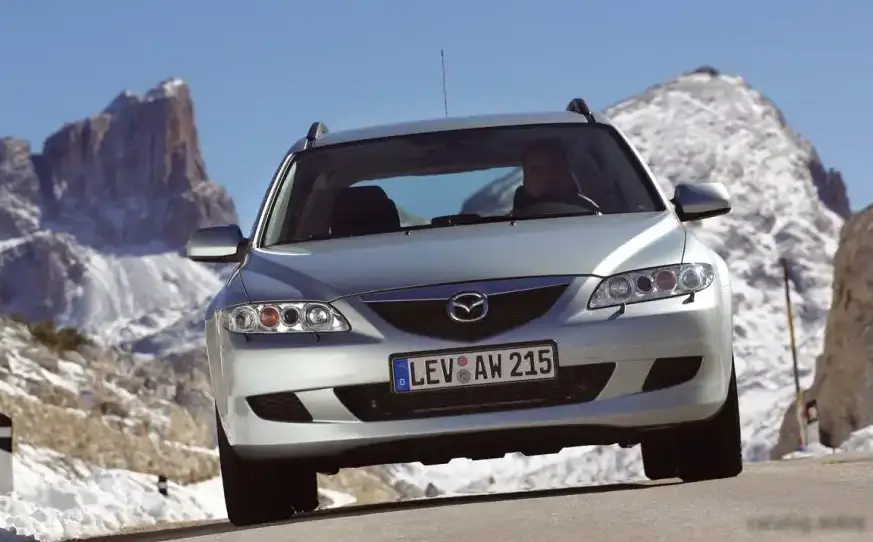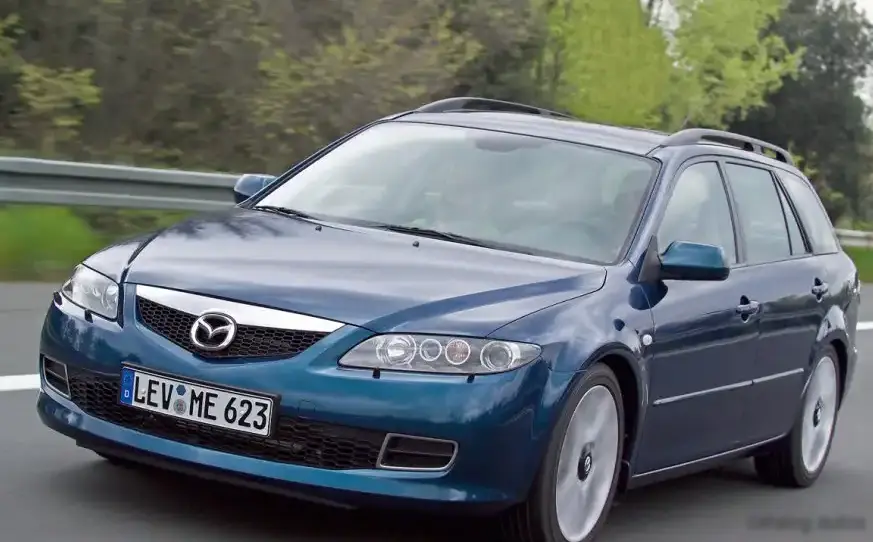
The Mazda 6 Combi (Typ GG/GY/GG1) facelift, produced from 2005 to 2008, represented Mazda’s entry into the competitive mid-size wagon segment. This generation of the 6, known internally as the GG/GY series, offered a compelling blend of style, practicality, and driving dynamics. The 2.0-liter (147 hp) automatic variant occupied a middle ground within the lineup, positioned as a more accessible option compared to the higher-performance 2.3-liter models, while offering a more refined experience than the base 1.8-liter engine. It was primarily marketed in Europe and other international markets, offering a spacious and well-equipped family vehicle.
Technical Specifications
| Brand | Mazda |
| Model | 6 |
| Generation | 6 I Combi (Typ GG/GY/GG1 facelift 2005) |
| Type (Engine) | 2.0 (147 Hp) Automatic |
| Start of production | 2005 |
| End of production | 2008 |
| Powertrain Architecture | Internal Combustion engine |
| Body type | Station wagon (estate) |
| Seats | 5 |
| Doors | 5 |
| Fuel consumption (urban) | 12 l/100 km (19.6 US mpg, 23.5 UK mpg, 8.3 km/l) |
| Fuel consumption (extra urban) | 6.8 l/100 km (34.6 US mpg, 41.5 UK mpg, 14.7 km/l) |
| Fuel consumption (combined) | 8.7 l/100 km (27 US mpg, 32.5 UK mpg, 11.5 km/l) |
| CO2 emissions | 207 g/km |
| Fuel Type | Petrol (Gasoline) |
| Acceleration 0 – 100 km/h | 11.1 sec |
| Acceleration 0 – 62 mph | 11.1 sec |
| Acceleration 0 – 60 mph | 10.5 sec |
| Maximum speed | 195 km/h (121.17 mph) |
| Emission standard | Euro 4 |
| Weight-to-power ratio | 9.6 kg/Hp, 104.6 Hp/tonne |
| Weight-to-torque ratio | 7.6 kg/Nm, 131 Nm/tonne |
| Power | 147 Hp @ 6500 rpm |
| Power per litre | 73.5 Hp/l |
| Torque | 184 Nm @ 4000 rpm (135.71 lb.-ft. @ 4000 rpm) |
| Engine layout | Front, Transverse |
| Engine Model/Code | LFF7 |
| Engine displacement | 1999 cm3 (121.99 cu. in.) |
| Number of cylinders | 4 |
| Engine configuration | Inline |
| Cylinder Bore | 87.5 mm (3.44 in.) |
| Piston Stroke | 83.1 mm (3.27 in.) |
| Compression ratio | 10.8:1 |
| Number of valves per cylinder | 4 |
| Fuel injection system | Multi-port manifold injection |
| Engine aspiration | Naturally aspirated engine |
| Valvetrain | DOHC |
| Engine oil capacity | 4.3 l (4.54 US qt | 3.78 UK qt) |
| Coolant | 7.5 l (7.93 US qt | 6.6 UK qt) |
| Kerb Weight | 1405 kg (3097.49 lbs.) |
| Max. weight | 1975 kg (4354.13 lbs.) |
| Max load | 570 kg (1256.63 lbs.) |
| Trunk (boot) space – minimum | 505 l (17.83 cu. ft.) |
| Trunk (boot) space – maximum | 1712 l (60.46 cu. ft.) |
| Fuel tank capacity | 64 l (16.91 US gal | 14.08 UK gal) |
| Permitted trailer load with brakes (12%) | 1500 kg (3306.93 lbs.) |
| Permitted trailer load without brakes | 550 kg (1212.54 lbs.) |
| Length | 4710 mm (185.43 in.) |
| Width | 1780 mm (70.08 in.) |
| Height | 1480 mm (58.27 in.) |
| Wheelbase | 2675 mm (105.31 in.) |
| Front track | 1540 mm (60.63 in.) |
| Rear (Back) track | 1540 mm (60.63 in.) |
| Ride height (ground clearance) | 130 mm (5.12 in.) |
| Drag coefficient (Cd) | 0.32 |
| Minimum turning circle (turning diameter) | 10.8 m (35.43 ft.) |
| Drivetrain Architecture | The Internal combustion engine (ICE) drives the front wheels of the vehicle. |
| Drive wheel | Front wheel drive |
| Number of gears and type of gearbox | 5 gears, automatic transmission |
| Front brakes | Ventilated discs |
| Rear brakes | Disc |
| Assisting systems | ABS (Anti-lock braking system) |
| Steering type | Steering rack and pinion |
| Tires size | 205/55 R16 V |
| Wheel rims size | 16 |
INTRODUCTION
The Mazda 6 Combi 2.0 Automatic, introduced during the facelift of the GG/GY generation in 2005, aimed to provide a balance between performance, fuel efficiency, and convenience. Built on the 1HX0/A3 platform shared with the Ford Focus and Volvo S40, the Mazda 6 Combi sought to elevate the brand’s image with a more sophisticated and sporty design. The facelift brought subtle styling revisions, improved interior materials, and refinements to the suspension. This 2.0-liter automatic variant was a popular choice for families and individuals seeking a practical and comfortable wagon without sacrificing Mazda’s reputation for engaging driving dynamics.
Powertrain & Engine Architecture
At the heart of the 2.0-liter variant lies the LFF7 engine, a naturally aspirated, four-cylinder gasoline engine. This engine utilizes a multi-port fuel injection system and a double overhead camshaft (DOHC) valvetrain, contributing to its relatively smooth power delivery. The engine produces 147 horsepower at 6500 rpm and 184 Nm (135.71 lb-ft) of torque at 4000 rpm. The engine’s 10.8:1 compression ratio was a standard figure for the time, balancing performance and fuel economy. Paired with this engine is a five-speed automatic transmission. This transmission, while offering convenience, wasn’t known for its particularly quick shifts or sporty responsiveness. It was designed more for smooth, comfortable cruising than aggressive driving.
Driving Characteristics
The 2.0-liter automatic Mazda 6 Combi offered a comfortable and predictable driving experience. Acceleration from 0-100 km/h (0-62 mph) took approximately 11.1 seconds, which was adequate for everyday driving but not particularly brisk. The automatic transmission, while smooth, did contribute to a slight loss of responsiveness compared to the available manual transmission. Gear ratios were tuned for fuel efficiency and relaxed cruising, meaning the engine often felt strained during hard acceleration. The suspension, tuned for comfort, provided a reasonably compliant ride, absorbing most road imperfections effectively. However, it wasn’t as sporty or engaging as the suspension found in some of the higher-performance Mazda 6 variants.
Equipment & Trim Levels
The 2.0-liter automatic trim typically included standard features such as air conditioning, power windows, power mirrors, a CD player, and ABS brakes. Higher trim levels offered options like alloy wheels, a sunroof, leather upholstery, and a more advanced audio system. Interior upholstery was generally cloth, although leather was available as an upgrade. The dashboard layout was functional and well-designed, with logically placed controls. Optional extras often included parking sensors, heated seats, and automatic climate control.
Chassis & Braking
The Mazda 6 Combi featured a front-wheel-drive layout with independent suspension at the front (typically MacPherson struts) and a multi-link rear suspension. Braking duties were handled by ventilated discs at the front and solid discs at the rear. ABS (Anti-lock Braking System) was standard, providing enhanced braking performance and stability. The suspension setup was tuned to prioritize ride comfort, with stabilizer bars helping to reduce body roll during cornering. The 16-inch wheels were typically fitted with 205/55 R16 tires.
Market Reception & Comparison
The 2.0-liter automatic Mazda 6 Combi was generally well-received by automotive critics as a practical and comfortable family wagon. It was praised for its spacious interior, good build quality, and attractive styling. However, some critics noted that the automatic transmission could feel sluggish and that the engine lacked the punch of the 2.3-liter variant. Compared to the 1.8-liter model, the 2.0-liter offered a noticeable improvement in performance, making it a more enjoyable driving experience. Fuel economy was competitive for its class, averaging around 8.7 l/100 km (27 US mpg). The 2.3-liter models, while offering more power, came at a higher price point and with slightly lower fuel economy.
Legacy
The Mazda 6 Combi 2.0 Automatic has proven to be a relatively reliable vehicle, with the LFF7 engine generally considered durable. Common issues include occasional oil leaks and wear on suspension components. The automatic transmission, while generally reliable, can sometimes exhibit issues with harsh shifting as it ages. In the used car market, these models represent a good value proposition, offering a spacious and well-equipped wagon at an affordable price. Parts availability is generally good, and maintenance costs are reasonable. While not a performance icon, the 2.0-liter automatic Mazda 6 Combi remains a practical and dependable choice for those seeking a comfortable and versatile family vehicle.