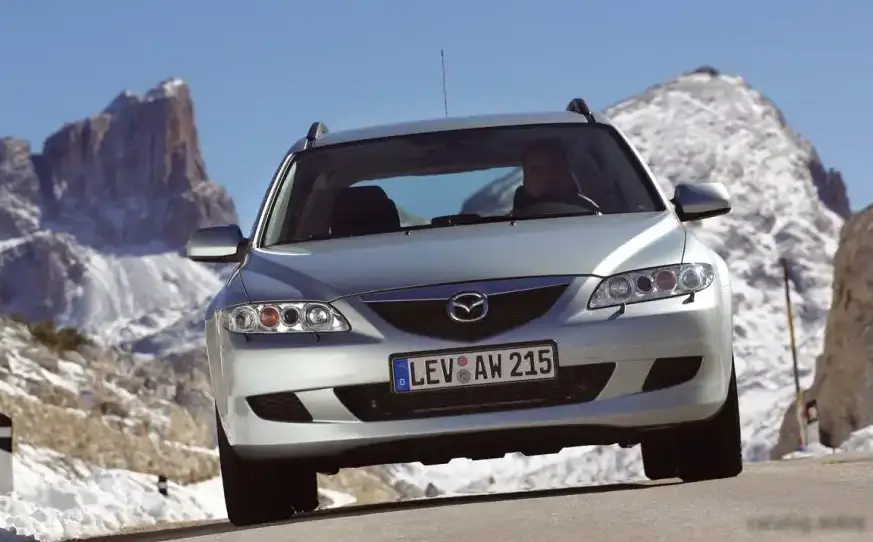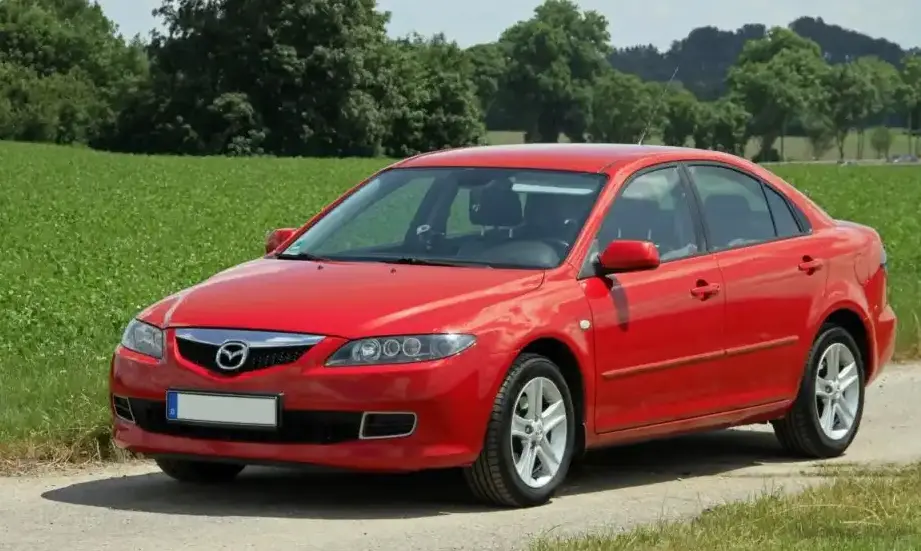
The Mazda 6 first generation (GG/GY/GG1) facelift, produced from 2005 to 2008, represented a significant step forward for Mazda in the mid-size segment. Offered in sedan, hatchback, and wagon body styles, the facelift brought revised styling, improved interior materials, and updated engine options. The 2.0 CD variant, producing 121 horsepower, was a key offering in many European markets, positioned as a fuel-efficient and practical choice for drivers prioritizing economy over outright performance. This model aimed to balance Mazda’s sporty brand image with the demands of a diesel-focused European consumer base.
Technical Specifications
| Brand | Mazda |
| Model | 6 |
| Generation | 6 I Hatchback (Typ GG/GY/GG1 facelift 2005) |
| Type (Engine) | 2.0 CD (121 Hp) |
| Start of production | 2005 |
| End of production | 2008 |
| Powertrain Architecture | Internal Combustion engine |
| Body type | Hatchback |
| Seats | 5 |
| Doors | 5 |
| Fuel consumption (urban) | 7.5 l/100 km (31.4 US mpg, 37.7 UK mpg, 13.3 km/l) |
| Fuel consumption (extra urban) | 5.1 l/100 km (46.1 US mpg, 55.4 UK mpg, 19.6 km/l) |
| Fuel consumption (combined) | 6 l/100 km (39.2 US mpg, 47.1 UK mpg, 16.7 km/l) |
| CO2 emissions | 165 g/km |
| Fuel Type | Diesel |
| Acceleration 0 – 100 km/h | 10.6 sec |
| Acceleration 0 – 62 mph | 10.6 sec |
| Acceleration 0 – 60 mph | 10.1 sec |
| Maximum speed | 192 km/h (119.3 mph) |
| Emission standard | Euro 4 |
| Weight-to-power ratio | 12.3 kg/Hp, 81.5 Hp/tonne |
| Weight-to-torque ratio | 4.6 kg/Nm, 215.5 Nm/tonne |
| Power | 121 Hp @ 3500 rpm |
| Power per litre | 60.6 Hp/l |
| Torque | 320 Nm @ 2000 rpm (236.02 lb.-ft. @ 2000 rpm) |
| Engine layout | Front, Transverse |
| Engine Model/Code | RF7J |
| Engine displacement | 1998 cm3 (121.93 cu. in.) |
| Number of cylinders | 4 |
| Engine configuration | Inline |
| Cylinder Bore | 86 mm (3.39 in.) |
| Piston Stroke | 86 mm (3.39 in.) |
| Compression ratio | 16.7:1 |
| Number of valves per cylinder | 4 |
| Fuel injection system | Diesel Commonrail |
| Engine aspiration | Turbocharger, Intercooler |
| Valvetrain | SOHC |
| Engine oil capacity | 4.7 l (4.97 US qt | 4.14 UK qt) |
| Coolant | 9 l (9.51 US qt | 7.92 UK qt) |
| Kerb Weight | 1485 kg (3273.86 lbs.) |
| Max. weight | 2015 kg (4442.31 lbs.) |
| Max load | 530 kg (1168.45 lbs.) |
| Trunk (boot) space – minimum | 492 l (17.37 cu. ft.) |
| Trunk (boot) space – maximum | 1662 l (58.69 cu. ft.) |
| Fuel tank capacity | 64 l (16.91 US gal | 14.08 UK gal) |
| Permitted trailer load with brakes (12%) | 1600 kg (3527.4 lbs.) |
| Permitted trailer load without brakes | 550 kg (1212.54 lbs.) |
| Length | 4690 mm (184.65 in.) |
| Width | 1780 mm (70.08 in.) |
| Height | 1435 mm (56.5 in.) |
| Wheelbase | 2675 mm (105.31 in.) |
| Front track | 1550 mm (61.02 in.) |
| Rear (Back) track | 1550 mm (61.02 in.) |
| Ride height (ground clearance) | 130 mm (5.12 in.) |
| Drag coefficient (Cd) | 0.31 |
| Minimum turning circle (turning diameter) | 10.8 m (35.43 ft.) |
| Drivetrain Architecture | The Internal combustion engine (ICE) drives the front wheels of the vehicle. |
| Drive wheel | Front wheel drive |
| Number of gears and type of gearbox | 6 gears, manual transmission |
| Front brakes | Ventilated discs |
| Rear brakes | Disc |
| Assisting systems | ABS (Anti-lock braking system) |
| Steering type | Steering rack and pinion |
| Tires size | 195/65 R15 H |
| Wheel rims size | 15 |
Powertrain & Engine Architecture
The 2.0 CD variant of the Mazda 6 facelift utilized the RF7J engine, a 1998cc inline-four cylinder diesel engine. This engine was a common sight in various Mazda and Ford models of the era, benefiting from a collaborative engineering effort. It featured a common rail direct injection system, delivering fuel at extremely high pressure for improved combustion efficiency and reduced emissions. The engine was turbocharged and intercooled, boosting power output to 121 horsepower and 320 Nm of torque. The RF7J engine employed a Single Overhead Camshaft (SOHC) valvetrain, a relatively simple design contributing to its reliability. The engine’s 16.7:1 compression ratio was typical for a diesel engine, maximizing thermal efficiency. The 6-speed manual transmission was the standard offering, providing a good balance between fuel economy and driver control.
Driving Characteristics
The 2.0 CD with the 6-speed manual transmission offered a practical and reasonably engaging driving experience. While not a performance-oriented variant, the 320 Nm of torque available from 2000 rpm provided adequate acceleration for everyday driving and overtaking maneuvers. The 0-60 mph time of around 10.1 seconds was respectable for a diesel hatchback of this size. The gear ratios were well-chosen, allowing the engine to operate efficiently at highway speeds. Compared to the higher-output petrol variants, the 2.0 CD prioritized fuel economy and low-end torque over outright horsepower. The manual transmission offered a more connected driving experience than the optional automatic, providing greater control over the engine’s power delivery.
Equipment & Trim Levels
The 2.0 CD trim typically included standard features such as air conditioning, power windows, power mirrors, and a basic audio system. Higher trim levels added features like alloy wheels, fog lights, a multi-function steering wheel, and upgraded interior upholstery. Optional extras included a sunroof, leather seats, and a more advanced audio system with CD changer. The interior design was functional and well-built, with a focus on ergonomics. The hatchback body style offered excellent practicality, with a spacious cargo area that could be expanded by folding down the rear seats.
Chassis & Braking
The Mazda 6 facelift featured a MacPherson strut front suspension and a multi-link rear suspension, providing a comfortable ride and good handling characteristics. The front brakes were ventilated discs, while the rear brakes were solid discs. Anti-lock Braking System (ABS) was standard, enhancing safety. The chassis was well-tuned, offering a good balance between ride comfort and handling precision. The 15-inch wheels and 195/65 R15 tires provided adequate grip for most driving conditions.
Market Reception & Comparison
The 2.0 CD variant of the Mazda 6 was well-received in European markets, where diesel engines were highly popular due to their fuel efficiency and lower running costs. Critics praised the engine’s torque and fuel economy, but some noted that it lacked the refinement of some of its competitors. Compared to the 2.0-liter petrol variants, the 2.0 CD offered significantly better fuel economy but less overall performance. It was often seen as a more sensible and practical choice for drivers who prioritized economy over excitement. The 2.3-liter petrol variant offered more power but at the expense of fuel efficiency.
Legacy
The RF7J engine, while generally reliable, is known to have some potential issues with the turbocharger and fuel injectors as it ages. Regular maintenance, including oil changes and fuel filter replacements, is crucial for ensuring its longevity. Today, the Mazda 6 facelift 2.0 CD can be found as a relatively affordable used car. Its fuel efficiency and practicality continue to make it an attractive option for budget-conscious buyers. However, potential buyers should be aware of the potential maintenance costs associated with a diesel engine of this age and mileage. The model remains a testament to Mazda’s ability to create a well-rounded and appealing mid-size vehicle.