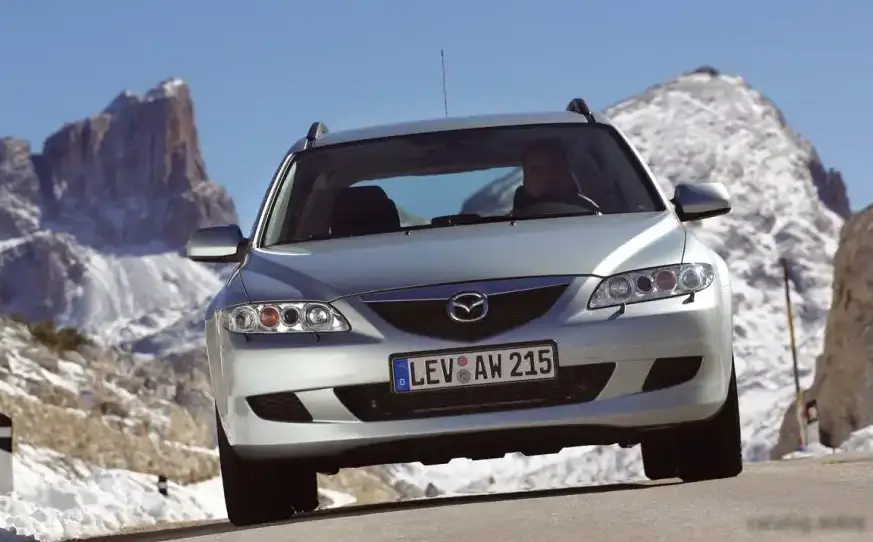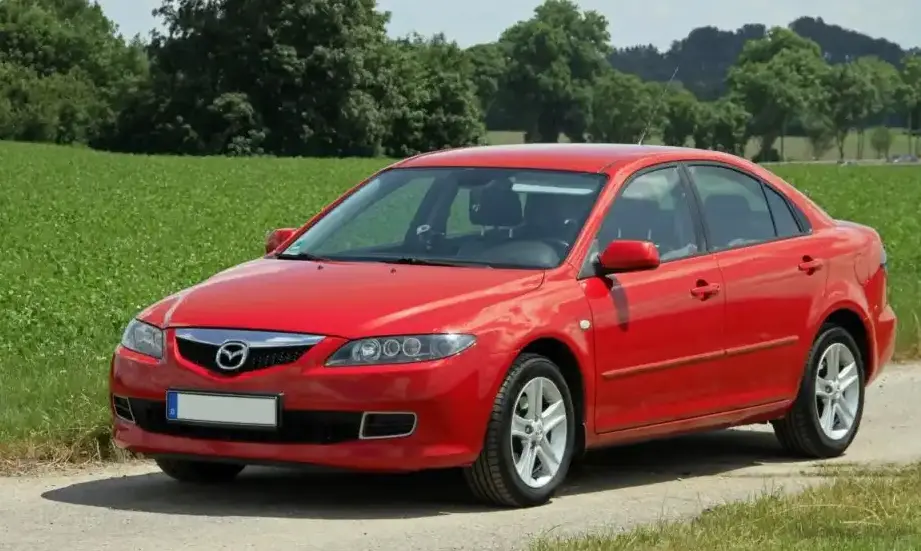
The Mazda 6 first generation (GG/GY/GG1) facelift, produced from 2005 to 2008, represented a significant step forward for Mazda in the mid-size segment. The hatchback variant, specifically equipped with the 3.0-liter V6 engine producing 212 horsepower, was a relatively rare offering, primarily sold in European and Australian markets. This model aimed to provide a more premium and sporty alternative to the more common four-cylinder versions, appealing to buyers seeking a blend of practicality and performance. Production of this specific configuration was limited, ending in June 2008.
Technical Specifications
| Brand | Mazda |
| Model | 6 |
| Generation | 6 I Hatchback (Typ GG/GY/GG1 facelift 2005) |
| Type (Engine) | 3.0 V6 (212 Hp) |
| Start of production | 2006 |
| End of production | June, 2008 |
| Powertrain Architecture | Internal Combustion engine |
| Body type | Hatchback |
| Seats | 5 |
| Doors | 5 |
| Fuel consumption (urban) | 12.4-13.8 l/100 km (19 – 17 US mpg) |
| Fuel consumption (extra urban) | 8.7-9.4 l/100 km (27 – 25 US mpg) |
| Fuel Type | Petrol (Gasoline) |
| Weight-to-power ratio | 7.2 kg/Hp, 138.9 Hp/tonne |
| Weight-to-torque ratio | 5.7 kg/Nm, 175 Nm/tonne |
| Power | 212 Hp @ 6000 rpm |
| Power per litre | 71.5 Hp/l |
| Torque | 267 Nm @ 5000 rpm (196.93 lb.-ft. @ 5000 rpm) |
| Maximum engine speed | 6500 rpm |
| Engine layout | Front, Transverse |
| Engine Model/Code | AJ0N |
| Engine displacement | 2967 cm3 (181.06 cu. in.) |
| Number of cylinders | 6 |
| Engine configuration | V-engine |
| Cylinder Bore | 89 mm (3.5 in.) |
| Piston Stroke | 79.5 mm (3.13 in.) |
| Compression ratio | 10:1 |
| Number of valves per cylinder | 4 |
| Fuel injection system | Multi-port manifold injection |
| Engine aspiration | Naturally aspirated engine |
| Valvetrain | DOHC, VVT |
| Engine oil capacity | 5.7 l (6.02 US qt | 5.02 UK qt) |
| Coolant capacity | 8.5 l (8.98 US qt | 7.48 UK qt) |
| Kerb Weight | 1526 kg (3364.25 lbs.) |
| Max. weight | 2053 kg (4526.09 lbs.) |
| Max load | 527 kg (1161.84 lbs.) |
| Trunk (boot) space – minimum | 626 l (22.11 cu. ft.) |
| Trunk (boot) space – maximum | 1662 l (58.69 cu. ft.) |
| Fuel tank capacity | 68 l (17.96 US gal | 14.96 UK gal) |
| Length | 4745 mm (186.81 in.) |
| Width | 1780 mm (70.08 in.) |
| Height | 1440 mm (56.69 in.) |
| Wheelbase | 2675 mm (105.31 in.) |
| Front track | 1530 mm (60.24 in.) |
| Rear track | 1530 mm (60.24 in.) |
| Ride height (ground clearance) | 130 mm (5.12 in.) |
| Minimum turning circle | 11.8 m (38.71 ft.) |
| Drivetrain Architecture | Front wheel drive |
| Number of gears | 5 |
| Gearbox type | Manual transmission |
| Front suspension | Double wishbone, Transverse stabilizer |
| Rear suspension | Independent multi-link spring suspension with stabilizer |
| Front brakes | Ventilated discs, 300×25 mm |
| Rear brakes | Disc, 280×10 mm |
| Assisting systems | ABS (Anti-lock braking system) |
| Steering type | Steering rack and pinion |
| Power steering | Hydraulic Steering |
| Tires size | 215/50 R17; 215/45 R18 |
| Wheel rims size | 7J x 17; 7J x 18 |
Powertrain & Engine Architecture
The heart of this Mazda 6 variant is the AJ0N 3.0-liter V6 engine. This engine, a naturally aspirated 60-degree V6, utilizes a cast iron block and aluminum cylinder heads. It features multi-port fuel injection and a double overhead camshaft (DOHC) valvetrain with variable valve timing (VVT) on both intake and exhaust camshafts. This VVT system optimizes engine performance and efficiency across the rev range. The engine’s design prioritized smooth power delivery and refinement over outright peak horsepower. The 5-speed manual transmission was the only transmission option available with this engine, offering a more engaging driving experience than an automatic would have. The engine’s layout, being front-engine, transverse-mounted, was typical for front-wheel-drive vehicles of this class.
Driving Characteristics
The 3.0 V6-equipped Mazda 6 hatchback offered a noticeable performance upgrade over the more common 2.0 and 2.3-liter four-cylinder models. With 212 horsepower and 267 Nm (197 lb-ft) of torque, acceleration was brisk, and highway passing maneuvers were executed with ease. The 5-speed manual transmission allowed for precise control and maximized the engine’s powerband. While not a sports car, the V6 provided a satisfying level of performance for a family hatchback. The gear ratios were tuned for a balance between acceleration and fuel economy, with a relatively tall fifth gear for comfortable cruising. Compared to the four-cylinder models, the V6 offered a smoother and more refined driving experience, with less engine vibration and noise.
Equipment & Trim Levels
The 3.0 V6 hatchback typically came with a higher level of standard equipment than the base models. This included features such as alloy wheels (typically 17 or 18-inch), automatic climate control, a premium audio system, and power-adjustable front seats. Interior upholstery was usually a combination of cloth and leather, or full leather in some cases. Optional extras included a sunroof, navigation system, and upgraded sound system. The trim level often denoted the quality of the interior materials and the availability of additional convenience features.
Chassis & Braking
The Mazda 6 hatchback featured a fully independent suspension system, with a double wishbone setup at the front and a multi-link setup at the rear. This suspension design provided a good balance between ride comfort and handling. The V6 model typically featured slightly stiffer springs and dampers compared to the four-cylinder versions to better manage the increased weight and power. Braking was handled by ventilated discs at the front and solid discs at the rear, equipped with an Anti-lock Braking System (ABS). The chassis was designed to provide a stable and predictable driving experience, with minimal body roll during cornering.
Market Reception & Comparison
The 3.0 V6 Mazda 6 hatchback was generally well-received by automotive critics, who praised its smooth engine, comfortable ride, and spacious interior. However, its relatively high price and limited availability meant that it wasn’t a mainstream choice. Compared to other V6-powered hatchbacks of the time, such as the Ford Focus ST, the Mazda 6 offered a more refined and comfortable driving experience, but lacked the same level of outright sportiness. Fuel economy was also a concern for some buyers, as the V6 engine consumed significantly more fuel than the four-cylinder alternatives.
Legacy
The 3.0 V6 Mazda 6 hatchback remains a relatively uncommon but desirable vehicle in the used car market. The AJ0N V6 engine is known for its reliability, provided it is properly maintained. Regular oil changes and timely replacement of wear items are crucial for ensuring its longevity. While parts availability may be more challenging than for the more common four-cylinder models, most components are still obtainable. Today, these cars are appreciated by enthusiasts who value their unique combination of performance, practicality, and refinement. The 3.0 V6 variant represents a high point in the first-generation Mazda 6’s development, offering a compelling alternative to more mainstream mid-size hatchbacks.