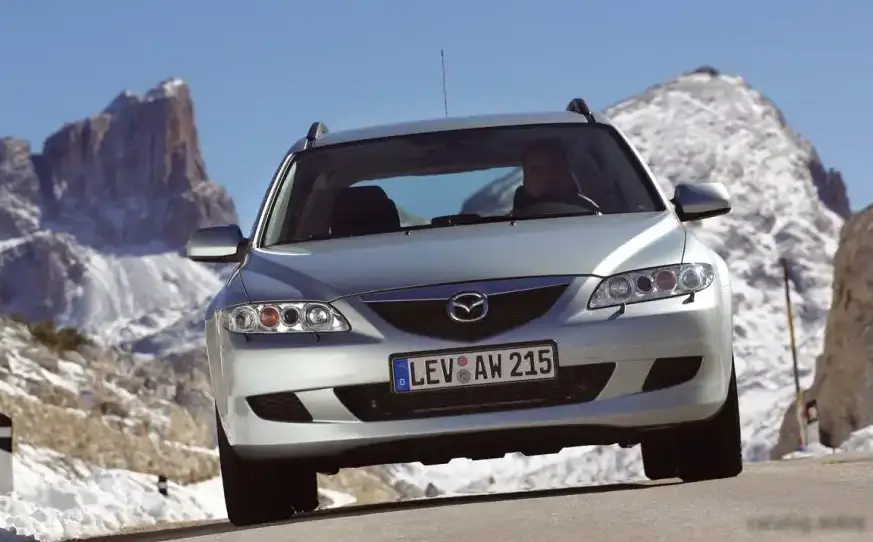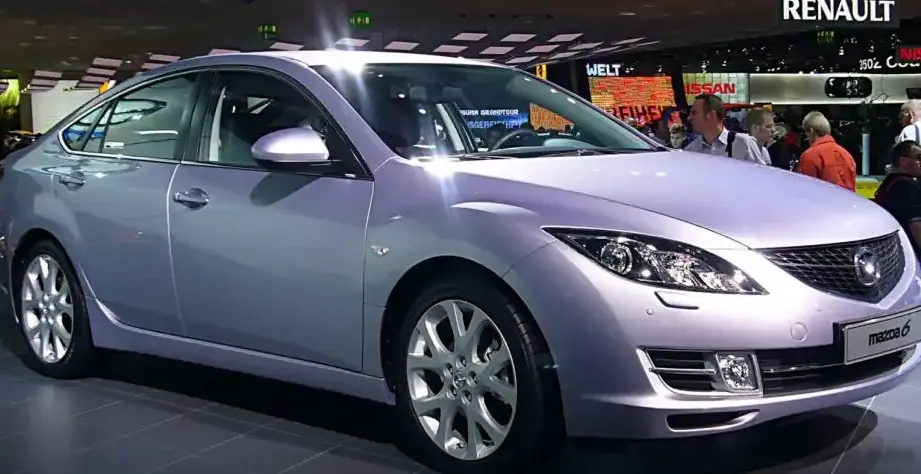
The Mazda 6 II Hatchback (GH) 2.2 CD, producing 185 horsepower, was a significant offering in Mazda’s lineup from 2007 to 2010. Positioned as a premium trim within the second generation (GH) Mazda 6 range, this variant combined a potent diesel engine with a practical hatchback body style. It primarily targeted the European market, where diesel engines were – and continue to be – highly favored for their fuel efficiency and torque characteristics. The GH generation represented a substantial step forward for Mazda, moving the 6 into a more competitive segment against established rivals like the Ford Mondeo, Vauxhall/Opel Vectra, and Volkswagen Passat. This particular 2.2 CD model aimed to provide a balance of performance, economy, and practicality for drivers seeking a refined and capable family vehicle.
Technical Specifications
| Brand | Mazda |
| Model | 6 |
| Generation | 6 II Hatchback (GH) |
| Type (Engine) | 2.2 CD (185 Hp) |
| Start of production | 2007 |
| End of production | 2010 |
| Powertrain Architecture | Internal Combustion engine |
| Body type | Hatchback |
| Seats | 5 |
| Doors | 5 |
| Fuel consumption (economy) – urban (NEDC) | 7.1 l/100 km (33.1 US mpg, 39.8 UK mpg, 14.1 km/l) |
| Fuel consumption (economy) – extra urban (NEDC) | 4.7 l/100 km (50 US mpg, 60.1 UK mpg, 21.3 km/l) |
| Fuel consumption (economy) – combined (NEDC) | 5.6 l/100 km (42 US mpg, 50.4 UK mpg, 17.9 km/l) |
| CO2 emissions (NEDC) | 149 g/km |
| Fuel Type | Diesel |
| Acceleration 0 – 100 km/h | 8.5 sec |
| Acceleration 0 – 62 mph | 8.5 sec |
| Acceleration 0 – 60 mph | 8.1 sec |
| Maximum speed | 218 km/h (135.46 mph) |
| Emission standard | Euro 4 |
| Weight-to-power ratio | 8.1 kg/Hp, 123.7 Hp/tonne |
| Weight-to-torque ratio | 3.7 kg/Nm, 267.6 Nm/tonne |
| Power | 185 Hp @ 3500 rpm |
| Power per litre | 84.7 Hp/l |
| Torque | 400 Nm @ 1600 rpm (295.02 lb.-ft. @ 1600 rpm) |
| Engine layout | Front, Transverse |
| Engine Model/Code | R2AA |
| Engine displacement | 2183 cm3 (133.21 cu. in.) |
| Number of cylinders | 4 |
| Engine configuration | Inline |
| Cylinder Bore | 86 mm (3.39 in.) |
| Piston Stroke | 94 mm (3.7 in.) |
| Compression ratio | 16.3:1 |
| Number of valves per cylinder | 4 |
| Fuel injection system | Diesel Commonrail |
| Engine aspiration | Turbocharger, Intercooler |
| Valvetrain | DOHC |
| Engine oil capacity | 4.7 l (4.97 US qt | 4.14 UK qt) |
| Coolant | 9 l (9.51 US qt | 7.92 UK qt) |
| Kerb Weight | 1495 kg (3295.91 lbs.) |
| Max. weight | 2110 kg (4651.75 lbs.) |
| Max load | 615 kg (1355.84 lbs.) |
| Trunk (boot) space – minimum | 510 l (18.01 cu. ft.) |
| Trunk (boot) space – maximum | 1702 l (60.11 cu. ft.) |
| Fuel tank capacity | 64 l (16.91 US gal | 14.08 UK gal) |
| Max. roof load | 100 kg (220.46 lbs.) |
| Permitted trailer load with brakes (12%) | 1600 kg (3527.4 lbs.) |
| Permitted towbar download | 75 kg (165.35 lbs.) |
| Length | 4755 mm (187.2 in.) |
| Width | 1795 mm (70.67 in.) |
| Height | 1440 mm (56.69 in.) |
| Wheelbase | 2725 mm (107.28 in.) |
| Front track | 1550-1570 mm (61.02 – 61.81 in.) |
| Rear (Back) track | 1550-1570 mm (61.02 – 61.81 in.) |
| Ride height (ground clearance) | 165 mm (6.5 in.) |
| Minimum turning circle (turning diameter) | 11.4 m (37.4 ft.) |
| Drivetrain Architecture | The Internal combustion engine (ICE) drives the front wheels of the vehicle. |
| Drive wheel | Front wheel drive |
| Number of gears and type of gearbox | 6 gears, manual transmission |
| Front suspension | Double wishbone, Transverse stabilizer |
| Rear suspension | Independent multi-link suspension, Transverse stabilizer |
| Front brakes | Ventilated discs, 299 mm |
| Rear brakes | Disc, 280 mm |
| Assisting systems | ABS (Anti-lock braking system) |
| Steering type | Steering rack and pinion |
| Power steering | Electric Steering |
| Tires size | 205/60 R16; 215/50 R17; 225/45 R18 |
| Wheel rims size | 6.5J x 16; 7J x 17; 7.5J x 18 |
Powertrain & Engine Architecture
The heart of this Mazda 6 variant is the R2AA 2.2-liter four-cylinder diesel engine. This engine, a product of Mazda’s ongoing development of diesel technology, featured a common-rail direct injection system, delivering fuel at extremely high pressure for optimized combustion. The engine utilized a variable geometry turbocharger (VGT) and an intercooler to enhance power and torque output while minimizing turbo lag. The DOHC (Double Overhead Camshaft) valvetrain, with four valves per cylinder, further contributed to the engine’s breathing efficiency. The 16.3:1 compression ratio was typical for a diesel engine of this era, maximizing thermal efficiency. The engine was transversely mounted in the front of the vehicle, driving the front wheels. The six-speed manual transmission was carefully geared to take advantage of the engine’s strong low-end torque, providing responsive acceleration and efficient cruising.
Driving Characteristics
The 185 hp and 400 Nm (295 lb-ft) of torque delivered by the 2.2 CD engine provided a noticeably more spirited driving experience compared to lower-powered Mazda 6 variants. Acceleration from 0-60 mph took approximately 8.1 seconds, making it competitive within its class. The engine’s peak torque, available from just 1600 rpm, meant that strong pulling power was readily accessible for overtaking and climbing hills. While not a sports car, the 2.2 CD offered a confident and composed driving experience. The six-speed manual transmission allowed drivers to maintain optimal engine speed for various driving conditions. Compared to the gasoline-powered versions, the diesel offered superior fuel economy and a more relaxed cruising experience, albeit with slightly more engine noise and vibration.
Equipment & Trim Levels
The 2.2 CD trim typically included a generous level of standard equipment. Interior features often included cloth or partial leather upholstery, air conditioning, a CD/radio system with auxiliary input, power windows and mirrors, and central locking. Higher-spec versions could be equipped with features like automatic climate control, a sunroof, and upgraded audio systems. Safety features such as ABS, traction control, and multiple airbags were standard. Optional extras included satellite navigation, leather seats, and alloy wheels.
Chassis & Braking
The Mazda 6 II Hatchback featured a well-engineered chassis designed to provide a balance of comfort and handling. The front suspension utilized a double wishbone setup with a transverse stabilizer bar, while the rear employed an independent multi-link suspension, also with a stabilizer bar. This configuration minimized body roll and provided a stable and predictable ride. Braking duties were handled by ventilated discs at the front and solid discs at the rear, providing adequate stopping power for the vehicle’s weight and performance. ABS (Anti-lock Braking System) was standard, enhancing safety during emergency braking situations.
Market Reception & Comparison
The Mazda 6 II Hatchback 2.2 CD was generally well-received by automotive critics. It was praised for its refined engine, comfortable ride, and spacious interior. The diesel engine’s fuel economy was a major selling point, particularly in Europe. Compared to the gasoline-powered Mazda 6 variants, the 2.2 CD offered a more economical and practical option for long-distance drivers. However, some critics noted that the diesel engine was slightly noisier than the gasoline engines. Against competitors like the Ford Mondeo and Volkswagen Passat, the Mazda 6 offered a more engaging driving experience and a stylish design.
Legacy
The R2AA 2.2-liter diesel engine proved to be a relatively reliable unit, although, like all diesel engines, it required regular maintenance, including oil changes and filter replacements. The particulate filter, a key component of the emissions control system, could require periodic regeneration or replacement. Today, well-maintained examples of the Mazda 6 II Hatchback 2.2 CD can still be found on the used car market. They represent a good value for buyers seeking a practical, economical, and reasonably well-equipped family car. The engine’s durability and fuel efficiency continue to make it an attractive option for those looking for a dependable diesel vehicle.