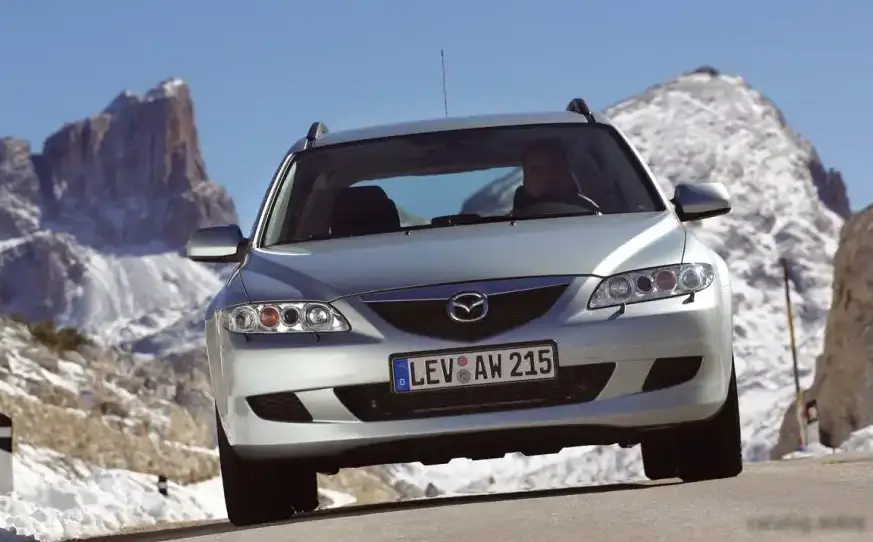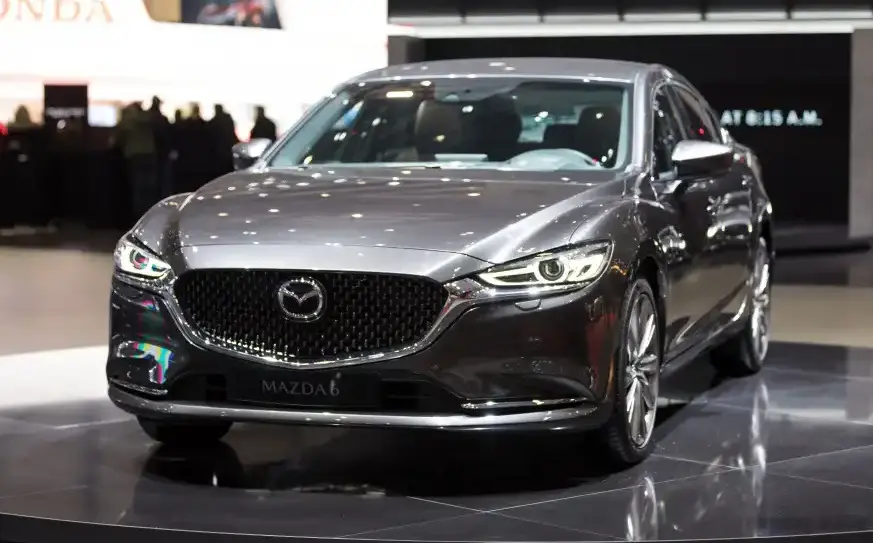
The Mazda 6 III Sedan, specifically the facelifted model introduced in 2018, represented a significant evolution of Mazda’s mid-size offering. The 2.0 SKYACTIV-G (165 Hp) variant, paired with the SKYACTIV-Drive automatic transmission, occupied a key position in the lineup, aiming for a balance between fuel efficiency, comfortable driving, and affordability. Production of this configuration spanned from 2018 onwards, forming a core part of the GJ generation Mazda 6’s appeal in markets worldwide, including North America, Europe, and Asia. This model aimed to provide a refined experience for drivers prioritizing everyday usability over outright performance.
Technical Specifications
| Brand | Mazda |
| Model | 6 |
| Generation | 6 III Sedan (GJ, facelift 2018) |
| Type (Engine) | 2.0 SKYACTIV-G (165 Hp) SKYACTIV-Drive |
| Start of production | 2018 |
| Powertrain Architecture | Internal Combustion engine |
| Body type | Sedan |
| Seats | 5 |
| Doors | 4 |
| Fuel consumption (urban) | 7.3 l/100 km (32.2 US mpg, 38.7 UK mpg, 13.7 km/l) |
| Fuel consumption (extra urban) | 5.4 l/100 km (43.6 US mpg, 52.3 UK mpg, 18.5 km/l) |
| Fuel consumption (combined) | 6.2 l/100 km (37.9 US mpg, 45.6 UK mpg, 16.1 km/l) |
| CO2 emissions | 141 g/km |
| Fuel Type | Petrol (Gasoline) |
| Acceleration 0 – 100 km/h | 10.5 sec |
| Acceleration 0 – 62 mph | 10.5 sec |
| Acceleration 0 – 60 mph | 10 sec |
| Maximum speed | 209 km/h (129.87 mph) |
| Emission standard | Euro 6 |
| Weight-to-power ratio | 8.6 kg/Hp, 116 Hp/tonne |
| Weight-to-torque ratio | 6.7 kg/Nm, 149.7 Nm/tonne |
| Power | 165 Hp @ 6000 rpm |
| Power per litre | 82.6 Hp/l |
| Torque | 213 Nm @ 4000 rpm (157.1 lb.-ft. @ 4000 rpm) |
| Engine layout | Front, Transverse |
| Engine Model/Code | PEY7 |
| Engine displacement | 1998 cm3 (121.93 cu. in.) |
| Number of cylinders | 4 |
| Engine configuration | Inline |
| Cylinder Bore | 83.5 mm (3.29 in.) |
| Piston Stroke | 91.2 mm (3.59 in.) |
| Compression ratio | 13:1 |
| Number of valves per cylinder | 4 |
| Fuel injection system | Direct injection |
| Engine aspiration | Naturally aspirated engine |
| Engine oil capacity | 4.2 l (4.44 US qt | 3.7 UK qt) |
| Coolant | 7 l (7.4 US qt | 6.16 UK qt) |
| Kerb Weight | 1423-1487 kg (3137.18 – 3278.27 lbs.) |
| Max. weight | 2046 kg (4510.66 lbs.) |
| Max load | 559-623 kg (1232.38 – 1373.48 lbs.) |
| Trunk (boot) space – minimum | 480 l (16.95 cu. ft.) |
| Fuel tank capacity | 62 l (16.38 US gal | 13.64 UK gal) |
| Max. roof load | 75 kg (165.35 lbs.) |
| Permitted trailer load with brakes (8%) | 1700 kg (3747.86 lbs.) |
| Permitted trailer load with brakes (12%) | 1500 kg (3306.93 lbs.) |
| Permitted trailer load without brakes | 680 kg (1499.14 lbs.) |
| Length | 4870 mm (191.73 in.) |
| Width | 1840 mm (72.44 in.) |
| Height | 1450 mm (57.09 in.) |
| Wheelbase | 2830 mm (111.42 in.) |
| Front track | 1585-1595 mm (62.4 – 62.8 in.) |
| Rear (Back) track | 1575-1585 mm (62.01 – 62.4 in.) |
| Ride height (ground clearance) | 165 mm (6.5 in.) |
| Minimum turning circle (turning diameter) | 11.2 m (36.75 ft.) |
| Drivetrain Architecture | The Internal combustion engine (ICE) drives the front wheels of the vehicle. |
| Drive wheel | Front wheel drive |
| Number of gears and type of gearbox | 6 gears, automatic transmission |
| Front brakes | Ventilated discs |
| Rear brakes | Disc |
| Assisting systems | ABS (Anti-lock braking system) |
| Steering type | Steering rack and pinion |
| Power steering | Electric Steering |
INTRODUCTION
The Mazda 6 III Sedan (GJ) facelift, launched in 2018, brought with it revised styling, enhanced safety features, and refinements to the existing powertrain options. The 2.0 SKYACTIV-G engine, producing 165 horsepower, coupled with the SKYACTIV-Drive six-speed automatic transmission, was positioned as a mainstream offering within the range. It sat below the more powerful 2.5-liter engine option and above any potential base-level engine configurations depending on the market. This combination aimed to appeal to buyers seeking a comfortable, fuel-efficient, and well-equipped mid-size sedan for daily commuting and family use.
Powertrain & Engine Architecture
The heart of this variant is the PEY7 engine, a 1998cc (121.93 cu. in.) inline-four cylinder gasoline engine utilizing Mazda’s SKYACTIV technology. This technology encompasses a high compression ratio of 13:1, achieved through careful engine design and precise fuel injection. The engine employs direct injection, optimizing fuel delivery and combustion efficiency. The valvetrain features dual overhead camshafts (DOHC) and four valves per cylinder, contributing to improved breathing and power output. The SKYACTIV-Drive automatic transmission is a six-speed unit designed to maximize fuel economy and provide smooth shifts. It utilizes a torque converter with a wider range of lock-up than traditional automatics, minimizing slippage and improving efficiency. The transmission’s control logic is tuned to work seamlessly with the engine’s characteristics, providing responsive acceleration and comfortable cruising.
Driving Characteristics
The 165 hp and 157.1 lb.-ft. of torque delivered by the 2.0-liter engine and SKYACTIV-Drive transmission resulted in a driving experience focused on refinement rather than outright speed. Acceleration from 0-60 mph took around 10 seconds, making it competitive within its class but noticeably slower than the 2.5-liter variants. The SKYACTIV-Drive transmission prioritized fuel efficiency, often upshifting quickly to maintain low engine speeds. This resulted in a relaxed driving experience during highway cruising, but could sometimes feel slightly hesitant during quick overtaking maneuvers. The transmission offered a manual shift mode, allowing drivers to exert more control over gear selection, but it wasn’t as engaging as a traditional manual gearbox. The overall feel was one of smooth, predictable performance, well-suited for everyday driving.
Equipment & Trim Levels
The 2.0 SKYACTIV-G Automatic trim typically included a generous array of standard features. These commonly included power windows and locks, air conditioning, a touchscreen infotainment system with Bluetooth connectivity, and a rearview camera. Higher trim levels, often designated as ‘Touring’ or ‘Grand Touring’ depending on the market, added features such as leather upholstery, a sunroof, upgraded audio systems, and advanced safety technologies like blind-spot monitoring and lane departure warning. Interior upholstery was typically cloth on base models, with leather options available on higher trims. Dashboard configurations were generally consistent across the range, featuring a clean and modern design with intuitive controls.
Chassis & Braking
The Mazda 6 III Sedan utilized a front-wheel-drive platform with a MacPherson strut front suspension and a multi-link rear suspension. This setup provided a good balance between ride comfort and handling. The 2.0-liter variant typically featured ventilated front disc brakes and solid rear disc brakes. ABS (Anti-lock Braking System) was standard across the range. Stabilizer bars were fitted to both the front and rear axles to reduce body roll during cornering. The suspension tuning was generally softer than that of the higher-performance 2.5-liter models, prioritizing ride comfort over sporty handling.
Market Reception & Comparison
Critics generally praised the Mazda 6 III Sedan for its stylish design, comfortable interior, and engaging driving dynamics. The 2.0 SKYACTIV-G Automatic variant was often viewed as a sensible choice for buyers prioritizing fuel economy and affordability. Compared to the 2.5-liter engine, it offered lower running costs but sacrificed some performance. Against competitors like the Toyota Camry, Honda Accord, and Ford Fusion, the Mazda 6 stood out for its more premium feel and refined driving experience. Fuel economy figures of around 37.9 US mpg combined were competitive within its segment. Reliability reports generally indicated good long-term dependability, although some owners reported minor issues with the infotainment system.
Legacy
The 2.0 SKYACTIV-G engine, paired with the SKYACTIV-Drive transmission, proved to be a reliable and durable powertrain. In the used car market, these models continue to be sought after for their fuel efficiency, comfortable ride, and overall value. While not as desirable as the higher-performance variants, they represent a practical and well-rounded option for buyers seeking a dependable mid-size sedan. The SKYACTIV technology introduced in this generation of Mazda 6 helped establish Mazda as a brand known for its innovative engineering and driver-focused vehicles.