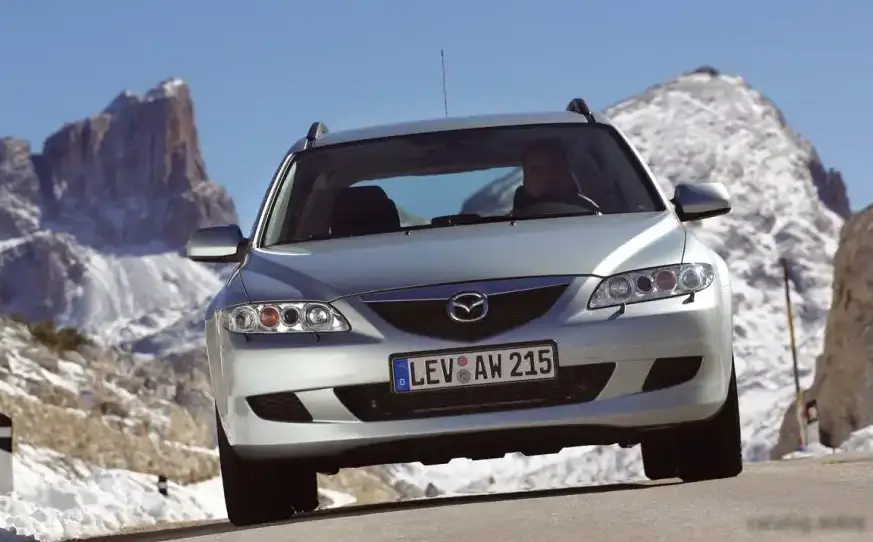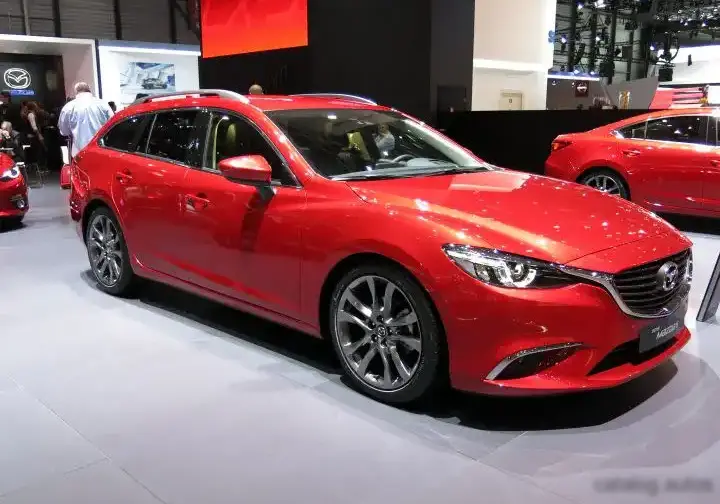
The Mazda 6 III Sport Combi, specifically the facelifted version produced from 2015 to 2017, represented Mazda’s continued refinement of the mid-size family wagon. This variant, equipped with the 2.0-liter SKYACTIV-G engine producing 165 horsepower, occupied a central position within the 6 Combi lineup, offering a balance between performance, fuel efficiency, and affordability. It was primarily marketed in Europe and other regions where wagons remain popular, competing with vehicles like the Ford Mondeo Wagon, Volkswagen Passat Variant, and Opel Insignia Sports Tourer. The “Combi” designation signifies Mazda’s term for a station wagon or estate body style.
Technical Specifications
| Brand | Mazda |
| Model | 6 |
| Generation | 6 III Sport Combi (GJ, facelift 2015) |
| Type (Engine) | 2.0 SKYACTIV-G (165 Hp) |
| Start of production | 2015 |
| End of production | 2017 |
| Powertrain Architecture | Internal Combustion engine |
| Body type | Station wagon (estate) |
| Seats | 5 |
| Doors | 5 |
| Fuel consumption (urban) | 7.7 l/100 km (30.5 US mpg) |
| Fuel consumption (extra urban) | 5 l/100 km (47 US mpg) |
| Fuel consumption (combined) | 6 l/100 km (39.2 US mpg) |
| CO2 emissions | 139 g/km |
| Fuel Type | Petrol (Gasoline) |
| Acceleration 0 – 100 km/h | 9.1 sec |
| Acceleration 0 – 62 mph | 9.1 sec |
| Acceleration 0 – 60 mph | 8.6 sec |
| Maximum speed | 214 km/h (132.97 mph) |
| Emission standard | Euro 6 |
| Weight-to-power ratio | 8.4 kg/Hp |
| Weight-to-torque ratio | 6.6 kg/Nm |
| Power | 165 Hp @ 6000 rpm |
| Torque | 210 Nm @ 4000 rpm (154.89 lb.-ft. @ 4000 rpm) |
| Engine layout | Front, Transverse |
| Engine displacement | 1998 cm3 (121.93 cu. in.) |
| Number of cylinders | 4 |
| Engine configuration | Inline |
| Cylinder Bore | 83.5 mm (3.29 in.) |
| Piston Stroke | 91.2 mm (3.59 in.) |
| Compression ratio | 14:1 |
| Number of valves per cylinder | 4 |
| Fuel injection system | Direct injection |
| Engine oil capacity | 4.2 l (4.44 US qt | 3.7 UK qt) |
| Coolant capacity | 6.6 l (6.97 US qt | 5.81 UK qt) |
| Kerb Weight | 1380-1483 kg (3042.38 – 3269.46 lbs.) |
| Max. weight | 1990 kg (4387.2 lbs.) |
| Max load | 507-610 kg (1117.74 – 1344.82 lbs.) |
| Trunk (boot) space – minimum | 522 l (18.43 cu. ft.) |
| Trunk (boot) space – maximum | 1664 l (58.76 cu. ft.) |
| Fuel tank capacity | 62 l (16.38 US gal | 13.64 UK gal) |
| Max. roof load | 100 kg (220.46 lbs.) |
| Permitted trailer load with brakes (8%) | 1700 kg (3747.86 lbs.) |
| Permitted trailer load with brakes (12%) | 1500 kg (3306.93 lbs.) |
| Permitted trailer load without brakes | 680 kg (1499.14 lbs.) |
| Permitted towbar download | 75 kg (165.35 lbs.) |
| Length | 4805 mm (189.17 in.) |
| Width | 1840 mm (72.44 in.) |
| Height | 1480 mm (58.27 in.) |
| Wheelbase | 2750 mm (108.27 in.) |
| Minimum turning circle | 11 m (36.09 ft.) |
| Drivetrain Architecture | Front wheel drive |
| Number of gears | 6 |
| Gearbox type | Manual transmission |
| Front brakes | Ventilated discs |
| Rear brakes | Disc |
INTRODUCTION
The 2015-2017 Mazda 6 Sport Combi 2.0 SKYACTIV-G 165 hp model represents a significant evolution of Mazda’s D-segment offering. Built upon the GJ platform, this facelift brought revised styling, improved interior materials, and enhancements to the SKYACTIV technology suite. Positioned as a mainstream offering within the range, it aimed to provide a practical and engaging driving experience for families and individuals seeking a spacious and efficient wagon. This version was a key player in Mazda’s strategy to elevate its brand image through a focus on driving dynamics and sophisticated design.
Powertrain & Engine Architecture
At the heart of this variant lies Mazda’s 2.0-liter SKYACTIV-G four-cylinder gasoline engine. This engine, designated as a PE-VPH, is characterized by its high compression ratio of 14:1, achieved through a combination of direct injection, optimized combustion chamber design, and precise valve control. The engine utilizes a conventional port fuel injection system supplemented by direct injection for improved efficiency and reduced emissions. The valvetrain employs dual overhead camshafts (DOHC) and four valves per cylinder. The 165 horsepower and 210 Nm (155 lb-ft) of torque are delivered at 6,000 rpm and 4,000 rpm respectively. This engine is paired with a six-speed manual transmission, delivering power to the front wheels. The SKYACTIV technology aimed to maximize fuel economy without sacrificing driving enjoyment.
Driving Characteristics
The 2.0-liter SKYACTIV-G engine, coupled with the six-speed manual transmission, provides a reasonably responsive driving experience. While not overtly powerful, the engine offers sufficient torque for everyday driving situations and comfortable highway cruising. Acceleration from 0-60 mph takes approximately 8.6 seconds. The manual gearbox is well-matched to the engine’s characteristics, offering precise shifts and a relatively short throw. Compared to the more powerful 2.5-liter SKYACTIV-G variants, this 2.0-liter model prioritizes fuel efficiency over outright performance. The gear ratios are tuned for a balance between acceleration and fuel economy, with a relatively tall sixth gear for relaxed highway driving. The driving experience is generally considered more engaging than competitors equipped with conventional automatic transmissions.
Equipment & Trim Levels
The 2.0 SKYACTIV-G 165 hp Sport Combi typically came equipped with a respectable level of standard features. These included air conditioning, power windows and mirrors, a basic audio system with USB connectivity, and alloy wheels. Higher trim levels, such as Sport Luxury or Touring, added features like leather upholstery, a more advanced infotainment system with navigation, automatic climate control, and parking sensors. Optional extras included a sunroof, premium sound system, and advanced safety features like lane departure warning and blind-spot monitoring. Interior upholstery was typically cloth on base models, with leather available on higher trims. The dashboard layout was clean and functional, with a focus on driver ergonomics.
Chassis & Braking
The Mazda 6 Combi utilizes a front-engine, front-wheel-drive layout with a MacPherson strut front suspension and a multi-link rear suspension. This suspension setup provides a good balance between ride comfort and handling precision. The steering is a power-assisted rack and pinion system, offering responsive and accurate steering feel. Braking duties are handled by ventilated discs at the front and solid discs at the rear. Anti-lock Braking System (ABS) and Electronic Brake-force Distribution (EBD) are standard features. Stabilizer bars are fitted to both the front and rear axles to reduce body roll during cornering.
Market Reception & Comparison
The Mazda 6 Combi 2.0 SKYACTIV-G 165 hp was generally well-received by automotive critics. It was praised for its stylish design, engaging driving dynamics, and fuel efficiency. However, some reviewers noted that the engine could feel slightly underpowered when fully loaded or tackling steep hills. Compared to the 2.5-liter variants, this model offered a more affordable entry point into the Mazda 6 range, but at the expense of some performance. Fuel economy figures were competitive, averaging around 39.2 US mpg on the combined cycle. Reliability reports have generally been positive, with the SKYACTIV engines proving to be durable and relatively trouble-free.
Legacy
The Mazda 6 III Sport Combi 2.0 SKYACTIV-G 165 hp has established a reputation as a reliable and practical family wagon in the used car market. The SKYACTIV engine has proven to be durable, and maintenance costs are generally reasonable. While not the fastest or most luxurious option in its class, it offers a compelling combination of style, efficiency, and driving enjoyment. These models continue to be sought after by buyers looking for a well-rounded and dependable vehicle. The focus on driving dynamics and fuel efficiency, hallmarks of the SKYACTIV technology, have contributed to its enduring appeal.