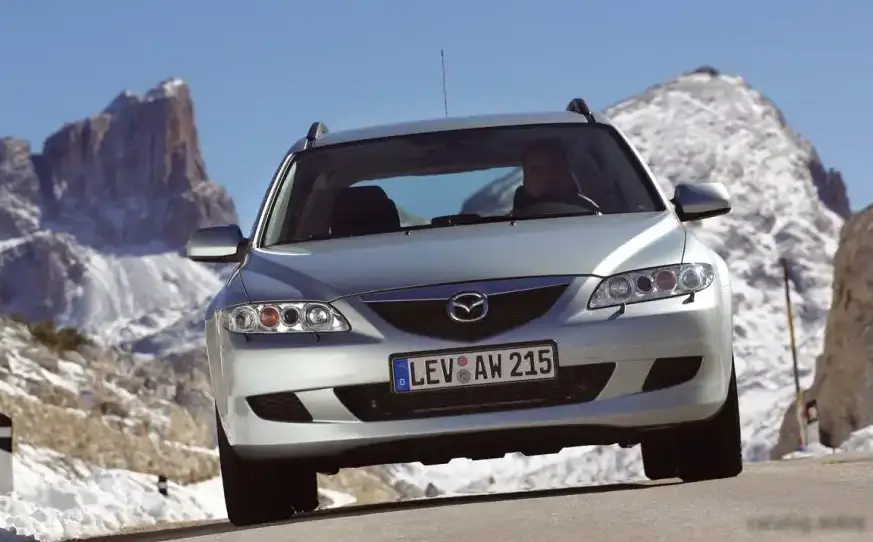
The Mazda 6 III Sport Combi (GJ series, post-facelift 2018) 2.2 SKYACTIV-D 150 hp 4×4 represents a compelling blend of practicality, efficiency, and driving dynamics within the Mazda 6 lineup. Introduced as part of the GJ facelift in 2018, this variant aimed to provide a sophisticated all-wheel-drive option for buyers prioritizing stability and all-weather capability in a stylish station wagon (estate) body style. It occupied a mid-range position within the broader Mazda 6 offerings, positioned above the lower-powered engine options and front-wheel-drive models, but below the higher-output diesel and petrol variants.
Technical Specifications
| Brand | Mazda |
| Model | 6 |
| Generation | 6 III Sport Combi (GJ, facelift 2018) |
| Type (Engine) | 2.2 SKYACTIV-D (150 Hp) 4×4 |
| Start of production | 2018 |
| Powertrain Architecture | Internal Combustion engine |
| Body type | Station wagon (estate) |
| Seats | 5 |
| Doors | 5 |
| Fuel consumption (urban) | 5.9 l/100 km (39.9 US mpg, 47.9 UK mpg, 16.9 km/l) |
| Fuel consumption (extra urban) | 4.6 l/100 km (51.1 US mpg, 61.4 UK mpg, 21.7 km/l) |
| Fuel consumption (combined) | 5.1 l/100 km (46.1 US mpg, 55.4 UK mpg, 19.6 km/l) |
| CO2 emissions | 135 g/km |
| Fuel Type | Diesel |
| Acceleration 0 – 100 km/h | 10.4 sec |
| Acceleration 0 – 62 mph | 10.4 sec |
| Acceleration 0 – 60 mph | 9.9 sec |
| Maximum speed | 201 km/h (124.9 mph) |
| Emission standard | Euro 6 |
| Weight-to-power ratio | 10.8 kg/Hp, 92.7 Hp/tonne |
| Weight-to-torque ratio | 4.3 kg/Nm, 234.9 Nm/tonne |
| Power | 150 Hp @ 4500 rpm |
| Power per litre | 68.5 Hp/l |
| Torque | 380 Nm @ 1800-2600 rpm (280.27 lb.-ft. @ 1800-2600 rpm) |
| Engine layout | Front, Transverse |
| Engine Model/Code | SHY8 |
| Engine displacement | 2191 cm3 (133.7 cu. in.) |
| Number of cylinders | 4 |
| Engine configuration | Inline |
| Cylinder Bore | 86 mm (3.39 in.) |
| Piston Stroke | 94.3 mm (3.71 in.) |
| Compression ratio | 14.4:1 |
| Number of valves per cylinder | 4 |
| Fuel injection system | Diesel Commonrail |
| Engine aspiration | BiTurbo, Intercooler |
| Engine oil capacity | 5.1 l (5.39 US qt | 4.49 UK qt) |
| Coolant | 8.3 l (8.77 US qt | 7.3 UK qt) |
| Kerb Weight | 1618-1674 kg (3567.08 – 3690.54 lbs.) |
| Max. weight | 2260 kg (4982.45 lbs.) |
| Max load | 586-642 kg (1291.91 – 1415.37 lbs.) |
| Trunk (boot) space – minimum | 522 l (18.43 cu. ft.) |
| Trunk (boot) space – maximum | 1664 l (58.76 cu. ft.) |
| Fuel tank capacity | 52.5 l (13.87 US gal | 11.55 UK gal) |
| Max. roof load | 75 kg (165.35 lbs.) |
| Permitted trailer load with brakes (8%) | 1800 kg (3968.32 lbs.) |
| Permitted trailer load with brakes (12%) | 1600 kg (3527.4 lbs.) |
| Permitted trailer load without brakes | 730 kg (1609.37 lbs.) |
| Length | 4805 mm (189.17 in.) |
| Width | 1840 mm (72.44 in.) |
| Width including mirrors | 2090 mm (82.28 in.) |
| Height | 1480 mm (58.27 in.) |
| Wheelbase | 2750 mm (108.27 in.) |
| Front track | 1585-1595 mm (62.4 – 62.8 in.) |
| Rear (Back) track | 1575-1585 mm (62.01 – 62.4 in.) |
| Ride height (ground clearance) | 165 mm (6.5 in.) |
| Minimum turning circle | 11.0 m (36.09 ft.) |
| Drive wheel | All wheel drive (4×4) |
| Number of gears and type of gearbox | 6 gears, manual transmission |
| Front brakes | Ventilated discs |
| Rear brakes | Disc |
INTRODUCTION
The Mazda 6 GJ series, launched in 2012 and facelifted in 2018, represented a significant step forward for Mazda in terms of design, technology, and driving experience. The Sport Combi body style, a station wagon, offered increased practicality without sacrificing the sleek aesthetics that Mazda had become known for. The 2.2 SKYACTIV-D 150 hp 4×4 variant, introduced with the 2018 facelift, combined Mazda’s efficient and refined diesel engine with the added security and capability of an all-wheel-drive system. This model was primarily aimed at European markets, where station wagons are highly popular and all-wheel drive is valued for its enhanced traction in varied weather conditions.
Powertrain & Engine Architecture
At the heart of this Mazda 6 variant lies the 2.2-liter SKYACTIV-D diesel engine, designated as SHY8. This engine is a four-cylinder, inline configuration, boasting a relatively high compression ratio of 14.4:1, contributing to its thermal efficiency. The engine utilizes a twin-turbocharger setup (BiTurbo) with an intercooler, allowing for a broad torque curve and responsive performance. The fuel injection system is a common-rail direct injection system, delivering precise fuel metering for optimal combustion. The 150 hp output is achieved at 4500 rpm, while the peak torque of 380 Nm (280 lb-ft) is available between 1800 and 2600 rpm. This engine is known for its quiet operation and relatively low emissions, adhering to Euro 6 standards. The engine is transversely mounted in the front of the vehicle. The 6-speed manual transmission delivers power to all four wheels via Mazda’s i-ACTIV AWD system.
Driving Characteristics
The 2.2 SKYACTIV-D 150 hp 4×4 offers a balanced driving experience. While not overtly sporty, the engine provides ample torque for comfortable cruising and confident overtaking. The all-wheel-drive system enhances traction, particularly on slippery surfaces, providing a surefooted feel. The 6-speed manual transmission allows for driver engagement, although the gear ratios are tuned more for fuel efficiency than outright acceleration. Compared to the higher-output 175 hp version of the same engine, this variant feels slightly less urgent in its acceleration, but offers improved fuel economy. The i-ACTIV AWD system is primarily front-wheel drive under normal conditions, seamlessly engaging the rear wheels when slip is detected, minimizing fuel consumption and maximizing efficiency.
Equipment & Trim Levels
The 2.2 SKYACTIV-D 150 hp 4×4 typically came equipped with a generous level of standard features. These included automatic climate control, a touchscreen infotainment system with navigation, Bluetooth connectivity, and a suite of safety features such as ABS, traction control, and multiple airbags. Interior upholstery was typically cloth or a combination of cloth and leatherette, depending on the specific trim level. Optional extras included a sunroof, leather seats, a premium sound system, and advanced driver-assistance systems like lane departure warning and adaptive cruise control. Trim levels varied by market, but generally offered increasing levels of luxury and technology.
Chassis & Braking
The Mazda 6 Sport Combi features a MacPherson strut front suspension and a multi-link rear suspension, providing a comfortable ride and responsive handling. The 4×4 variant often featured slightly stiffer springs and dampers to compensate for the added weight of the all-wheel-drive system. Braking duties are handled by ventilated discs at the front and solid discs at the rear. The braking system is assisted by ABS and electronic brakeforce distribution (EBD). The steering is an electric power-assisted rack and pinion system, offering precise and responsive control.
Market Reception & Comparison
The Mazda 6 III Sport Combi 2.2 SKYACTIV-D 150 hp 4×4 was generally well-received by automotive critics. It was praised for its stylish design, refined engine, comfortable ride, and practical interior. The all-wheel-drive system was seen as a valuable addition for buyers in regions with inclement weather. Compared to other diesel station wagons in its class, the Mazda 6 offered a compelling combination of performance, efficiency, and value. The 150 hp variant offered a more economical option compared to the 175 hp version, appealing to drivers prioritizing fuel efficiency over outright performance. Reliability reports generally indicated good long-term dependability for the SKYACTIV-D engine and drivetrain.
Legacy
The Mazda 6 III Sport Combi 2.2 SKYACTIV-D 150 hp 4×4 remains a popular choice in the used car market. The SKYACTIV-D engine has proven to be relatively reliable, although regular maintenance, including oil changes and diesel particulate filter (DPF) regeneration, is crucial. The all-wheel-drive system adds to the vehicle’s appeal, particularly in regions with harsh winters. The combination of practicality, style, and efficiency ensures that this Mazda 6 variant continues to be a desirable option for buyers seeking a well-rounded and dependable station wagon.