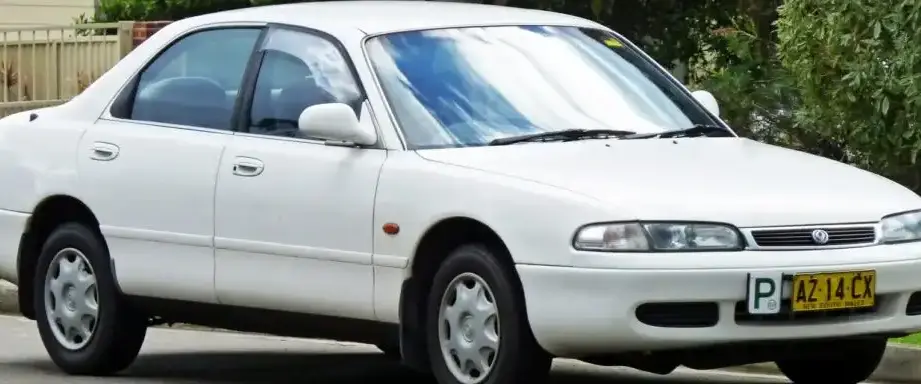
The Mazda 626 IV (GE) 2.0i, produced between 1992 and 1997, marked a substantial step forward in Mazda’s mid-size sedan lineup. As the fourth generation of the 626, internally designated the GE series, this variant occupied a crucial middle ground, balancing performance with affordability. It was primarily aimed at families and commuters desiring a dependable and well-equipped vehicle. The GE platform represented a complete redesign from its predecessor, emphasizing improved aerodynamics, increased interior space, and overall refinement. Sold globally, the 626 GE received regional adaptations, but the 2.0i model, with its 115 horsepower engine, was a common configuration in numerous markets.
Technical Specifications
| Brand | Mazda |
| Model | 626 |
| Generation | 626 IV (GE) |
| Type (Engine) | 2.0i (115 Hp) |
| Start of production | 1992 |
| End of production | 1997 |
| Powertrain Architecture | Internal Combustion engine |
| Body type | Sedan |
| Seats | 5 |
| Doors | 4 |
| Fuel consumption (combined) | 8 l/100 km (29.4 US mpg, 35.3 UK mpg, 12.5 km/l) |
| Fuel Type | Petrol (Gasoline) |
| Acceleration 0 – 100 km/h | 9.7 sec |
| Acceleration 0 – 62 mph | 9.7 sec |
| Acceleration 0 – 60 mph | 9.2 sec |
| Maximum speed | 198 km/h (123.03 mph) |
| Weight-to-power ratio | 10.1 kg/Hp, 99.1 Hp/tonne |
| Weight-to-torque ratio | 6.8 kg/Nm, 146.6 Nm/tonne |
| Power | 115 Hp @ 5500 rpm |
| Power per litre | 57.8 Hp/l |
| Torque | 170 Nm @ 4500 rpm (125.39 lb.-ft. @ 4500 rpm) |
| Engine layout | Front, Transverse |
| Engine Model/Code | FS |
| Engine displacement | 1991 cm3 (121.5 cu. in.) |
| Number of cylinders | 4 |
| Engine configuration | Inline |
| Cylinder Bore | 83 mm (3.27 in.) |
| Piston Stroke | 92 mm (3.62 in.) |
| Compression ratio | 9:1 |
| Number of valves per cylinder | 4 |
| Fuel injection system | Multi-port manifold injection |
| Engine aspiration | Naturally aspirated engine |
| Valvetrain | DOHC |
| Engine oil capacity | 3.5 l (3.7 US qt | 3.08 UK qt) |
| Coolant capacity | 7.5 l (7.93 US qt | 6.6 UK qt) |
| Kerb Weight | 1160 kg (2557.36 lbs.) |
| Max. weight | 1645 kg (3626.6 lbs.) |
| Max load | 485 kg (1069.24 lbs.) |
| Trunk (boot) space – minimum | 452 l (15.96 cu. ft.) |
| Fuel tank capacity | 60 l (15.85 US gal | 13.2 UK gal) |
| Length | 4695 mm (184.84 in.) |
| Width | 1750 mm (68.9 in.) |
| Height | 1400 mm (55.12 in.) |
| Wheelbase | 2610 mm (102.76 in.) |
| Front track | 1500 mm (59.06 in.) |
| Rear (Back) track | 1500 mm (59.06 in.) |
| Drivetrain Architecture | The Internal combustion engine (ICE) drives the front wheels of the vehicle. |
| Drive wheel | Front wheel drive |
| Number of gears and type of gearbox | 5 gears, manual transmission |
| Front suspension | Wishbone |
| Rear suspension | Trailing arm |
| Front brakes | Ventilated discs |
| Rear brakes | Disc |
| Assisting systems | ABS (Anti-lock braking system) |
| Steering type | Steering rack and pinion |
| Power steering | Hydraulic Steering |
| Tires size | 195/60 R14 |
| Wheel rims size | 6J x 15 |
Powertrain & Engine Architecture
The 626 2.0i’s engine was the FS, a 1.991-liter (121.5 cubic inch) inline-four cylinder gasoline engine. It featured a multi-port fuel injection system, injecting fuel directly into each intake port for enhanced efficiency and responsiveness. The engine incorporated a double overhead camshaft (DOHC) valvetrain, operating four valves per cylinder, contributing to its respectable power output for its displacement. The FS engine was known for its relatively smooth operation and good reliability. The 9:1 compression ratio was standard for naturally aspirated engines of the period. A 5-speed manual transmission was the standard offering, giving drivers good control over the engine’s powerband.
Driving Characteristics
The 115 horsepower and 125 lb-ft of torque from the 2.0i engine delivered adequate, though not thrilling, performance. Acceleration from 0-60 mph took around 9.2 seconds, with a top speed of approximately 123 mph. The 5-speed manual transmission allowed drivers to maintain the engine within its optimal power range, maximizing available horsepower. Compared to the more powerful V6 options available in some markets, the 2.0i felt less refined and had slower acceleration. However, it provided a more fuel-efficient and affordable alternative. The gear ratios were well-spaced, balancing everyday drivability with highway cruising. The front-wheel-drive configuration offered predictable handling, though it lacked the dynamic capabilities of rear-wheel-drive or all-wheel-drive vehicles.
Equipment & Trim Levels
The 2.0i trim typically included power steering, air conditioning, and an AM/FM radio. Interior upholstery was generally cloth, with a relatively simple dashboard layout. Optional extras included power windows, power door locks, and a sunroof. The standard equipment level was competitive for its price point, aiming for a comfortable and practical driving experience. Higher trim levels, often paired with the V6 engine, offered more luxurious features like leather upholstery, upgraded sound systems, and alloy wheels.
Chassis & Braking
The 626 IV (GE) used a front independent suspension with a wishbone configuration, providing a comfortable ride and reasonable handling. The rear suspension employed a trailing arm setup, a cost-effective solution for adequate ride quality. Braking was handled by ventilated discs on the front wheels and solid discs on the rear. An Anti-lock Braking System (ABS) was standard, improving safety by preventing wheel lockup during hard braking. The chassis was designed to balance rigidity and weight, contributing to the car’s overall stability.
Market Reception & Comparison
The Mazda 626 2.0i was generally well-received by automotive critics as a practical and reliable family sedan. It was praised for its spacious interior, comfortable ride, and fuel efficiency. Some reviewers noted the engine lacked the refinement and power of competitors, especially those offering V6 options. Compared to other 4-cylinder offerings like the Honda Accord and Toyota Camry, the 626 2.0i offered a competitive feature set and performance at a reasonable price. Fuel economy was a strong point, averaging around 29.4 US mpg in combined driving.
Legacy
The Mazda 626 IV (GE) 2.0i has proven to be a durable and reliable vehicle over time. The FS engine, while not high-performance, is known for its longevity with proper maintenance. Today, these cars are increasingly rare, but well-maintained examples are still found. They appeal to enthusiasts seeking a classic Japanese sedan offering a comfortable ride and a simple, effective driving experience. Parts availability can be challenging, but many components remain available through aftermarket suppliers or salvaged vehicles. The 626 IV (GE) represents a significant chapter in Mazda’s history, demonstrating the company’s commitment to building reliable and affordable vehicles.