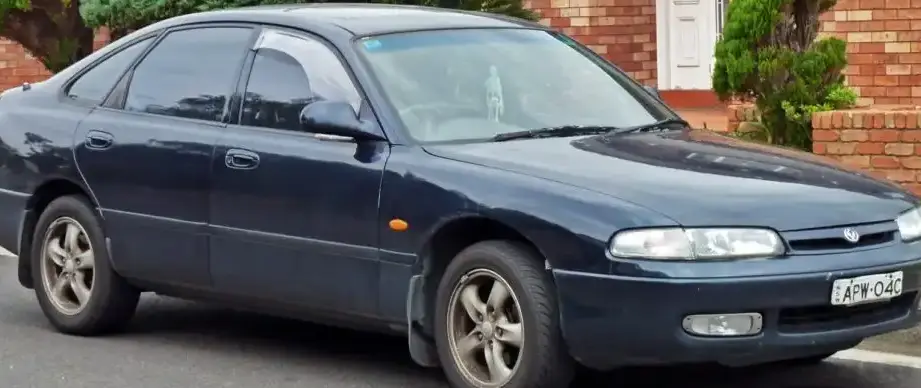
The Mazda 626 IV, produced between 1991 and 1997, represented a significant evolution for Mazda’s mid-size offering. The GE series, specifically the hatchback variant introduced in 1994, aimed to provide a practical and affordable option within the increasingly competitive family car segment. This article focuses on the 1.8-liter (90 hp) version of the GE hatchback, a mainstay of the range in many European and Asian markets, and a relatively uncommon sight in North America. This trim level served as the entry point into the 626 IV hatchback lineup, prioritizing fuel efficiency and affordability over outright performance.
Technical Specifications
| Brand | Mazda |
| Model | 626 |
| Generation | 626 IV Hatchback (GE) |
| Type (Engine) | 1.8 (90 Hp) |
| Start of production | 1994 |
| End of production | 1997 |
| Powertrain Architecture | Internal Combustion engine |
| Body type | Hatchback |
| Seats | 5 |
| Doors | 5 |
| Fuel Type | Petrol (Gasoline) |
| Power | 90 Hp |
| Power per litre | 48.9 Hp/l |
| Engine Model/Code | FP01LP |
| Engine displacement | 1840 cm3 |
| Engine displacement (US/UK) | 112.28 cu. in. |
| Number of cylinders | 4 |
| Engine configuration | Inline |
| Number of valves per cylinder | 4 |
| Fuel injection system | Multi-port manifold injection |
| Engine aspiration | Naturally aspirated engine |
| Engine oil capacity | 3.5 l |
| Engine oil capacity (US/UK) | 3.7 US qt | 3.08 UK qt |
| Coolant capacity | 7.5 l |
| Coolant capacity (US/UK) | 7.93 US qt | 6.6 UK qt |
| Drivetrain Architecture | Front wheel drive |
| Number of gears | 5 |
| Type of gearbox | Manual transmission |
| Front brakes | Disc |
| Rear brakes | Disc |
| Assisting systems | ABS (Anti-lock braking system) |
| Power steering | Hydraulic Steering |
Powertrain & Engine Architecture
The heart of this 626 variant is the FP01LP engine, an 1.8-liter inline-four cylinder gasoline engine. This engine, part of Mazda’s F-series, utilized a cast iron block with an aluminum cylinder head. The FP engine featured a single overhead camshaft (SOHC) design operating four valves per cylinder. Fuel delivery was managed by a multi-port fuel injection system, providing a balance between efficiency and responsiveness. The FP01LP produced 90 horsepower at approximately 5,500 rpm and 137 Nm (101 lb-ft) of torque at 3,500 rpm. The engine was designed for reliability and ease of maintenance, reflecting Mazda’s engineering philosophy of the time. The five-speed manual transmission was a standard feature, offering a relatively direct driving experience. While an automatic transmission was available in some markets, it wasn’t commonly paired with this specific engine due to the performance deficit.
Driving Characteristics
The 1.8-liter 626 hatchback, equipped with the five-speed manual, offered a competent, if not exhilarating, driving experience. Acceleration was modest, with a 0-60 mph time estimated around 11-12 seconds. The engine’s torque curve was relatively flat, providing adequate pulling power for everyday driving situations. The gear ratios were well-matched, allowing for comfortable cruising on highways, although overtaking required careful planning. Compared to the more powerful 2.0-liter versions of the 626, the 1.8 felt noticeably less responsive, particularly at higher speeds. However, the lighter engine weight contributed to slightly improved handling and fuel economy. The steering was light and precise, making the car easy to maneuver in urban environments. The suspension, tuned for comfort, absorbed bumps and imperfections in the road reasonably well.
Equipment & Trim Levels
The 1.8-liter hatchback typically represented the base trim level of the 626 range. Standard equipment generally included power steering, central locking, electric front windows, and an AM/FM radio. Interior upholstery was typically cloth, with a simple, functional dashboard layout. Optional extras, depending on the market, could include air conditioning, a sunroof, alloy wheels, and upgraded audio systems. Safety features were relatively basic for the time, consisting primarily of ABS brakes and seatbelts. The interior design prioritized practicality and durability over luxury, reflecting the car’s positioning as an affordable family vehicle.
Chassis & Braking
The 626 IV utilized a front-engine, front-wheel-drive layout with an independent MacPherson strut suspension at the front and a semi-independent multi-link suspension at the rear. This suspension setup provided a good balance between ride comfort and handling. The braking system consisted of disc brakes on all four wheels, providing adequate stopping power for the car’s weight and performance. ABS was standard, enhancing braking performance in slippery conditions. The steering system was a hydraulic power-assisted rack and pinion system, offering light and precise steering feel. Stabilizer bars were fitted to both the front and rear axles to reduce body roll during cornering.
Market Reception & Comparison
The 1.8-liter 626 hatchback was generally well-received as a practical and affordable family car. Critics praised its fuel efficiency, spacious interior, and comfortable ride. However, the engine’s lack of power was often cited as a drawback, particularly when compared to competitors offering more powerful engines. In terms of fuel economy, the 1.8-liter version typically achieved around 30-35 mpg in mixed driving conditions, making it a relatively economical choice. Compared to the 2.0-liter versions of the 626, the 1.8 offered lower running costs but sacrificed performance. The 1.8 was often seen as a sensible choice for drivers prioritizing fuel efficiency and affordability over sporty driving dynamics.
Legacy
The FP01LP engine, while not known for its high performance, proved to be a reliable and durable unit. Many examples of the 1.8-liter 626 hatchback are still on the road today, testament to the engine’s longevity. In the used car market, these models are often sought after by budget-conscious buyers looking for a practical and dependable vehicle. Maintenance costs are generally low, and spare parts are readily available. While not a collector’s item, the 1.8-liter 626 hatchback represents a solid and dependable example of 1990s Japanese automotive engineering. Its enduring presence on roads worldwide speaks to its inherent reliability and practicality.