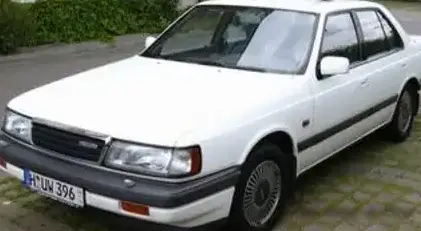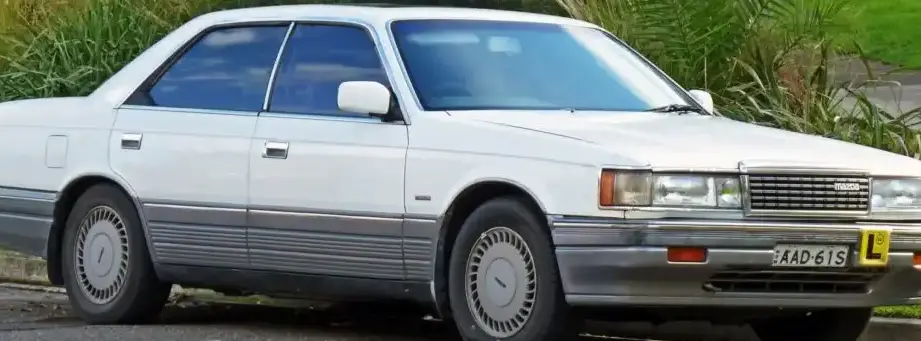
The Mazda 929 III (HC) 2.0 i V6 Turbo, produced between 1988 and 1991, represented a significant step forward for Mazda’s flagship sedan. Positioned as a luxury offering, the HC generation 929 aimed to compete with established European and domestic brands in the full-size segment. This particular variant, featuring a 2.0-liter turbocharged V6 engine producing 110 horsepower, was a mid-range offering within the 929 lineup, slotting below the higher-output naturally aspirated versions and offering a blend of performance and relative fuel efficiency. The 929 was never a high-volume seller in the US market, but it showcased Mazda’s engineering capabilities and commitment to building a world-class luxury car.
Technical Specifications
| Brand | Mazda |
| Model | 929 |
| Generation | 929 III (HC) |
| Type (Engine) | 2.0 i V6 Turbo (110 Hp) |
| Start of production | 1988 |
| End of production | 1991 |
| Powertrain Architecture | Internal Combustion engine |
| Body type | Sedan |
| Seats | 5 |
| Doors | 4 |
| Fuel consumption (urban) | 16 l/100 km (14.7 US mpg) |
| Fuel consumption (extra urban) | 9 l/100 km (26.1 US mpg) |
| Fuel Type | Petrol (Gasoline) |
| Maximum speed | 200 km/h (124.27 mph) |
| Weight-to-power ratio | 13.4 kg/Hp |
| Weight-to-torque ratio | 8.8 kg/Nm |
| Power | 110 Hp @ 5500 rpm |
| Power per litre | 55.1 Hp/l |
| Torque | 168 Nm @ 4000 rpm (123.91 lb.-ft. @ 4000 rpm) |
| Engine layout | Front, Longitudinal |
| Engine displacement | 1997 cm3 (121.86 cu. in.) |
| Number of cylinders | 6 |
| Engine configuration | V-engine |
| Cylinder Bore | 74 mm (2.91 in.) |
| Piston Stroke | 77.4 mm (3.05 in.) |
| Compression ratio | 8:1 |
| Number of valves per cylinder | 2 |
| Fuel injection system | Single-point injection |
| Engine aspiration | Turbocharger |
| Kerb Weight | 1470 kg (3240.8 lbs.) |
| Trunk (boot) space | 427 l (15.08 cu. ft.) |
| Fuel tank capacity | 70 l (18.49 US gal) |
| Length | 4690 mm (184.65 in.) |
| Width | 1695 mm (66.73 in.) |
| Height | 1425 mm (56.1 in.) |
| Wheelbase | 2710 mm (106.69 in.) |
| Front track | 1440 mm (56.69 in.) |
| Rear track | 1450 mm (57.09 in.) |
| Drivetrain Architecture | Rear wheel drive |
| Drive wheel | Rear wheel drive |
| Number of gears | 5 gears, manual transmission |
| Front suspension | Coil spring |
| Rear suspension | Coil spring |
| Front brakes | Ventilated discs |
| Rear brakes | Disc |
| Assisting systems | ABS (Anti-lock braking system) |
| Steering type | Steering rack and pinion |
| Power steering | Hydraulic Steering |
| Tires size | 195/65 R15 91 H |
| Wheel rims size | 6J x 15 ET 50 |
Powertrain & Engine Architecture
The heart of the 929 III 2.0 i V6 Turbo was the JE engine, a 1,997 cc (121.86 cu. in.) 60-degree V6. This engine utilized a single-point fuel injection system, a relatively common technology for the late 1980s, and a turbocharger to boost power output. The turbocharger, while enhancing performance, was a relatively small unit, prioritizing drivability over outright power. The engine featured a cast iron block and aluminum cylinder heads, a common construction for the era. Valve actuation was handled by a single overhead camshaft per cylinder bank, operating two valves per cylinder. The 5-speed manual transmission was the only transmission option available with this engine, providing a direct connection to the rear wheels. The engine code for this variant is often referenced as JE.
Driving Characteristics
The 110 horsepower and 168 Nm (123.91 lb.-ft.) of torque delivered by the turbocharged V6 provided adequate, but not exhilarating, performance. Acceleration to 60 mph was estimated to be around 9-10 seconds. The turbocharger did introduce a degree of turbo lag, meaning there was a slight delay between pressing the accelerator and feeling the full power delivery. However, once spooled up, the turbo provided a noticeable boost in mid-range acceleration. Compared to the naturally aspirated 2.2-liter engine offered in other 929 variants, the turbo 2.0 offered more torque, making it feel more responsive in everyday driving situations. The 5-speed manual transmission allowed drivers to keep the engine in its optimal power band, but the gear ratios were relatively tall, prioritizing fuel economy over aggressive acceleration. The rear-wheel-drive configuration provided a balanced feel, although it wasn’t particularly sporty.
Equipment & Trim Levels
The 929 III was marketed as a luxury vehicle, and even the 2.0 i V6 Turbo variant came reasonably well-equipped. Standard features typically included power windows, power locks, air conditioning, and a decent audio system. Interior upholstery was typically cloth, although leather was available as an option. The dashboard layout was functional and straightforward, with clearly marked gauges and controls. Optional extras included a sunroof, upgraded audio systems, and alloy wheels. The trim level for this engine was generally considered a mid-range offering, providing a good balance of features and price.
Chassis & Braking
The 929 III utilized a traditional body-on-frame construction, which was becoming less common in the late 1980s as unibody designs gained popularity. The suspension consisted of coil springs and shock absorbers all around, providing a comfortable ride. The front suspension featured independent double wishbones, while the rear suspension used a solid axle. Braking duties were handled by ventilated discs at the front and solid discs at the rear. An Anti-lock Braking System (ABS) was standard, enhancing safety. The steering was a rack-and-pinion system with hydraulic power assistance, providing a reasonably responsive feel.
Market Reception & Comparison
The Mazda 929 III, including the 2.0 i V6 Turbo variant, received generally positive reviews from automotive critics. It was praised for its comfortable ride, spacious interior, and relatively refined driving experience. However, it was often criticized for its somewhat bland styling and lack of a truly sporty character. Compared to other trims in the 929 lineup, the 2.0 i V6 Turbo offered a good compromise between performance and fuel economy. The naturally aspirated engines were less powerful but more fuel-efficient, while the higher-output versions offered more performance but at the expense of fuel economy. Reliability was generally good, although the turbocharger did add a potential point of failure.
Legacy
The Mazda 929 III, while not a massive sales success, played an important role in establishing Mazda as a maker of premium vehicles. The 2.0 i V6 Turbo powertrain, while not particularly groundbreaking, proved to be reasonably reliable and offered a good balance of performance and efficiency for its time. Today, the 929 III is a relatively rare sight on the roads, and well-maintained examples are becoming increasingly collectible. The turbo engine, while requiring more diligent maintenance than the naturally aspirated versions, is still capable of providing enjoyable performance. Parts availability can be a challenge, but a dedicated community of enthusiasts helps to keep these cars running.