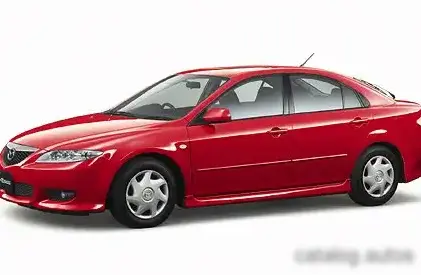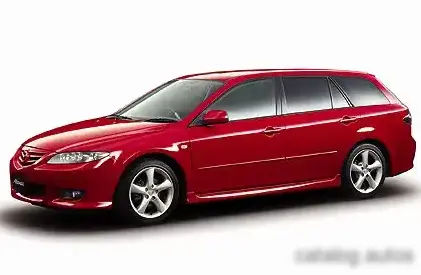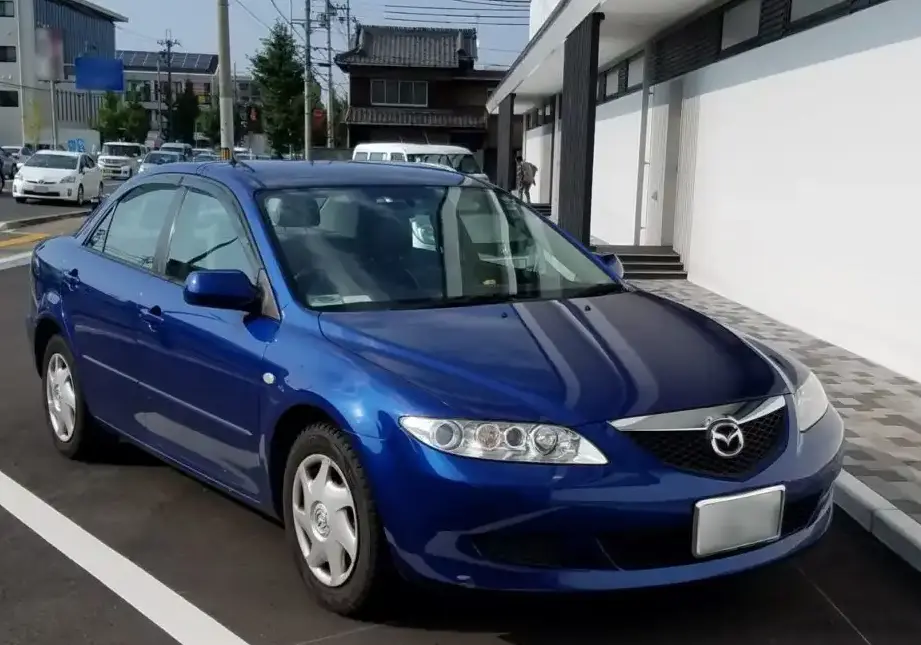
The Mazda Atenza, known as the Mazda6 outside of Japan, represented a significant step forward for Mazda when it debuted in 2002. Replacing the 626, the Atenza aimed to offer a more sophisticated and sporty driving experience within the mid-size sedan segment. The 2.3i 16V variant, producing 178 horsepower, was a key offering in the lineup, positioned as a balance between affordability and performance. Production of this specific configuration ran from 2002 to 2005, coinciding with the first generation (GG/GY) of the Atenza/Mazda6. It was primarily marketed towards buyers seeking a comfortable, reliable, and reasonably powerful family sedan.
Technical Specifications
| Brand | Mazda |
| Model | Atenza |
| Generation | Atenza (GG/GY) |
| Type (Engine) | 2.3 i 16V (178 Hp) |
| Start of production | 2002 |
| End of production | 2005 |
| Powertrain Architecture | Internal Combustion engine |
| Body type | Sedan |
| Seats | 5 |
| Doors | 4 |
| Fuel Type | Petrol (Gasoline) |
| Maximum speed | 180 km/h (111.85 mph) |
| Weight-to-power ratio | 7.5 kg/Hp, 132.8 Hp/tonne |
| Weight-to-torque ratio | 6.2 kg/Nm, 161.2 Nm/tonne |
| Power | 178 Hp @ 6500 rpm |
| Power per litre | 78.7 Hp/l |
| Torque | 216 Nm @ 5000 rpm (159.31 lb.-ft. @ 5000 rpm) |
| Engine layout | Front, Transverse |
| Engine displacement | 2261 cm3 (137.97 cu. in.) |
| Number of cylinders | 4 |
| Engine configuration | Inline |
| Cylinder Bore | 87.5 mm (3.44 in.) |
| Piston Stroke | 94 mm (3.7 in.) |
| Compression ratio | 10.6:1 |
| Number of valves per cylinder | 4 |
| Fuel injection system | Multi-port manifold injection |
| Engine aspiration | Naturally aspirated engine |
| Valvetrain | DOHC |
| Engine oil capacity | 4.3 l (4.54 US qt | 3.78 UK qt) |
| Kerb Weight | 1340 kg (2954.19 lbs.) |
| Trunk (boot) space – minimum | 430 l (15.19 cu. ft.) |
| Fuel tank capacity | 64 l (16.91 US gal | 14.08 UK gal) |
| Length | 4745 mm (186.81 in.) |
| Width | 1780 mm (70.08 in.) |
| Height | 1440 mm (56.69 in.) |
| Wheelbase | 2675 mm (105.31 in.) |
| Front track | 1529 mm (60.2 in.) |
| Rear (Back) track | 1519 mm (59.8 in.) |
| Drivetrain Architecture | The Internal combustion engine (ICE) drives the front wheels of the vehicle. |
| Drive wheel | Front wheel drive |
| Number of gears and type of gearbox | 4 gears, automatic transmission |
| Front suspension | Coil spring |
| Rear suspension | Coil spring |
| Front brakes | Ventilated discs |
| Rear brakes | Disc |
| Assisting systems | ABS (Anti-lock braking system) |
| Steering type | Steering rack and pinion |
| Power steering | Hydraulic Steering |
| Tires size | 195/65 R15 91 H |
| Wheel rims size | 6J x 15 ET 50 |
Powertrain & Engine Architecture
The heart of the Atenza 2.3i was the Mazda L3-DE engine, a 2.3-liter inline-four cylinder powerplant. This engine featured a cast iron block with an aluminum cylinder head, incorporating dual overhead camshafts (DOHC) and four valves per cylinder. The multi-port fuel injection system delivered fuel directly into the intake ports, optimizing combustion efficiency. The engine’s 10.6:1 compression ratio contributed to its respectable power output. The engine code is often found as L3-DE. Paired with this engine was a four-speed automatic transmission, designed for smooth and comfortable shifts. This transmission wasn’t known for its sportiness, prioritizing fuel economy and ease of use over rapid gear changes. It was a fairly conventional automatic for the early 2000s, lacking the manual shift modes or tighter ratios found in later designs.
Driving Characteristics
The 2.3i Automatic Atenza offered a comfortable and predictable driving experience. While not a performance leader, the 178 hp engine provided adequate power for everyday driving and highway cruising. Acceleration was reasonable, but noticeably slower than the manual transmission versions or the higher-output 2.3L variants. The four-speed automatic transmission, while smooth, lacked the responsiveness of more modern transmissions with more gears. Gear ratios were tuned for fuel efficiency, meaning the engine could feel strained during aggressive acceleration. The front-wheel-drive configuration provided predictable handling, but didn’t offer the dynamic capabilities of all-wheel-drive systems found on some competitors. Steering was light and easy, making it well-suited for city driving, but lacked the feedback desired by more enthusiastic drivers.
Equipment & Trim Levels
The 2.3i trim level typically included standard features such as air conditioning, power windows and locks, a CD player, and basic cloth upholstery. Higher trim levels, often denoted with suffixes like “Sport” or “Luxury,” added features like alloy wheels, a sunroof, upgraded audio systems, and leather upholstery. Optional extras included navigation systems (a rarity for the time), automatic climate control, and side airbags. The interior design was functional and well-built, though not particularly luxurious compared to some European rivals. The dashboard layout was straightforward and easy to use, with clearly labeled controls. Interior space was generous for a mid-size sedan, offering comfortable seating for five adults.
Chassis & Braking
The Atenza utilized a MacPherson strut front suspension and a multi-link rear suspension, providing a comfortable ride and decent handling characteristics. The front brakes were ventilated discs, offering good stopping power, while the rear brakes were solid discs. Anti-lock Braking System (ABS) was standard, enhancing safety. The chassis was designed to balance rigidity and weight, contributing to the car’s overall stability. Stabilizer bars were fitted to both the front and rear axles to reduce body roll during cornering. The suspension tuning prioritized comfort over outright sportiness, resulting in a smooth ride even on rough roads.
Market Reception & Comparison
The Atenza 2.3i Automatic was generally well-received by automotive critics as a solid and reliable family sedan. It was praised for its comfortable ride, spacious interior, and good value for money. However, the automatic transmission was often criticized for its lack of responsiveness and the engine’s performance was considered adequate but not exciting. Compared to the manual transmission versions, the automatic offered less engaging driving experience. Against competitors like the Honda Accord and Toyota Camry, the Atenza offered a more sporty design and handling, but lacked the established reputation for reliability of its Japanese rivals. Fuel economy was comparable to other vehicles in its class, averaging around 22-26 mpg in mixed driving conditions. Some reviewers noted the Atenza’s slightly firmer suspension compared to the Camry, providing a more connected feel to the road.
Legacy
The Mazda Atenza 2.3i 16V (178 Hp) has proven to be a relatively reliable vehicle, with many examples still on the road today. The L3-DE engine is known for its durability, provided it receives regular maintenance. Common issues include oil leaks and occasional sensor failures, but these are generally not major concerns. In the used car market, this variant represents a good value proposition for buyers seeking an affordable and dependable mid-size sedan. While it may not offer the performance or features of more modern vehicles, its simplicity and reliability make it a popular choice for those seeking a practical and economical transportation option. The Atenza helped establish Mazda as a brand capable of producing stylish and engaging vehicles, paving the way for future successes like the Mazda6. The four-speed automatic, while not cutting-edge, has proven to be a robust and long-lasting unit.