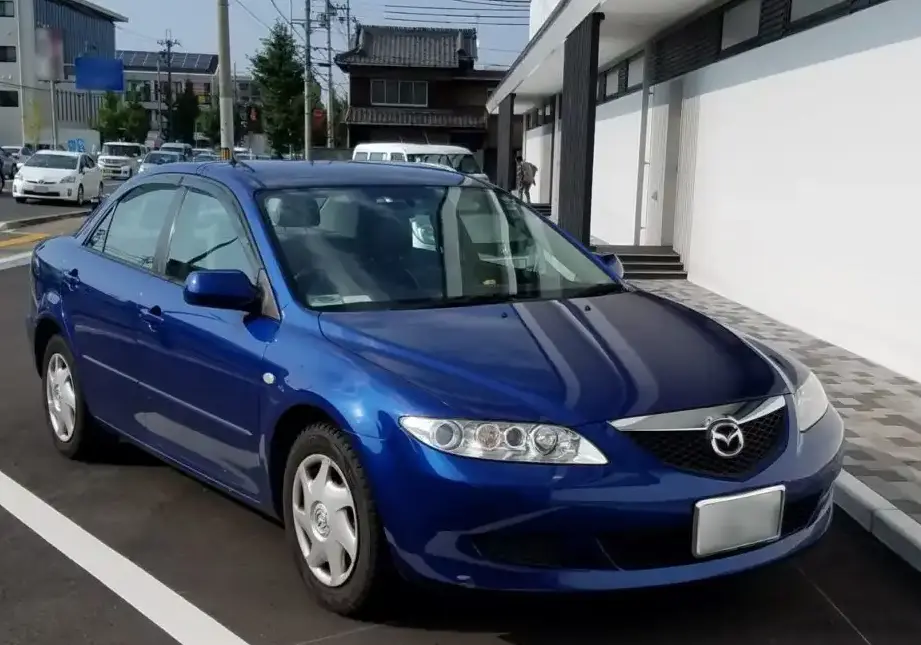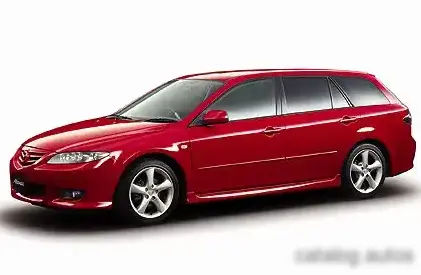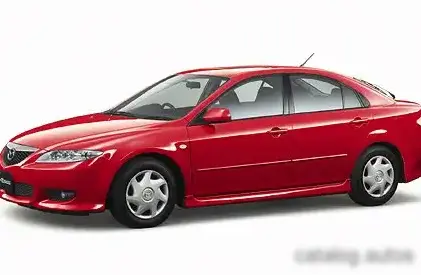
The Mazda Atenza Sport 2.0i 16V, produced between 2002 and 2005, represented a key offering in Mazda’s lineup during that period. Positioned as a practical and stylish compact, the Atenza (known as the Mazda3 in North America from 2004 onwards) aimed to bridge the gap between affordability and a more premium driving experience. This particular 2.0-liter, 145 horsepower variant, coupled with a four-speed automatic transmission, served as a popular choice for buyers prioritizing ease of use and fuel efficiency within the Atenza range. It was a mid-range offering, sitting below the more powerful 2.3-liter engine options but above the base 1.8-liter models.
Technical Specifications
| Brand | Mazda |
| Model | Atenza |
| Generation | Atenza Sport |
| Type (Engine) | 2.0 i 16V (145 Hp) |
| Start of production | 2002 |
| End of production | 2005 |
| Powertrain Architecture | Internal Combustion engine |
| Body type | Hatchback |
| Seats | 5 |
| Doors | 5 |
| Fuel Type | Petrol (Gasoline) |
| Weight-to-power ratio | 9.3 kg/Hp, 107 Hp/tonne |
| Weight-to-torque ratio | 7.4 kg/Nm, 135.8 Nm/tonne |
| Power | 145 Hp @ 6500 rpm |
| Power per litre | 72.5 Hp/l |
| Torque | 184 Nm @ 5000 rpm (135.71 lb.-ft. @ 5000 rpm) |
| Engine layout | Front, Transverse |
| Engine displacement | 1999 cm3 (121.99 cu. in.) |
| Number of cylinders | 4 |
| Engine configuration | Inline |
| Cylinder Bore | 87.5 mm (3.44 in.) |
| Piston Stroke | 83.1 mm (3.27 in.) |
| Compression ratio | 10:1 |
| Number of valves per cylinder | 4 |
| Fuel injection system | Multi-port manifold injection |
| Engine aspiration | Naturally aspirated engine |
| Valvetrain | DOHC |
| Engine oil capacity | 4.3 l (4.54 US qt | 3.78 UK qt) |
| Kerb Weight | 1355 kg (2987.26 lbs.) |
| Trunk (boot) space – minimum | 430 l (15.19 cu. ft.) |
| Fuel tank capacity | 64 l (16.91 US gal | 14.08 UK gal) |
| Length | 4670 mm (183.86 in.) |
| Width | 1780 mm (70.08 in.) |
| Height | 1435 mm (56.5 in.) |
| Wheelbase | 2675 mm (105.31 in.) |
| Front track | 1540 mm (60.63 in.) |
| Rear (Back) track | 1540 mm (60.63 in.) |
| Drivetrain Architecture | The Internal combustion engine (ICE) drives the front wheels of the vehicle. |
| Drive wheel | Front wheel drive |
| Number of gears and type of gearbox | 4 gears, automatic transmission |
| Front suspension | Coil spring |
| Rear suspension | Coil spring |
| Front brakes | Ventilated discs |
| Rear brakes | Disc |
| Assisting systems | ABS (Anti-lock braking system) |
| Steering type | Steering rack and pinion |
| Power steering | Hydraulic Steering |
| Tires size | 195/65 R15 91 H |
| Wheel rims size | 6J x 15 ET 50 |
Powertrain & Engine Architecture
The heart of the Atenza Sport 2.0i is Mazda’s F2 engine, a 1999cc inline-four cylinder powerplant. This engine, part of the FS family, utilizes a double overhead camshaft (DOHC) valvetrain with four valves per cylinder, contributing to its respectable power output for its displacement. Fuel delivery is managed by a multi-port fuel injection system, providing precise fuel metering for optimal combustion. The engine’s 10:1 compression ratio strikes a balance between performance and fuel efficiency. Paired with this engine is a four-speed automatic transmission, designed for smooth and convenient shifting. While not offering the sportiness of a manual gearbox, the automatic provided a more relaxed driving experience, appealing to a broader range of drivers. The transmission’s gear ratios were tuned for everyday usability, prioritizing acceleration from a standstill and comfortable cruising speeds.
Driving Characteristics
The 145 hp and 184 Nm (135.71 lb-ft) of torque delivered by the 2.0i engine, when channeled through the four-speed automatic, resulted in a competent, if not exhilarating, driving experience. Acceleration from 0 to 60 mph was estimated to be around 9-10 seconds, placing it in line with other compact hatchbacks of the era. Compared to the manual transmission versions of the same engine, the automatic offered slightly reduced responsiveness due to inherent transmission losses. The automatic’s shift points were generally well-programmed, but lacked the driver control offered by a manual. The Atenza’s suspension, tuned for comfort, provided a reasonably smooth ride, absorbing most road imperfections effectively. However, it wasn’t particularly sporty, exhibiting some body roll during cornering.
Equipment & Trim Levels
The Atenza Sport 2.0i 16V typically came equipped with a respectable level of standard features. Interior appointments included cloth upholstery, air conditioning, power windows and locks, and a basic audio system. Higher trim levels, often available as optional packages, added features such as alloy wheels, a sunroof, upgraded audio systems, and climate control. Safety features included ABS (Anti-lock Braking System) as standard, and dual front airbags. The interior design was functional and well-laid-out, prioritizing usability over outright luxury.
Chassis & Braking
The Atenza Sport utilized a front-engine, front-wheel-drive layout. Suspension consisted of coil springs all around, with a MacPherson strut setup at the front and a multi-link setup at the rear. Braking duties were handled by ventilated discs at the front and solid discs at the rear, providing adequate stopping power for the vehicle’s weight and performance. The steering system employed a hydraulic power steering rack and pinion, offering a reasonable level of assistance and feedback.
Market Reception & Comparison
The Mazda Atenza Sport 2.0i 16V was generally well-received by automotive critics. It was praised for its stylish design, comfortable ride, and good fuel economy. However, some reviewers noted that the four-speed automatic transmission felt somewhat dated compared to newer transmissions with more gears. Compared to the more powerful 2.3-liter Atenza variants, the 2.0i offered a more affordable entry point, but at the expense of performance. The 1.8-liter models, while even more affordable, lacked the refinement and power of the 2.0i. Fuel economy was a strong point, with the 2.0i achieving around 30-35 mpg on the combined cycle.
Legacy
The Mazda Atenza Sport 2.0i 16V, while not a particularly rare or collectible vehicle, has proven to be relatively reliable over the long term. The F2 engine is known for its durability, and with proper maintenance, can withstand high mileage. The four-speed automatic transmission, while not the most sophisticated, is also generally reliable. Today, these Atenzas can be found on the used car market at affordable prices, making them a practical and economical choice for buyers seeking a reliable and stylish compact hatchback. Parts availability remains good, and the car’s relatively simple mechanical design makes it accessible for DIY repairs.